
 Worksheets
Explorers Review
Total questions: 20
Worksheet time: 3600secs
One way that European explorers adapted to the environment of North America was by
learning how to grow native crops.
using new types of money.
studying native religions.
sending goods back to their homeland.

The map above shows the voyages of which explorer?
Christopher Columbus
Francisco Pizarro
Vasco Núñez de Balboa
Hernando De Soto
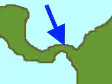
The arrow on this map points to a piece of land called the Isthmus of Panama. Which of these explorers crossed this land and became the first European to see the eastern shore of the Pacific Ocean?
Hernando De Soto
Francisco Pizarro
Vasco Núñez de Balboa
Christopher Columbus
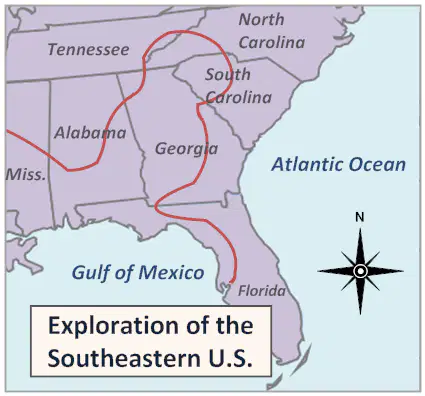
On the map above, the red line shows the route that a Spanish explorer took in 1540. The explorer became the first European to discover the Mississippi River. His name was
Francisco Pizarro.
Hernando De Soto.
Christopher Columbus.
Marco Polo.
Which is a reason why some Europeans wanted to explore North America?
to find oil
to find gold
to learn a new language
to start a new language
Which reason best explains why exploring North America was often difficult for Europeans?
They did not like the weather very much.
There were not able to build homes.
They did not have strong horses.
There was not enough food to eat.
Even though John Cabot did not find the Northwest Passage, he
started the first European colony in Quebec.
started the first European colony in Virginia.
became the first European explorer to set foot on South America's mainland.
became the first European explorer to set foot on North America's mainland.
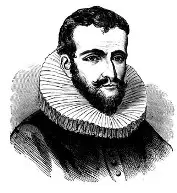
Which explorer discovered a famous river and explored the area now known as New York City?
Ferdinand Magellan
Amerigo Vespucci
Christopher Columbus
Henry Hudson
France sent _______ to explore the area of present-day Canada.
Juan Ponce de León
Christopher Columbus
Christopher Newport
Jacques Cartier
Which is an example of how French explorers and American Indians worked together?
The French traded with the American Indians for cotton cloth.
The French traded with the American Indians for furs.
The French taught the American Indians how to plant corn.
The French taught the American Indians how to make glass.
Why did Spanish explorers and American Indians often fight with each other?
The Spanish tried to take American Indian land.
The Spanish tried to grow American Indian crops.
The American Indians did not want to trade with the Spanish.
The American Indians did not want to travel with the Spanish.
What is one reason why European explorers and American Indians fought with each other in North America?
The explorers moved onto land that belonged to the American Indians.
The American Indians were planning a large war against the explorers.
The explorers did not want to be ruled by an American Indian government.
The American Indians did not want the explorers to practice their religions.
Why did the early explorers begin their explorations?
They were in search of free religion, gold, and glory.
They wanted to challenge themselves to be brave.
They wanted to prove that the Earth was oval.
They were afraid of the King and Queen of their country.
One of the biggest hurdles explorers faced was getting ___.
someone to travel with them and planning their route
convincing their parents to let them go on the voyage and planning their voyage
their voyage funded and good enough ships to last throughout the trip
funded and a crew to go with them
Which statement is true about John Cabot?
He sailed for England, and he was one of the first explorers to reach South America.
He sailed for England, and he was one of the first explorers to reach North America.
He sailed for Spain, and he was one of the first explorers to reach North America.
He sailed for Spain, and he was one of the first explorers to reach South America.
Which of the following statements is true about Vasco Nunez de Balboa?
He is given credit for discovering Europe.
He is given credit for discovering North America.
He is given credit for discovering the Pacific Ocean.
He is given credit for discovering the Atlantic Ocean.
Which of the following statements is true about Hernando de Soto?
He was one of the first explorers to explore all across North America.
He was one of the first explorers to explore the northeastern region of present-day United States.
He was one of the first explorers to explore the southeastern region of present-day United States.
He was one of the first explorers to explore the Plains region of present-day United States.
Which statement is true about Christopher Columbus?
Christopher Columbus made severeal voyages to present-day Canada.
Christopher Columbus discovered the Americas.
Christopher Columbus did not discover the Americas.
Christopher Columbus only made one voyage to the Americas.
Which of the following statements is true about Henry Hudson?
Henry Hudson and his crew explored present-day Florida and Georgia.
Henry Hudson explorered the Americas.
Henry Hudson explored around present-day New York City and was left on his vessel never to be seen again.
Henry Hudson and his crew explored the Hudson Bay and then returned safely to England.
Jacques Cartier explored along the ____ and then he returned to ____.
St. Lawrence River; France
Hudson Bay; France
Hudson Bay; Italy
St. Lawrence River; Italy

