wayground logo

Free Printable Worksheets

Font size

S
M
L
XL
Worksheets

MAP Review

Total questions: 132

Worksheet time: 3hrs 53mins

Name
Class
Date
1.

Many people ride a bicycle for fun and exercise. Some people ride a bicycle to work because it saves money and benefits the environment by reducing the use of fossil fuels. Which of these is not an example of the bicycle using mechanical energy?

a)

The pedals, gears, and chain help turn the wheels.

b)

The wheels turn when the bicycle moves.

c)

The front wheel guides the bicycle as it moves.

d)

The reflector allows the bicycle to be seen at night.

2.

Many people ride a bicycle for fun and exercise. Some people ride a bicycle to work because it saves money and benefits the environment by reducing the use of fossil fuels. Which of these is not an example of the bicycle using mechanical energy?

a)

The pedals, gears, and chain help turn the wheels.

b)

The wheels turn when the bicycle moves.

c)

The front wheel guides the bicycle as it moves.

d)

The reflector allows the bicycle to be seen at night.

3.

A farmer keeps bees to pollinate crops. The farmer makes several observations about the bees. Which of these observations describes a learned behavior?

a)

Bees make return trips to drink sugar water from a bowl placed 40 meters from their hive.

b)

Bees have dark eyes and black-and-yellow stripes.

c)

Bees produce honey from the nectar they collect.

d)

Bees will sting when threatened or disturbed.

4.

The whiskers of a river otter and the antennae of a cockroach are shown here. How do structures such as whiskers and antennae benefit organisms?

a)

They help the organisms detect their surroundings.

b)

They help the organisms eat food quickly.

c)

They help the organisms fight predators.

d)

None of these

5.

An energy company wants to build a hydroelectric power plant. Which of these characteristics of an area is most important to the development of a hydroelectric power plant?

a)

The area has a cool, rainy climate.

b)

The area is located in a valley with very little wind and frequent heavy fog.

c)

The area has a river that flows rapidly from nearby mountains through a valley.

d)

The area has no geysers or hot springs.

6.

Some students investigate the properties of four objects using a hand lens, a magnet, and a beaker containing water. Their observations are recorded in the table. Which statement identifies a property that could be used to classify these objects into two different groups?

a)

Density can be used to separate objects that sink in water from objects that do not.

b)

Magnetism can be used to separate objects that are attracted by a magnet from objects that are not.

c)

Solubility can be used to separate objects that dissolve in water from objects that do not.

d)

Physical state can be used to separate objects that are solids from objects that are not.

7.

An African savanna is a grassland with shrubs and a few small trees. It has warm temperatures all year long, a dry winter season, and a rainy summer season. Which group of animals is most likely supported by an African savanna?

a)
b)
c)
d)
8.

Some characteristics of objects in the solar system are listed here. Which of the listed characteristics describe both Earth and the moon?

a)
b)
c)
d)
9.

The table shown lists ways that four organisms obtain energy. Which organism obtains energy without depending on another organism?

a)

Oak tree

b)

Mushroom

c)

Cottontail rabbit

d)

Mountain Lion

10.

A student observed liquid wax dripping down the side of a burning candle. After putting out the candle’s flame, the student left the room. Several hours later the student observed that there was no longer any liquid on the side of the candle. Which statement explains what most likely happened to the liquid wax?

a)

The heat given off by the flame caused the candle wax to evaporate.

b)

The liquid wax changed back into a solid as it cooled.

c)

The liquid wax condensed and was absorbed by the candle.

d)

None of the above

11.

Which statement best describes the relationship between humans and plants in the carbon dioxide–oxygen cycle?

a)

Humans depend on oxygen released into the air by plants, and plants depend on carbon dioxide that humans release into the air.

b)

Plants produce carbon dioxide as a product of photosynthesis and release it into the air to provide energy for humans.

c)

Plants depend primarily on energy supplied by oxygen for photosynthesis, a process which releases carbon dioxide needed by humans.

d)

Humans and plants use gases in the air and the energy of sunlight to produce their own food.

12.

A student draws diagrams of her house and the location of the sun in the sky. Which diagram below does not correctly represent the location of the sun at the time indicated?

a)
b)
c)
d)
13.

The diagram shows a fish being viewed from above the water. The fish appears to be closer to the surface than it really is. What causes this difference?

a)

Light is reflected.

b)

Light is refracted.

c)

Light is focused.

d)

Light is blocked.

14.
If students could rotate the globe quickly or slowly and the globe could rotate only at the rate that Earth actually rotates, about how long would each complete rotation take?
a)
30 Days
b)
60 Minutes
c)
24 Hours
d)
365 Days
15.

Which of the following does NOT have mass?

a)

Light from a flashlight

b)

Water in a glass

c)

Air in a balloon

d)

An empty box

16.

Astronauts who have walked on the Moon....

a)

weighed less on the Moon

b)

weighed more on the Moon

c)

had greater mass on the Moon

d)

felt greater magnetism on the Moon

17.

If a piece of wood is floating at the top of the pitcher with water, that means that the wood is.....

a)

more dense than water

b)

less dense than water

c)

is neither an insulator or conductor

d)

solid

18.

A toaster is powered by electrical energy. The toaster changes the electrical energy to.....

a)

wind energy

b)

solar energy

c)

thermal energy

d)

mechanical energy

19.

In science, what is the definition of energy?

a)

Movement of things

b)

Ability to do work

c)

Use of electricity

d)

Cycle of work

20.

What would cause refraction?

a)

a mirror

b)

a metallic pan

c)

a hand lens

d)

a pan balance

21.

About 50% of the electricity produced in the U.S. is created by burning coal. What form of energy is coal?

a)

Chemical

b)

Heat

c)

Light

d)

Natural

22.

Which statement about light and water is correct?

a)

Light cannot pass through water.

b)

Light bends just before entering water.

c)

Light changes speed when passing through water.

d)

Light bounces in the difference directions when passing through water.

23.

Reflection means that light

a)

bends

b)

bounces

c)

refracts

d)

magnifies

24.

Sunlight can pass through our classroom windows because the windows are...

a)

clean

b)

opaque

c)

translucent

d)

transparent

25.

Which of the following would probably reflect the most light?

a)

Coffee cup

b)

Notebook paper

c)

Polished spoon

d)

Wooden block

26.

Which process would probably create the most rapid change in Earth's surface?

a)

Erosion

b)

Heating

c)

Volcanic eruption

d)

Weathering

27.

Soil is made up of both living and non-living materials. Which of the following is a living material that might be found in soil?

a)

Air

b)

Algae

c)

Mineral

d)

Silt

28.
__________ is an energy resource that WILL NOT run out in the next several hundred years. 
a)
Renewable Energy Resource
b)
Nonrenewable Energy Resource
29.
__________ is an energy resource that WILL run out in the next several hundred years.
a)
Renewable Energy Resource
b)
Nonrenewable Energy Resource
30.
A type of energy that uses heat that is stored  inside the earth is 
a)
geometric energy
b)
geothermal energy
c)
biomass energy
d)
solar energy
31.
A problem with geothermal energy is that it 
a)
is too hot
b)
is non-polluting
c)
is available only in the ocean
d)
is available only in certain locations
32.
What is coal made of?
a)
decomposed animal and plant remains
b)
water
c)
electricity
d)
all of the above
33.
This power plant produces electricity by getting heat from a hot spring. It is most likely using - 
a)
fossil fuels
b)
biofuels
c)
solar energy 
d)
geothermal energy 
34.
As water flows through a dam, a generator is turned and creates enough electricity for thousands of homes. This describes...
a)
biofuels
b)
hydroelectric energy
c)
geothermal energy
d)
solar power
35.
Where can the oldest layer be found?
a)
The top layer
b)
The middle layer
c)
They are all the same age
d)
The bottom layer
36.
In what kind of rock can fossils be found?
a)
Sedimentary Rocks
b)
Igneous Rocks
c)
Metamorphic Rocks
d)
Granite
37.
Some students made a model to show one of the first steps in the formation of sedimentary rock.  The students pour 2 cm of light-colored sand into a clear plastic box.  Then they add 1 cm of gravel.  Finally, they pour 2 cm of dark-colored sand on top of the gravel.  Which characteristic of sedimentary rock does this model best show?
a)
Sedimentary rock is made of layers.
b)
Sedimentary rock is cemented bits of rock.
c)
Sedimentary rock is often limestone.
d)
Sedimentary rock is common in Texas.
38.
Monahans Sandhills State Park in Texas has almost 4,000 acres of sand dunes. Some of the dunes are as tall as a six-story building. 
The dunes in the park are formed by — 
a)
rainstorms
b)
tornadoes
c)
strong winds
d)
earthquakes
39.
Fertilizers used on farms near the coast can be carried to the ocean when runoff occurs during rain showers. These fertilizers can decrease the populations of fish and shellfish. Which other populations most likely decrease as a result?
a)
Organisms that eat algae 
b)
Organisms that live on farms 
c)
Organisms that eat fish and shellfish 
d)
All of these 
40.
Some buildings and homes are heated by energy produced from an alternative to fossil fuels. Which of these is an example of a building or home heated using an alternative energy source? 
a)
A home heated by energy generated by a hydroelectric dam 
b)
A building that has emergency electric generators that run on gasoline 
c)
A home heated by energy produced from a coal power plant in a city 
d)
A building that has furnaces powered by natural gas 
41.
A group of students visited a park and collected leaves from many different trees in order to study them. They recorded their observations about the leaves. Which of these observations does NOT describe an inherited trait? 
a)
The leaves vary in shape and size. 
b)
 Some leaves have holes made by insects chewing on them.
c)
Some leaves are smooth on one side and rough on the other. 
d)
The colors of the leaves range from light green to dark green. 
42.

A student made a list of activities that involve energy.

1. Sharks chasing a school of fish

2. A toaster heating bread

3. A cell phone charging

4. A tree limb falling to the ground

5. Tomato plants absorbing sunlight

6. A canoe floating down a rive


Which activities on the list are examples of the use of mechanical energy?

a)

Activities 1, 4, and 6

b)

Activities 2, 4, and 5

c)

Activities 1 and 2

d)

Activities 3, 5, and 6

43.
The Smiths notice a bird flying into a window.  The bird flies into the window because light - 
a)
travels through the window
b)
reflects from the window
c)
refracts around the window
d)
reflects around the window
44.
Students conduct an investigation to observe the Sun's movement.   Which safety procedure should students following during this investigation?
a)
Wear gloves and goggles
b)
Keep loose hair tied back
c)
Never look directly at the Sun
d)
Record all data in science notebooks
45.
Students conduct and investigation to determine which substances are soluble in water.  All of the following have the property of solubility in water EXCEPT - 
a)
sugar cubes
b)
salt crystals
c)
cooking oil
d)
food coloring
46.
Which of the following shows conservation of natural resources?
a)
Throw litter on the side of a highway
b)
Write on both sides of notebook paper
c)
Leave the water running while brushing teeth.
d)
Leave the lights on when exiting a room.
47.
In a grassland ecosystem, if the population of eagles suddenly decreased, what will most likely be the effect on the rest of the ecosystem?
a)
The ecosystem will become overpopulated with snakes.
b)
There will be a decrease in the population of snakes in the ecosystem.
c)
The nutrition of the soil in the ecosystem will decrease
d)
More types of plants will begin growing in the ecosystem.
48.
Which gets all its energy from the sun?
a)
consumer
b)
producer
c)
decomposer
d)
no living organism
49.
Which best explains why a pan placed on a hot stove top will begin to warm?
a)
conduction
b)
convection
c)
radiation
d)
evaporation
50.
Which material is most likely to expand if exposed to freezing temperatures?
a)
iron
b)
wood
c)
water
d)
plastic
51.
A ball was rolling fast and then slowed. Which most likelycaused the ball to slow?
a)
heat
b)
wind
c)
friction
d)
momentum
52.
Which statement best describes how winter weather can damage roads?
a)
Snow and ice can cause car accidents, which damage roads.
b)
Rain, ice, and snow can cause the painted lines on roads to fade.
c)
Cold temperatures can cause road materials to expand, creating potholes.
d)
Water can get into cracks in roads, then freeze and expand, making the cracks worse.
53.
A boy is doing an experiment with coke and different kinds of mentos. He is testing what kind of mentos will have the biggest effect and highest geyser with coke. What is not a constant in this experiment?
a)
The type of soda
b)
The amount of soda
c)
The mentos
d)
The place you are doing the experiment
54.
a)

rainstorms

b)

tornados

c)

earthquakes

d)

strong winds

55.
a)

Organisms that eat algae

b)

Organisms that live on a farm

c)

Organisms that eat fish and shellfish

d)

All of the above

56.
a)

Saturn

b)

Uranus

c)

Jupiter

d)

Mars

57.
a)

Bell 1 only

b)

Bells 1 & 4 only

c)

Bells 3 & 4 only

d)

Bells 1,2,3, 4

58.
a)

It obtains energy from producers

b)

It returns nutrients to the soil

c)

It preys on other organisms

d)

I provides energy to consumers

59.
a)

The anole rested on the rock and lifted his head to the light.

b)

The anole climbed on the plant and ate a cricket

c)

The anole drank some water and ran across the sand

d)

The anole jumped off the rock and scatter sand with its tail

60.
a)

electrical and thermal

b)

mechanical and electrical

c)

thermal and mechanical

d)

light and sound

61.

Which list contains only processes that leads to the formation of fossil fuels?

a)

formation of faults, burial glacier formation

b)

organism growth, burial, volcano eruptions

c)

organism growth, burial, compaction

d)

erosion, burial, earthquakes

62.
a)

1

b)

2

c)

3

d)

4

63.
a)

The cycle of the four seasons

b)

The aging of a star

c)

The passing of a year

d)

The cycle of day and night

64.
a)

A snake shedding its skin

b)

A bird laying an egg

c)

A swarm of bees leaving a hive

d)

A tadpole growing into an adult

65.
a)

A

b)

B

c)

C

d)

D

66.
a)

F

b)

G

c)

H

d)

J

67.

Which of these is a behavior that a person learns rather than inherits?

a)

Swallowing a sweet liquid

b)

Having a pleasant dream

c)

Digesting a chocolate covered strawberry

d)

Identifying the scent of a rose

68.
a)

The bolt is magnetic and has the same density as the maple syrup

b)

The bolt is nonmagnetic and more dense than maple syrup

c)

The bolt is nonmagnetic and less dense than maple syrup

d)

The bolt is magnetic and less dense than maple syrup

69.
A state of matter that has a definite volume and shape.
a)
solid
b)
liquid
c)
gas
d)
matter
70.
The amount of space something takes up
a)
density
b)
volume
c)
mass
d)
matter
71.
Shape is a ____ that helps identify an object.
a)
physical property
b)
chemical property
c)
mass
d)
matter
72.
Iron + oxygen = rust is an example of a ___________.
a)
physical property/change
b)
chemical property/change
c)
mass
d)
volume
73.
The ability of a metal to allow heat or electricity to pass through it.
a)
conductivity
b)
insulator
c)
mass
d)
density
74.
What is one way matter change states?
a)
matter loses mass
b)
heat is added
c)
it doesn't change
d)
by doing nothing
75.
At 32 degrees Fahrenheit, water _________.
a)
evaporates
b)
boils
c)
freezes
d)
remains the same
76.
Water in the form of a gas is called _________.
a)
water vapor
b)
gasoline
c)
ice
d)
liquid
77.
Liquid matter takes the shape of _______.
a)
a gas
b)
water
c)
a pet
d)
Its container
78.
_______________ - heat = liquid water
a)
ice
b)
kool-aid
c)
smoothie
d)
cheese
79.
What is the measure of gravity on an object?
a)
matter
b)
mass
c)
weight
d)
volume
80.
Volume is ______________.
a)
length X width
b)
height X length
c)
length X width X height
d)
width X height
81.
Dimensions of a shape are:
length- 4cm
height- 3cm
width- 10cm
What is the volume?
a)
12cm cubed
b)
40cm cubed
c)
120cm cubed
d)
17cm cubed
82.
Dimensions of a shape are:
length- 10cm
height- 8cm
width- 7cm
What is the volume?
a)
560cm cubed
b)
25cm cubed
c)
56cm cubed
d)
80cm cubed
83.
Substance with a DEFINITE shape and DEFINITE volume...
a)
solid
b)
liquid
c)
gas
84.
Measured with a balance...
a)
Mass
b)
Volume
85.
Different materials placed together, but each keeps its own properties...
a)
Solution
b)
Mixture
86.
Different materials placed together that spread out evenly and do not settle...
a)
Mixture
b)
Solution
87.
Lucky Charms and milk is an example of a...
a)
Mixture
b)
Solution
88.
Lemonade is an example of a...
a)
Mixture
b)
Solution
89.
True or False: Ice cubes and water have particles that ACT/MOVE the exact same way.
a)
True
b)
False
90.
True or False: A CHEMICAL CHANGE is a change in some properties of matter WITHOUT forming a different kind of matter.
a)
True
b)
False
91.
True or False: A PHYSICAL CHANGE does NOT create a different kind of matter.
a)
True
b)
False
92.
Breaking a window or crumpling a piece of paper are examples of a....
a)
Physical Change
b)
Chemical Change
93.
Baking a cake is an example of a...
a)
Physical Change
b)
Chemical Change
94.
How are Sedimentary Rocks formed?
a)
Cooling and Hardening
b)
Heat and Pressure
c)
Compacting and Cementing
d)
Melting
95.
Where can the oldest layer be found?
a)
The top layer
b)
The middle layer
c)
They are all the same age
d)
The bottom layer
96.
In what kind of rock can fossils be found?
a)
Sedimentary Rocks
b)
Igneous Rocks
c)
Metamorphic Rocks
d)
Granite
97.
Fossil Fuels formed over long periods of time after particles in water settled to the sea floor and formed marine mud.  What kinds of particles needed to be present in the marine mud in order for fossil fuels to form.
a)
Mostly sand and a few small bits of wood
b)
Mostly decaying organisms
c)
Mostly lava and a few sedimentary rocks
d)
Mostly metal minerals
98.
Oil and natural gas were formed from ___________________
a)
marine organisms
b)
dead plants
c)
trees
99.
Which of the following is a nonrenewable resource?
a)
milk
b)
coal
c)
biomass
d)
water
100.
What type of fossil fuel is mined from the ground?
a)
wind
b)
coal
c)
biomass
d)
air
101.
Fossil fuels are classified as nonrenewable because they.......
a)
require expensive equipment
b)
take millions of years to replace
c)
can be found all over 
d)
provide all the energy we use
102.
Which of these is not a fossil fuel?
a)
Coal
b)
Oil
c)
Olive Oil
d)
Natural Gas
103.
The Appalachian Mountains used to be pointed like the Rockies. What process lead to the roundedness of their peaks?
a)
Weathering
b)
Deposition
c)
Lightning Strikes
d)
Mining of the rock
104.
What is the definition of a renewable resource?
a)
things that don't run out
b)
things that do run out
c)
stuff that makes things happen
d)
none of the above
105.
Which of the following is not a fossil fuel?
a)
natural gas
b)
electricity
c)
oil
d)
petroleum
106.
Which layer formed first?
a)
Rock Layer W
b)
Rock Layer X
c)
Rock Layer Y
d)
Rock Layer Z
107.
Fossils give us evidence about which of the following?
a)
plants and animals that lived long ago
b)
how weathering and erosion break down rocks
c)
the other planets in our solar system
d)
the transfer of energy from one form  to another
108.
Erosion is one of the processes involved in the formation of sedimentary rock. Which of these best describes the process of erosion?
a)
Rocks are broken into smaller pieces that remain in the same location.
b)
Pressure compacts layers of sediment and turns them into rock.
c)
Pieces of rock or soil are carried from one place to another.
d)
Sediment grains fall to the bottom of a lake to form sedimentary layers.
109.
A student made a list of activities that involve energy.  
-
1. Sharks chasing a school of fish
2. A toaster heating bread
3. A cell phone charging
4. A tree limb falling to the ground
5. Tomato plants absorbing sunlight
6. A canoe floating down a river
-
Which activities on the list are examples of the use of mechanical energy? 
a)
Activities 1, 4, and 6 
b)
Activities 2, 4, and 5
c)
Activities 1 and 2 
d)
Activities 3, 5, and 6 
110.
Which of these is not soluble in water?
a)
Oil
b)
Salt
c)
Honey
d)
Sugar
111.
Most young animals inherit similar appearances, such as shape and color, from their parent animals. Which best describes why a baby deer (fawn) has spots when the adult deer do not?
a)
The spots help camouflage the fawn for protection.
b)
The spots help a fawn to be seen when crossing roads.
c)
The adult deer lose their spots by rubbing against trees.
112.
What characteristic is inherited by only some members of its species?
a)
gills on a fish
b)
wings on a bird
c)
spots on a horse
d)
trunk on an elephant
113.
Which characteristic would a child not inherit from one or both of its parents?
a)
freckles
b)
hair style
c)
eye color
d)
dimples
114.
A litter of kittens have traits that are similar to both the mother cat and the father cat. Which best explains this situation?
a)
The kittens are provided the same kind of milk from their mother as they grow.
b)
The kittens inherit some of their traits from their mother and some from their father.
c)
The kittens are kept at the same temperatures by their mother when they are first born.
d)
The kittens are taught by their parents to have similar traits.
115.
The outside layer of the earth is called ______________________.
a)
core
b)
crust
c)
mantle
d)
outer core
116.
Most earthquakes happen along the _________________. 
a)
coast
b)
faults
c)
desert
d)
directions
117.
What is Magma when it reaches the surface of Earth?
a)
Lava
b)
Mafic Magma
c)
Felsic Magma
d)
None of these
118.
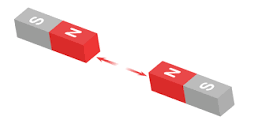
What will happen when these magnets are brought close together?
a)
They will attract each other.
b)
They will repel each other.
c)
Both magnets will turn to the left
d)
Both magnets will turn to the right
119.
Why does a compass needle point north?
a)
The compass is a bar magnet
b)
Because north is up
c)
Because it's magic
d)
It lines up with the Earth's magnetic field
120.
In which state of matter are molecules moving the slowest?
a)
solid
b)
liquid
c)
gas
d)
all of the above
121.
Gas particles are...
a)
tightly packed.
b)
loosely bonded and flowing.
c)
free to fly in all directions.
d)
so hot that the electrons are removed from the nucleus.
122.
Which best describes an inherited trait?
a)
a characteristic one chooses to express
b)
a characteristic one receives from the food one eats
c)
a characteristic that is passed on from one’s parents
d)
a characteristic that is influenced by one’s surroundings
123.
A dog sitting on command is an example of what type of trait?
a)
acquired trait
b)
inherited trait
124.
What process is being described by this diagram?
a)
adaptation
b)
digestion
c)
respiration
d)
photosynthesis
125.
Why are decomposers necessary in the food chain?
a)
They provide nutrients for plants.
b)
They photosynthesize.
c)
They are food for carnivores.
d)
They prey on herbivores.
126.
If a population of grizzly bears gradually increases over time, which of the following will most likely occur?
a)
The number of prey species will decrease.
b)
The size of the bear population will continue to increase.
c)
The bear population in that area will eventually die out.
d)
The number of prey species will increase.
127.
According to the energy pyramid, which of the following will most likely happen to the other organisms if all the harvest mice died?
a)
The number of hawks would decrease, and the number of insects would increase.
b)
The number of hawks would increase, and the number of insects would increase.
c)
The number of hawks would increase, and the number of insects would decrease.
d)
There would be no change in the rest of the chain.
128.
Which of the following food chains shows the correct energy flow from left to right?
a)
rabbit > owl > grass
b)
grass > rabbit > owl
c)
owl > rabbit > grass
d)
grass > owl > rabbit
129.
Which of these adaptations would help an animal survive a cold winter season?
a)
losing extra fat on the body
b)
shedding fur
c)
hibernating in a cave
d)
sweating to release heat
130.
Certain types of bacteria located in the human intestine are needed for proper digestion of food.  What does this suggest about bacteria?
a)
All types of bacteria are harmful to humans.
b)
Bacteria are only harmful when outside of the body.
c)
Some bacteria are necessary for survival.
d)
All bacteria are necessary for survival.
131.
People don't eat grasses, but grasses are still important to people.  Relating to the food chain, why are grasses important to people?
a)
People eat organisms that eat the grasses.
b)
Grass surfaces are safer than concrete.
c)
People use grass surfaces for recreation.
d)
Grass fields can't hide dangerous animals.
132.
Which of the following can destroy animal habitats but can also clear the way for new plant growth?
a)
earthquakes
b)
erosion
c)
floods
d)
forest fires