
 Worksheets
keystone cell review
Total questions: 20
Worksheet time: 1hrs 26mins

What cell process is best modeled by the diagram?
osmosis
exocytosis
passive transport
facilitated diffusion
Most prokaryotes and eukaryotes maintain a reserve of ATP. Which feature of prokaryotes and eukaryotes makes the ATP reserve necessary?
They have a cell membrane.
They can change over time.
They use energy to function.
They have the ability to reproduce.
Small structures made of rRNA and protein found in all cells. Site of protein synthesis.
Nucleus
Golgi Body
Ribosome
Vesicle
Which characteristic is shared by all prokaryotes and eukaryotes?
Ability to store hereditary information
Use of organelles to control cell processes
Use of cellular respiration for energy release
Ability to move in response to environmental stimuli
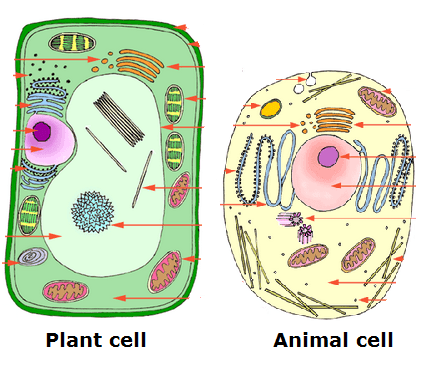
What distinguishes a plant cell from an animal cell? (How do you tell them apart) Hint: There's 3 ways (Check all 3)
Central Vacuole
Mitochondria
Cell Wall
Ribosomes
Chloroplasts

I decide what goes in and out of the cell. I am fluid like and found in BOTH plant and animal cells. I am a...
Cell Wall
Cell Membrane
Cytoplasm
Golgi Apparatus
Animal and Plant Cells are...
Shopkoytes
Eukaryotes
Prokaryotes
The building blocks of non-living things
What type of cell is an animal cell?
Prokaryotic
Eukaryotic
What type of cell is a plant cell?
Prokaryotic
Eukaryotic
What type of cell is a bacterial cell?
Prokaryotic
Eukaryotic
What is the smallest unit of an organism that can perform life functions?
Organ system
Organ
Tissue
Cell
All organisms are made of
organs
tissues
cells
A cell without a true nucleus
Prokaryotic
Eukaryotic
All cells have DNA,cytoplasm, ribosomes, and
Nucleus
Cell membrane
Golgi body
Endoplasmic Reticulum
Abiotic means
living
not living
almost living

This cell is a(n)
prokaryote
eukaryote

What does mitochondria do for the cell?
provides the cells energy
is the cell's control center
fills and supports the cell
Which statement best compares eukaryotic cells and prokaryotic cells?
Eukaryotic cells are smaller than prokaryotic cells.
Prokaryotic cells are more complex than eukaryotic cells.
Prokaryotic cells contain a distinct central organelle, and eukaryotic cells do not.
Eukaryotic cells contain membrane-bound organelles, and prokaryotic cells do not.

