
 Worksheets
Final Exam Review Part 1
Total questions: 20
Worksheet time: 12mins
What does 'Scoring' your script mean?
to mark it up in order to make specific choices about the way you are going to perform a character, using beats, emphasis, and action verbs
to rate your script from 1 to 10 based on how good you think it is
to give someone a rating on a performance
What marking means a 'short pause' in Script Scoring?
/
>
_
//
What is an Action Verb?
a short pause
tactics your character is taking
emphasis
a long pause
What is a 'beat' in Script Scoring?
a good rhythm in a song
a good rhythm in a monologue
Every time you pause, shift what you are feeling or thinking about, have a realization, or try a new tactic; that is a new beat.
every time you have a flashback in a monologue that represents deeper character
When Choosing a monologue for an audition, you should always choose something challenging.
True
False
When choosing material for an audition, try something you've never done before so that the judges can see your wide range!
True
False
Bunraku Puppetry Originated in which country?
China
Japan
Korea
Scotland
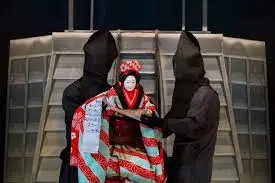
What kind of puppetry is being used in the picture?
Shadow
Rod and Arm
Marionette
Bunraku

What kind of puppetry is being used in the picture?
bunraku
hand
shadow
What are the Three Principles of Puppetry?
Breath, Timing, and Space
Breath, Focus, and Weight
Weight, Timing, Space
Timing, Focus, and Space
Which one of the following is NOT a form of puppetry?
Bunraku
Shadow
Marionettes
Pantomime
What is a slate?
a rock people use for decorative design
an introduction to a performance
an ending to a performance
When introducing a piece, you should always give credit to the person who wrote it.
True
False
Shakespeare created his own language. Which of the following IS NOT one of the words he created?
Aglet
Morrow
Prithee
Dost
A 'privy' in Shakespeare's language is what?
Bedroom
Flowers
Bathroom
Surprise


What are your articulators?
Lips
Teeth
Tongue
All of the above

