
NEW
Font size
 Worksheets
Cells, Microscopes, & Respiratory Quiz Review
Total questions: 30
Worksheet time: 42mins
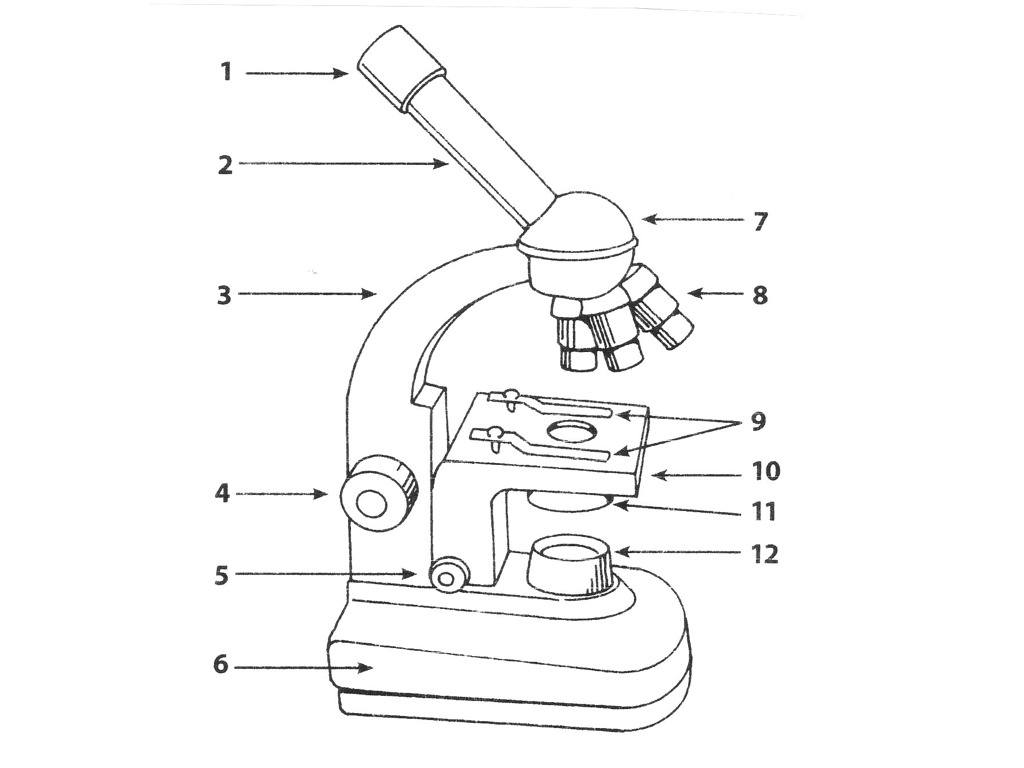


eye piece/ocular lens

What is the basic structural and functional unit of all living things?
atom
cell
bacteria
animalcules
Which statement was NOT included in cell theory?
All living things are composed of cells.
Living cells come only from other living cells.
Each cell contains a cell membrane, cytoplasm, nucleus, mitochondria, and endoplasmic reticulum.
Cells are the smallest structure of living things that can perform the functions necessary for life.
What is the basic structural and functional unit of all living things?
atom
cell
bacteria
animalcules
Large oval structure that acts as the control center of the cell, directing all of the cells’ activities
Vacuole
Ribosome
Golgi Apparatus
Nucleus
Rod-shaped organelles that convert energy in food molecules to energy the cell can use to carry out its functions
Mitochondria
Golgi Apparatus
Ribosomes
Endoplasmic Reticulum
Semipermeable membrane, surrounding a cell that controls what goes into and out of the cell
Cell Wall
Lysosome
Nucleus
Cell Membrane
___ is needed for cellular respiration, it is absorbed from the air.
oxygen
glucose
carbon dioxide
water
___ is needed for cellular respiration, it comes from food.
glucose
water
oxygen
carbon dioxide
The primary purpose of cellular respiration is to produce ___.
ATP
sugar
glucose
heat
Both ___ are leftover as waste products after cellular respiration.
water & carbon dioxide
oxygen & glucose
carbon dioxide & oxygen
water & oxygen
In the human body, our ___ system collects oxygen from the air.
respiratory
digestive
circulatory
nervous
In the human body, our ___ system moves our blood - which contains both glucose and oxygen - to every cell.
circulatory
digestive
respiratory
nervous

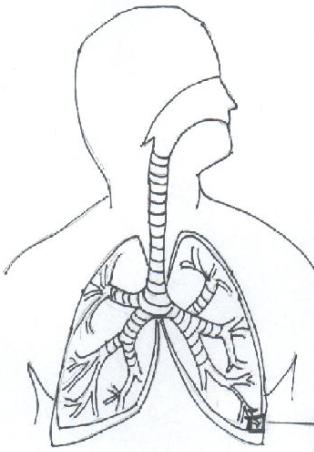

What is labeled F?
bronchioles
trachea
bronchi
diaphragm
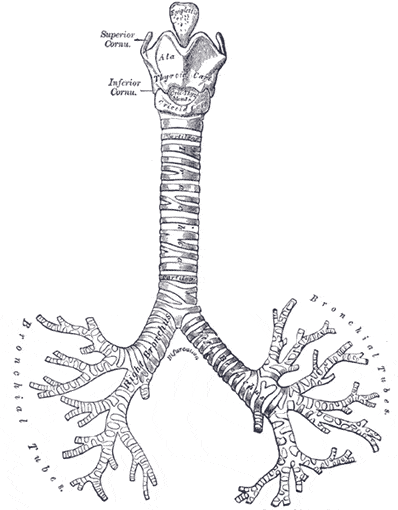
After the trachea divides into the left and right bronchi, these divide into smaller tubes called ____________ to bring air to the alveoli.
bronchioles
pharynx
capillaries
larynx
What is an infection of the main airways of the lungs (bronchi), causing them to become irritated and inflamed?
Bronchitis
Stroke
Heart Attack
Allergy

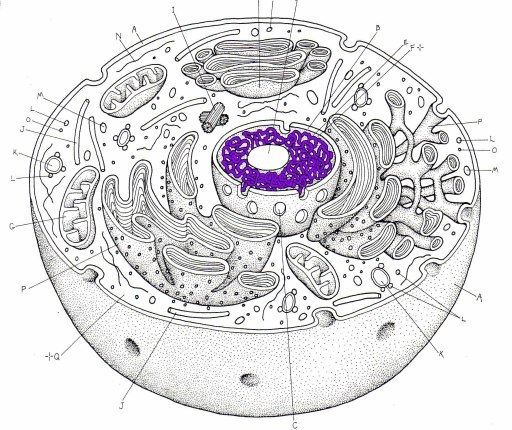
What kind of cell is in the diagram?
Eukaryotic
Prokaryotic

