
 Worksheets
Tue PT- Rocket Math and Stars
Total questions: 10
Worksheet time: 10mins
Identify the size of the following stars:
Supergiant is the (a)
Neutron star is the (b)
White dwarf is the (c) .
Match the appropriate definition with their answers.
When a supergiant explodes
a SUPERNOVA occurs
A supernova may leave behind a ___
Neutron Star
When the outer portion of a red giant expands and is blown away,
a WHITE DWARF is left behind
The most-massive stars may become ____
Black Holes
Check all that apply. Which statementS describe the death of stars?
A star’s final stages of life depend on its mass.
Stars die when they run out of fuel.
When a star starts to die, its core expands.
The outer portion of the star contracts.
All stars become black holes when they die.
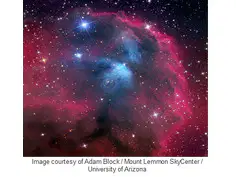
This image shows a nebula. What would most likely be found in a nebula?
a white dwarf
a neutron star
a protostar
a red giant

Reorder the stages of how stars are born
Stars are born in clouds of gas and dust called nebulas.
The gas and dust are pulled together by gravity.
The pulled-together cloud collapses and becomes hot and dense.
Heat and pressure cause nuclear fusion, which signals the birth of a star.star bith
The color and temperature of stars are closely related. Which color star is the hottest?
Yellow
Red
Blue
White
Check all that apply.Which statements describe properties of stars?
Stars produce energy through nuclear fusion.
Stars produce energy through gravity.
Stars are massive objects composed of gas.
Stars are solid objects that we could stand on.
Stars are composed primarily of hydrogen and helium.
If your rocket made 50 meters apogee in 9.8 seconds, what is the average velocity of your rocket? (round to the nearest tenths)

If the same rocket sped up to 5.1 m/s average velocity over 9.8 seconds, what is the average acceleration of your rocket? (round to the nearest hundredths)
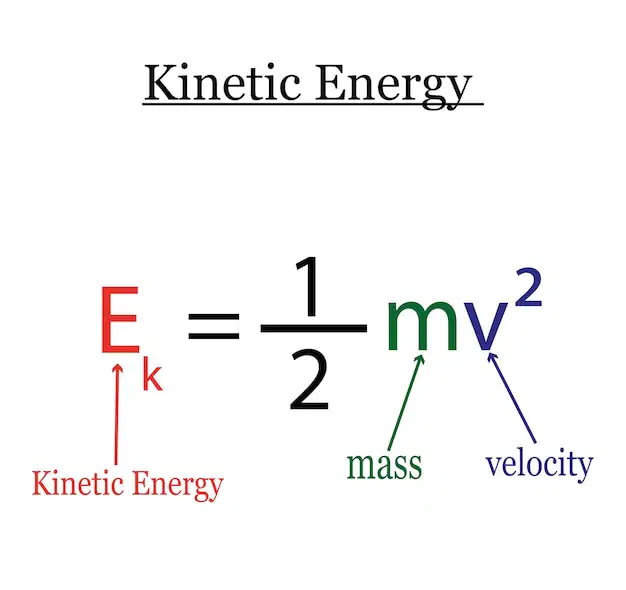
- Total liftoff mass of the same rocket=
60 g = 0.060 kg
- Maximum (average) Velocity of the rocket= 5.1 m/s
What is the max kinetic energy of the rocket right before landing?
(round to the nearest hundredths)

