
 Worksheets
Final Exam Review
Total questions: 25
Worksheet time: 13mins

The Three-Fifths Compromise at the Constitutional Convention concerned which of the following issues?
The establishment of upper and lower legislative bodies.
The manner in which bills and amendments would become law.
The portion of federal revenues that would come from large and small states.
The counting of slaves for purposes of determining representation and taxation.
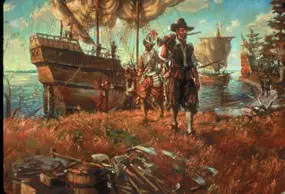
The first permanent English settlement was:
Plymouth
Jamestown
Pennsylvania
Boston

The Mayflower Compact was the first example of:
Democratic government
The Constitution of the United States
Representative government
Self-government

The importance of the Magna Carta was that it
Limited the power of the king.
Gave rights to all Englishmen.
Abolished slavery in the south.
Established the government of the U.S.

The economy of the New England Colonies was based on –
whaling
fishing
shipbuilding
all of the above.
Which of the following is not part of the New England colonies?
Massachusetts
Connecticut
Maryland
Rhode Island
The Judiciary Act of 1789-
Allowed the President to establish a Cabinet
Judged the efficiency of the President
Put a financial plan in place.
Established the court system.

The Middle Passage was-
The horrific journey the Pilgrims took to the New World.
The horrific journey the slaves took across the Atlantic Ocean.
The horrific journey the Pilgrims took across the Pacific.
The horrific journey the slaves took across the Pacific

An important political result of the American victory at the Battle of Saratoga was-
The British Parliament repealed the Navigation Acts.
German mercenary soldiers were hired by the British to fight.
American colonists acted to create the first national government.
European powers were convinced the Americans had a chance of winning.
Why did the Continental Congress create a national government with few powers under the Articles of Confederation?
George Washington refused to be crowned king.
States were allowed only one representative in the Confederation Congress.
Virginia did not want a national government to challenge its power among the states.
Revolutionary leaders were suspicious of a central government with too much power.
Someone who agreed to work without pay for a certain period of time in return for the payment of travel expenses was a(n)
slave
Indentured Servant
Debtor
tenant farmer
What are unalienable rights?
Rights that have been added as amendments
Rights that are specifically protected by the government.
Rights that the citizens have when traveling outside the country.
Rights that the government cannot take away without cause
Which is one way the Bill of Rights protects individual states?
States are guaranteed the same rights as the individual.
A republican system is guaranteed by the national government.
All power not granted to the national government is given to the states.
Individual states are granted representation in the national government.
Which principle of American democracy is traced to the English Bill of Rights?
Government should protect individual liberties of citizens.
Government should divide power among several branches.
Government should have a single person as a chief executive.
Government should have a representative body of the people.
How did Alexander Hamilton propose to pay off the Revolutionary War debt?
Raise money through taxes.
Sell bonds to foreign nations.
Borrow money from state banks.
Accept loans from private investors
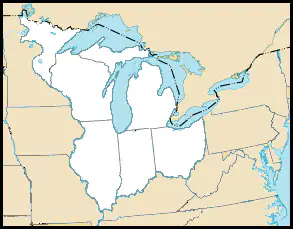
Which law passed under the Articles of Confederation allowed for the creation of new states and the expansion of the U.S.?
Judiciary Act
Louisiana Purchase
Northwest Ordinance
Land Ordinance

Which statement best explains Thomas Paine’s role in the growth of representative government in the colonies?
Paine’s Declaration of Independence stated that the colonies were no longer part of Great Britain.
Paine’s pamphlet Common Sense persuaded many colonists to support the struggle for the colonies’ independence.
Paine wrote a series of letters to the Committees of Correspondence, advocating independence for the colonies.
Paine’s pamphlet Common Sense encouraged the writers of the U.S. Constitution to include a Bill of Rights in the document.
The first political parties in the United States formed mainly in response to disagreements over-
Taxation without representation
The doctrine of judicial review
Territorial expansion to the west
The extent of federal power.
“I know too that it is a maxim (principle) with us, and I think it a wise one, not to entangle ourselves with the affairs of Europe…”
-Thomas Jefferson
Which document echoes the advice given by Thomas Jefferson in this statement?
Mayflower Compact
Declaration of Independence
Washington’s Farewell Address
John Adams’ Farewell Address
Congress passes a bill --> The President Vetoes the bill--> Congress overrides the veto.
Which principle of U.S. government is illustrated in the sequence shown above?
Judicial Review
Checks and Balances
Popular Sovereignty
Federalism

The Philadelphia Convention of 1787 was originally called to –
Create a new plan for the U.S. economy.
Write a new constitution for the United States.
Make changes to the Articles of Confederation.
Pass laws to prevent the states from raising taxes
What was a key foreign policy theme that George Washington established in his Farewell Address?
Maintaining good relations with American Indians.
Building a strong navy and permanent army.
Avoiding alliances with European powers.
Asserting presidential authority over foreign policy.
"The President... shall have power, by and with the Advice and Consent of the Senate, to make Treaties, provided two thirds of the Senators concur. -- U.S. Constitution, Article II, Section 2
This excerpt provides one example of which constitutional principle?
Federalism
Checks and balances
Popular sovereignty
Individual rights
Which of the following was a provision of the Northwest Ordinance (1787)?
An area would become a territory after 10,000 free male settlers moved to the area.
An area would become a territory after 50,000 free male settlers moved to the area.
After 60,000 free people moved to the territory, the territory could write a constitution and apply for statehood.
After a territory became a state, the people living there would decide whether slavery would be legal in the state.

The Columbian Exchange caused-
The exchange of animals, plants, culture and diseases between the American and Afro-Eurasian hemispheres.
The exchange of animals, plants, culture, and diseases between America and Asia.
The exchange of animals, plants, culture and diseases between America and Columbia.
The exchange of animals, plants, culture, and diseases between America and South America

