
NEW
Font size
S
M
L
XL
 Worksheets
Earth's History
Total questions: 18
Worksheet time: 9mins
Name
Class
Date
1.
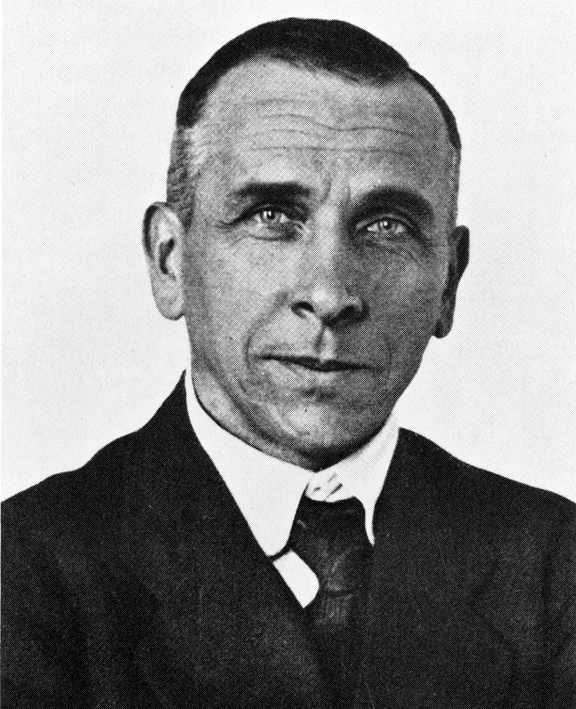
Who is the person credited with developing the theory of continental drift?
a)
Harry Hess
b)
Galileo
c)
Alfred Wegener
d)
Newton
2.
The supercontinent in the continental drift hypothesis was called ____.
a)
Panthalasa
b)
Pangaea
c)
Mesosaurus
d)
Africa
3.
What hypothesis states that the continents were once joined to form a single supercontinent?
a)
plate tectonics
b)
seafloor spreading
c)
continental drift
4.
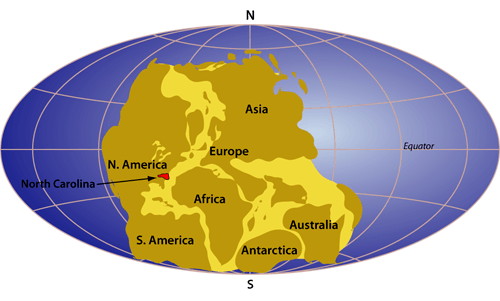
What is this a picture of?
a)
plate tectonics
b)
continental drift
c)
pangea
d)
glacier scaring
5.
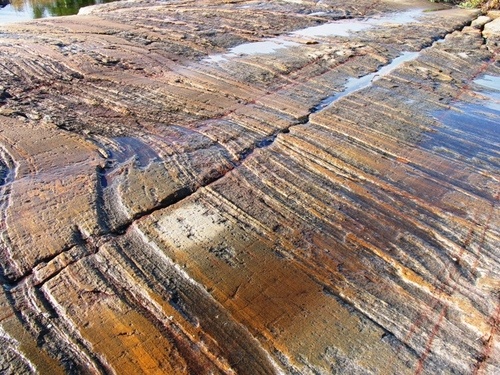
This is a picture of glacier scars found in Africa. What are these evidence for?
a)
Africa has always been near the equator
b)
Africa was once in an area of the Earth that had a very cold climate
c)
The continents have not moved
d)
sea floor spreading
6.
What is the area where two tectonic plates meet called?
a)
collision
b)
mid-ocean ridge
c)
a boundary
d)
a rift zone
7.
What type of boundary is formed when plates collide?
a)
convergent
b)
horizontal
c)
divergent
d)
transform
8.
What type of boundary is formed when plates separate?
a)
convergent
b)
horizontal
c)
divergent
d)
transform
9.
What type of boundary is formed when plates slide past each other?
a)
convergent
b)
horizontal
c)
divergent
d)
transform
10.
Why did no one believe Wegener's theory?
a)
He could not explain HOW the continents moved
b)
He didn't have evidence
c)
His data was wrong
d)
He didn't use the right technology to gather data
11.
Which type of plate boundary would cause folded mountains to form?
a)
transform
b)
convergent
c)
divergent
d)
subduction
12.
What are the two types of crust?
a)
continental and oceanic
b)
ocean and basin
c)
lower and upper
d)
thick and thin
13.
Earthquakes and volcanoes are most likely found in which locations?
a)
at plate boundaries
b)
in oceans
c)
in the middle of continents
d)
in the middle of plates
14.
Transform boundaries are most likely to produce what phenomenon?
a)
volcanoes
b)
deep sea trenches
c)
underwater mountain ranges
d)
earthquakes
15.
When an oceanic plate and a continental plate collide, which one will subduct?
a)
oceanic
b)
continental
c)
neither
d)
both
16.
According to Wegener's hypothesis of continental drift,
a)
Earth's surface is made up of seven major landmasses
b)
the continents DO NOT move
c)
Earth is slowly cooling and shrinking
d)
the continents were once joined together in a single landmass
17.
A rift valley forms at a
a)
convergent plate boundary
b)
divergent plate boundary
c)
transform boundary
d)
deep ocean trench
18.
A collision between two pieces of continental crust at a converging boundary produces a
a)
mid-ocean ridge
b)
deep ocean trench
c)
volcanic mountain range
d)
folded mountain range
Reset

