
Font size
 Worksheets
CUA #8 life cycle and adaptations
Total questions: 28
Worksheet time: 20mins
Which part of the life cycle produces the seeds?
leaves
stem
flower
roots

Which of the following best describes the life cycle of a turtle?
The turtle lays the egg and then transforms into an adult.
The turtle changes from a hatchling into an adult.
The turtle changes from an adult into a juvenile.
The turtle hatches from the egg and look like the parent growing bigger until it becomes an adult.
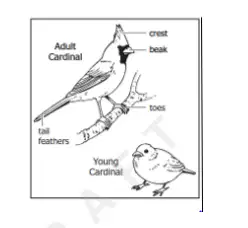
Which is one way the young male cardinal will change as it grows up?
Grow a pointed crest
grow more toes
Tail feathers become shorter
Beak will become narrow
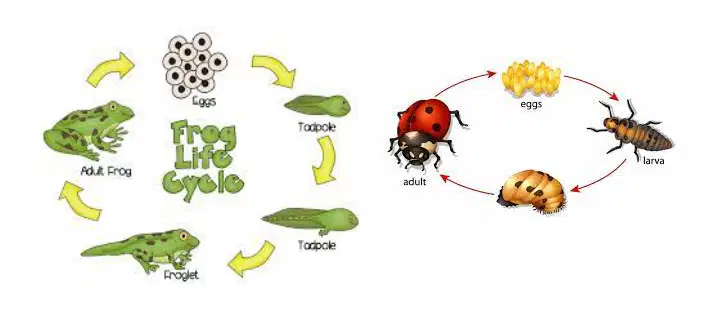
Which state of the Frogs life cycle is like the egg stage of the ladybug's life cycle?
They both have a pupa
They both are a larva
They both lay eggs
Nothing is the same
Many trees grow in a forest. Which of the following characteristics best help them get sunlight that they need to survive.
deep roots
great height
small leaves
light bark
Which part of the plant grows a new plant?
root
seeds
leaf
stem
Which of the following characteristics of a flowering plant helps them most for pollination by insects so that it can make new plants?
brightly colored flowers
deep roots
large leaves
long stem
In which of the following environments would the fur of a polar bear and arctic fox be an advantage that helps them survive and reproduce?
light brown sandy desert
green grassland
snowy tundra
green and brown forest
Which trait best help a a cactus conserve water in the dry climate of West Texas desert ecosystem?
sweet fruit
sharp spines
large flowers
waxy stem
Some animals have special structures for survival in the wetlands. Fish have fins to help them move through water. Birds have oily feathers to help them-
repel water
float in water
swim in water
move in water
Roots take in ________ and ________ from the soil.
sunlight and air
water and nutrients
food and air
wind and sun
What do flowers do?
produce seeds so that new plants can grow
take in water
just look pretty
hold the plant in place
Leaves ...
produce food through photosynthesis
produce seeds
carry water
produce trees
What part of the plant carries water?
Roots
Leaves
Flowers
Stem

The stages of an organisms life are known as its
life cycle
polination
heredity

Which stage of a butterfly's life cycle is pictured?
egg
larvae
adult
pupa

Which stage of the butterfly's life cycle is pictured?
larvae
egg
pupa
adult

Which characteristic helps this animal blend in with its surroundings?
camouflage
beak
blubber
The process of changing form or shape
Metamorphosis
Life Cycle
Pupa
Adult


Some grasses grow in hot dry areas. Why might they grow very deep roots?
to protect the plant from sun damage
to take in as much light as possible
to spread seeds to new places
to reach water that is underground
What would happen if all the flowers were removed
from a tomato plant?
The plant would not be affected.
The plant could not produce seeds.
The plant would skip some steps in its life cycle.
The plant would grow larger tomatoes.
How are frogs and butterflies alike?
They both turn into caterpillars.
They both eat fish.
They both start out as an egg
They both like to swim.

How is a seedling different from an adult plant?
A seedling does not have flowers or fruit.
A seedling does not have roots.
A seedling does not have a stem.
A seedling does not need sunlight to grow.

