
 Worksheets
Spring ACP Review Quizizz
Total questions: 53
Worksheet time: 46mins
The domain Eukarya has which kingdoms?
Archaea
Bacteria
Plantae, Animalia, Fungi and Protista
none of the above

Cells that do not have a true nucleus are called...
eukaryotic
prokaryotic
unicellular
multicellular
The following kingdoms contain organisms with eukaryotic cells.
Protista, Animalia, Plantae, Fungi
Animalia and Archaebacteria
Bacteria and Archaea
Fungi and Eubacteria
There are 3 domains: Archaea, Bacteria, Eukarya
True
False
Which of the following is NOT a characteristic of organisms in Kingdom Fungi
They are eukaryotes.
They are mostly multicellular organisms.
They include mushrooms, yeast, and mold.
They are autotrophic.
The cells of organisms in these two domains are prokaryotic:
Archaea and protista
Archaea and bacteria
Plantae and animalia
Bacteria and fungi
Which of the following is true of organisms in Kingdom Plantae. (Select all that apply.)
They are autotrophic.
They are prokaryotic.
They are multicellular.
They have cell walls.
Cells come from______.
other living cells
cytoplasm
organelles
prokaryotes
The cell theory states that_________
cells come from pre-existing cells
all organisms are made of cells
The cell is the basic unit of structure and function for living things
all of the above
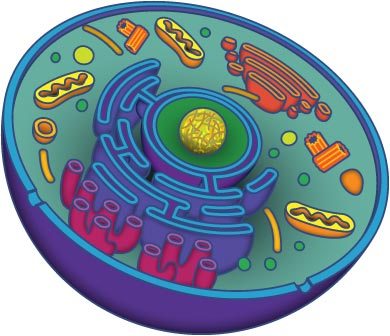
cells
tissues
organ
organ systems

Which word best describes the response the seedlings are showing?
homeostasis
geotropism
hydrotropism
phototropism
What is homeostasis?
changes in a species over time
the response of an organism to a stimulus
the ability of an organism to reproduce
the balance in an organism's internal environment
An example of an internal stimulus is
thirst
temperature
light
noise
Hunger, thirst, fever, and sleepiness are what type of stimulus?
external
internal
When roots of a plant grow downward in response to the stimulus of gravity, it is called...
phototropism
geotropism
thigmotropism
homeostasis
An example of an internal stimulus would be...
A rabbit sees a fox in the distance.
A rabbit is hungry.
A rabbit hears a bird in a tree.
An example of an external stimulus would be...
You are thirsty.
You are hungry.
You feel tired.
You are cold on a winter day.
Identify the stimulus..."A loud noise causes you to cover your ears"
A loud noise
You cover your ears

Identify the stimulus..."A person shivers because it is cold outside"
Cold temperature
A person shivers
Is the stimulus internal or external? Feeling hungry
Internal
External

Identify the tropism in the picture.
Geotropism
Thigmotropism
Hydrotropism

Identify the tropism in the picture.
Hydrotropism
Phototropism
Gravitropism
Thigmotropism
What two organelles are in a plant cell but not in an animal cell? Select all that apply.
Cell Wall
Ribosomes
Nucleus
Chloroplast
What is the function of the vacuole?
Gel-like fluid that supports the cell
Place where materials are processed and moved around the cell
Storage space for water, waste, and food
Helps maintain shape and structure

What organelle is Number 1 pointing to?
Vacuoles
Cytoplasm
Golgi Bodies
Cell Wall
The structure that surrounds the cell and regulates which molecules can enter or leave the cell is called the
vacuole
endoplasmic reticulum
cell membrane
chloroplast
This structure in plants uses light energy from the sun to form sugars during the process of photosynthesis
vacuole
lysosome
ribosome
chloroplast
Which of the following best describes a comet?
It is made of ice, rock, and dust.
It is located between Mars and Jupiter
It has a short elliptical orbit
It is known as a "shooting star"
Where is the asteroid belt located?
Between Earth and Mars
In the Kuiper belt
Between Mars and Jupiter
Beyond the Oort cloud

A _____ travels through Earth's atmosphere at very fast speeds and appears as a "shooting star."
Meteoroid
Meteorite
Meteor
Comet
What force keeps the planets in an orbit around the sun?
Electricity
Solar power
Inertia
Gravity
Choose the best description for a meteoroid.
Burns up while entering Earth's atmosphere
Hits Earth's surface
Still in space
Choose the best description for a meteor.
Still in space
Burns up in Earth's atmosphere
Hits Earth's surface
Choose the best description for a meteorite.
Still in space
Burns up in Earth's atmosphere
Hits Earth's surface
What is the main function of the circulatory system?
Movement
to remove waste
action and senses
Transport blood through your body
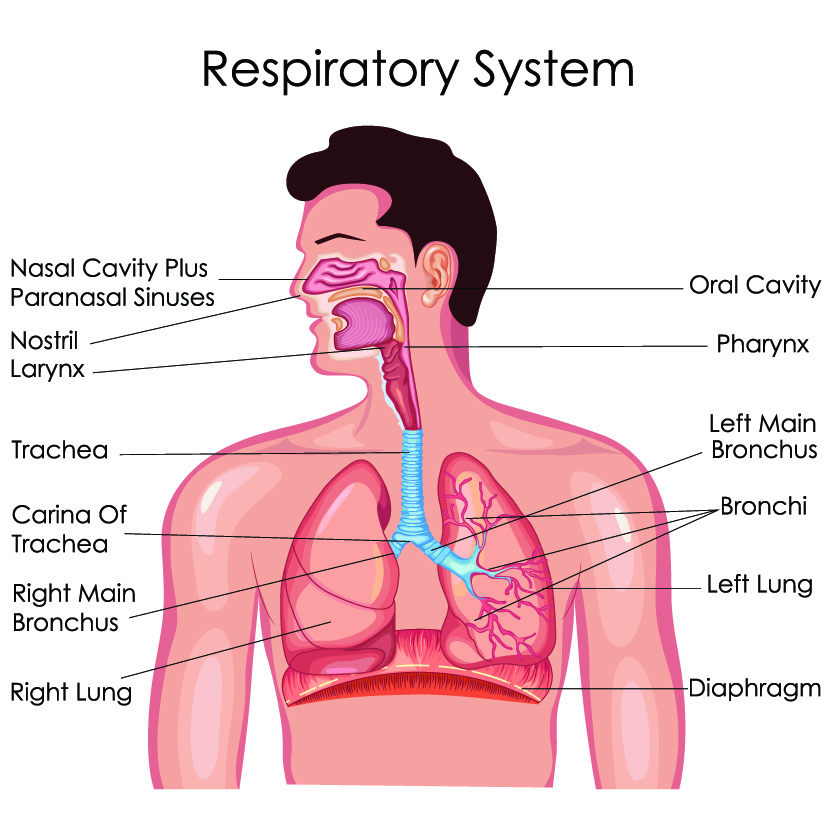
Which body system is responsible for bringing oxygen into your body and removing carbon dioxide?
circulatory system
excretory system
skeletal system
respiratory system
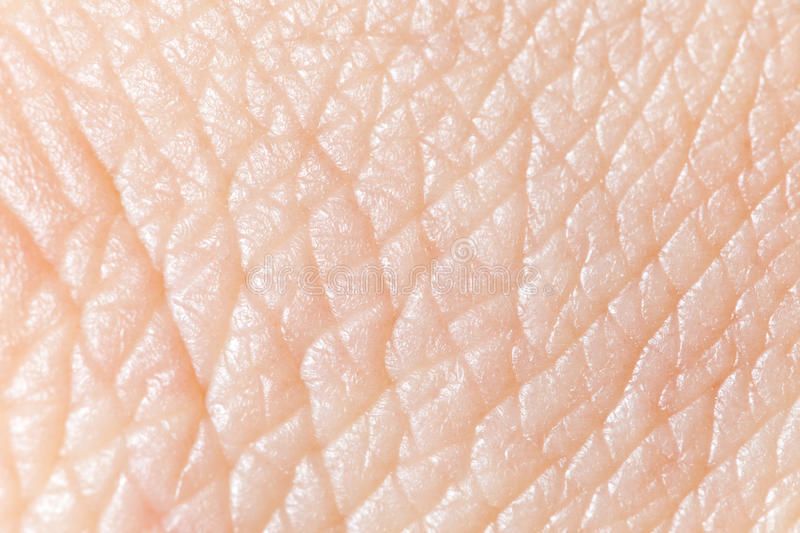
Define tissue.
A group of cells that work together to perform a specific function.
A living thing
responsible for filtering your blood, removing wastes, and heating and cooling your body.
A group of tissues that work together to perform a specific function.
Aa, DD, Bb, yy are all examples of
genotypes
phenotypes
the alphabet
One version/form of a gene is called_______________
a DNA
a phenotype
a trait
an allele
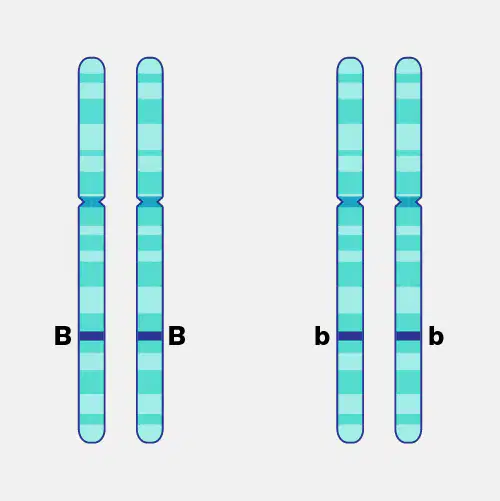
When there are two of the same alleles in gene pair, such as BB or bb
homozygous
heterozygous
mutation
codominance
An organism's allele combination/genetic makeup is known as its _____________________.
phenotype
mutation
hybrid
genotype
What is an acquired trait?
A trait that you have to buy from a store
a feature that an organism develops over its lifetime due to an experience/the environment
a feature passed down from parents to offspring that an organism is born with
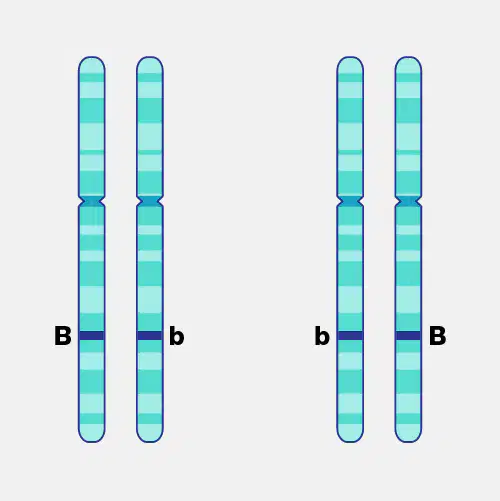
When there are two different alleles in a gene pair, such as Bb or Rr
Homozygous
Heterozygous
Dominant
Recessive
A version of a gene that always appears because it masks the other version of the same trait; represented by a capital letter
dominant allele
recessive allele
purebred
hybrid
A version of a gene that only appears when it is the only version present on a gene pair; represented by a lowercase letter
dominant allele
recessive allele
purebred
hybrid

