
Font size
 Worksheets
HS Physics DO NOW Electric Fields
Total questions: 12
Worksheet time: 8mins
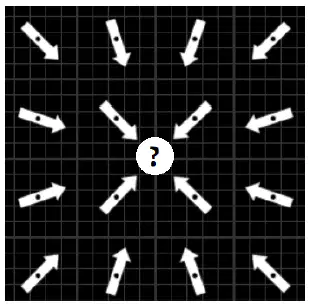
Which charge is shown in the diagram?
positive
negative
neutral
may be positive or negative
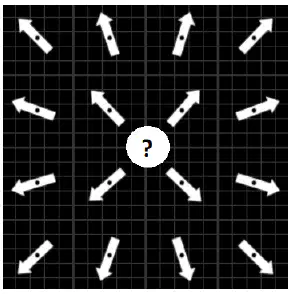
Which charge is shown in the diagram?
positive
negative
neutral
may be positive or negative

What is the charge of the sensor?
positive
negative
neutral
may be positive or negative
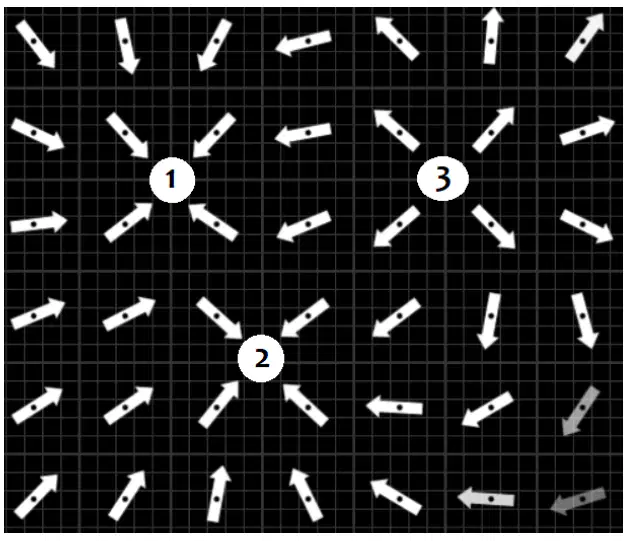
What types of charges are 1, 2, and 3 as shown?


Which observations are correct? Select all that apply.
As the distance increases, the force on the sensor decreases.
As the distance increases, the force on the sensor increases.
As the distance increases, the electric field strength decreases.
As the distance increases, the electric field strength increases.
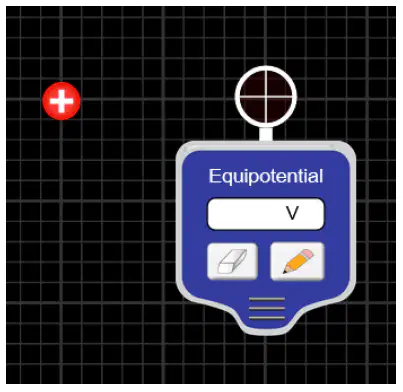
Start with a positive charge and use the equipotential meter to measure the values at various distances from the positive charge. Which observations are correct? Select all that apply.
As the distance from the charge increases, the electric potential increases.
As the distance from the charge increases, the electric potential decreases.
As the amount of charge increases, the electric potential at the same distance increases.
As the amount of charge increases, the electric potential at the same distance decreases.
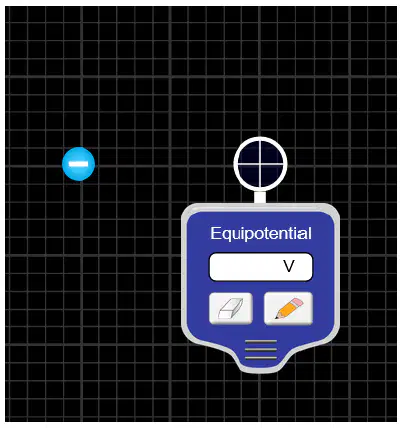
Start with a negative charge and use the equipotential meter to measure the values at various distances from the negative charge. Which observations are correct? Select all that apply.
As the distance from the charge increases, the electric potential increases.
As the distance from the charge increases, the electric potential decreases.
As the amount of charge increases, the electric potential at the same distance increases.
As the amount of charge increases, the electric potential at the same distance decreases.
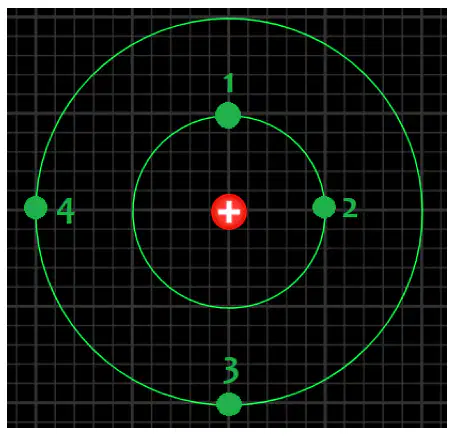
Click the pencil on the equipotential meter to create the arrangement as shown.
For the given arrangement, which statements are correct? Select all that apply.
The potential at 4 is equal to the potential at 3.
The potential at 4 is equal to the potential at 2.
The potential at 1 is equal to the potential at 3.
The potential at 1 is equal to the potential at 2.
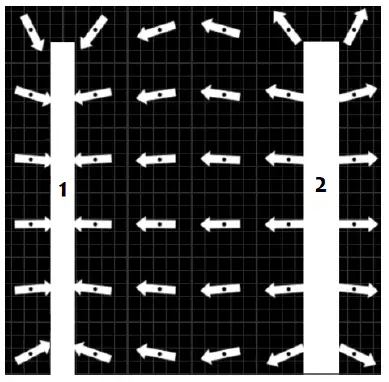
For the arrangement shown, what are the charges of 1 and 2?


For the arrangement shown, what happens to the potential as the meter moves from 1 to 2?
increases
decreases
stays the same
There is no pattern.
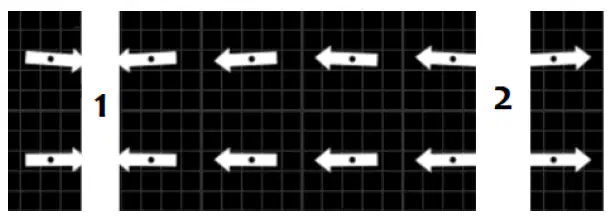
Research: The electric field lines between 1 and 2 are nearly parallel to each other.
What does it mean if the electric field lines are parallel as shown? Select all that apply.
The electric charges of 1 and 2 are equal.
The electric potential is constant.
The electric field is constant.
The electric force on a sensor is constant.
Research: The electric field lines between 1 and 2 are nearly parallel to each other.
Which device has such arrangement?
battery (dry cell)
resistor
lamp
capacitor

