
 Worksheets
T4.Light Assessment2
Total questions: 25
Worksheet time: 45mins
Q. After World War II, dramatic political changes began to take place across the world. This was especially the case with (a) .
Q. Growing nationalism led to the founding of two nationalists groups, the primarily Hindu Indian National Congress or Congress party in 1885 and the Muslim League in ______
1906
1916
1917
1909

Read the story. Summarize what is happening by using specific vocabulary words from Module 30. Use at least 3 key terms that you defined into summary. (summray should be 3-4 sentences)
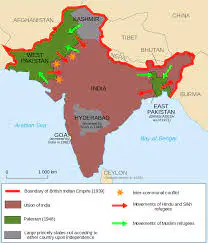
Q:Module 30. Lesson 1. This is India during 1940s. Explain geographically what are the disadvantages that India might have due to its geographic location. You must use your critical thinking skills for this question by using HIPPO writing format.
________becomes the first prime minister of independent India
Jawaharlal Nehru
Masamata Ghandi
Rajvi Ghandi
Indra Ghandi
According to Module 31.3, economic stagnation means a 'stuck' economy. Give an example of a country where it had economic stagnation and 'how' it became one. (3-4 sentences)
Glasnost means...
policy that promotes and encourage social and economic change
policy that promotes leaders to suppress
policy that promotes to open expression of opinions
policy that promotes churches to do more missions
Choose the best answer from Module 31.2. According to democracy in Africa, there was a high demand and supply for 36 African countries in 2014 and 2015, the period of colonial rule in Africa prevented...
countries from modernizing and exacerbated ethnic and racial tensions
countries to grow demand and supply
countries were highly suffering due to war
countries were slowly creating peace
According to Module 31.2, choose the best answer.
Q: Europeans established colonial borders and it made 2 problems. Select the best 2 problems.
1. divided ethnic/cultural groups
2. put different groups together
1. divided women/men
2. divided ethnic groups
1. divided cultural aspects and beliefs
2. divided women/men
1. divided freedom of choice
2. divided rival groups together
What countries had to take up arms against European rulers?
Kenya & Algeria
Mexico & Canada
Russian & Germany
Thailand & Japan
When did the African push for independence begin?
before WWII
after WWII
before the Civil War
after the Civil War
Kwame Nkrumah
President of Burma
leader of the socialist movement
President of Ethiopia
leader of the largely nonviolent movement
Kwame Nkrumah organized__________
concerts in the park.
strikes and boycotts.
rallies and protests.
his bookshelf.
Which European country ruled Kenya?
Germany
Austria
Britain
U.S.
Jomo Kenyatta
a Kenyan nationalist
an Algerian nationalist
a Ghanaian nationalist
a Japanese nationalist
MAU MAU was a secret society.
TRUE
FALSE
When did the British grant Kenya independence?
1863
1963
2001
2009
A major factor in the development of 20th–century nationalist movements throughout Africa was a common
language throughout most of Africa
goal to end European rule in Africa
ethnic bond among the people of
sub-Saharan Africa
religion throughout most of Africa
The current political boundaries of African nations have been most influenced by
the topographic features of the continent
the patterns of European colonialism
traditional African language groups
The location of ancient African tribal kingdoms
The most significant occurrence in Africa since 1950 has been the
decrease in the birthrate in most nations
decline of European colonialism
unification of East African nations
establishment of communist regimes in most nations
In the early days of independence, a major problem for many African nations was a
shortage of skilled technical workers
scarcity of natural resources
lack of water for hydroelectric power
reluctance to accept economic aid from the United Nations
Some African nations have maintained close relationships with their former colonial rulers primarily because
economic and cultural ties remain strong
African leaders are unwilling to tackle problems on their own
outside nations do not provide assistance to African nations
most Africans want to keep their dual citizenship

