wayground logo

Free Printable Worksheets

Font size

S
M
L
XL
Worksheets

Biology Practice Test

Total questions: 27

Worksheet time: 31mins

Name
Class
Date
1.

The enzymes that create DNA molecules by assembling nucleotides

a)

Helicase

b)

DNA Polymerase

c)

Primase

d)

RNA Primer

2.

Where do replication begins

(a)  

3.

Which RNA bring amino acids from the cytoplasm to the ribosomes

a)

mRNA

b)

tRNA

c)

rRNA

4.
The enzyme that unwinds the DNA to prepare for replication
a)
helicase
b)
replicase
c)
polymerase
d)
synthase
5.
Which enzyme fixes the Okazaki fragments in the lagging strand?
a)
Helicase
b)
Polymerase
c)
Ligase
d)
Primerase
6.

Where does DNA replication occur?


(a)  

7.
Where the better adapted organisms survive to pass traits along to offspring.
a)
Evolution
b)
Natural Selection
c)
Extinction
d)
Artifical Selection
8.
Why are advantageous traits more likely to be passed onto offspring?
a)
Because they are more likely to survive and reproduce.
b)
Because they come from dominant alleles.
c)
Because they come from recessive alleles.
d)
Because the trait is an acquired phenotype.
9.
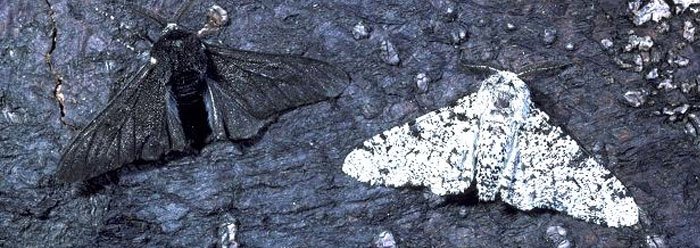
The trees these moths used to live on were white, but have been covered in soot from coal factories. Which moth will be more successful in this environment?
a)
Dark moth
b)
Light moth
c)
Both will be equally successful
d)
Neither will be successful
10.
The picture shows the members of the Camelidae family. The physical features and the geographical origin of these animals provide evidence that - 
a)
they live in the same type of environment.
b)
have slowly evolved to become herbivores.
c)
have a common ancestor.
d)
exchanged DNA in the past.
11.
In recent years "SuperBugs" (bacteria that aren't effected by antibiotics) are becoming more and more common. How could natural selection explain this?
a)
Superbugs survive antibiotics and reproduce
b)
Antibiotics cause bacteria to become superbugs
c)
We have always had the same amount of superbugs; modern media just discusses them more.
d)
There is no reliable data on the origin of super bugs.
12.
What process does a multi-cellular organism use to replace its damaged body cells?
a)
mitosis
b)
meiosis
c)
replication
d)
transcription
13.
Identify the stage of mitosis.
a)
interphase
b)
prophase
c)
metaphase
d)
anaphase
14.

What is the name of the Belgium scientist who first discovered meiosis in 1883?

a)

Edouard van Beneden

b)

Gregor Mendel

c)

Aristotle

d)

Rosalind Franklin

15.

What type of evidence is shown in the image above?

a)

Fossils

b)

Vestigial structures

c)

Homologous Structures

d)

DNA

16.
Which of the following units are repeatedly joined together to form a strand of DNA? (This is the MONOMER of DNA.) 
a)
amino acids
b)
nucleotides
c)
fatty acids
d)
polysaccharides
17.
What are the 4 nitrogen bases?
a)
adenine, thymine, cytoplasm, and guanine
b)
adenine, thymine cytosine, and guanine
c)
adenine, thymine, cytosine, and gylcerol
d)
adenine, thymine, cytosine, and glucose
18.
A process in which DNA has the unique ability to make an exact copy of itself.
a)
Replication
b)
Translation
c)
Transcription
19.
Which organelle is DNA usually found in?
a)
cell membrane
b)
vacuole
c)
chloroplast
d)
nucleus
20.
DNA replication produces two identical strands of DNA.
a)
True
b)
False
21.
DNA holds the code for
a)
lipids
b)
carbohydrates
c)
protein
d)
sugar
22.
original chromosome
ABC-DEF
mutated chromosome
AC-DEF
This is a _____________ mutation.
a)
frameshift
b)
point
c)
deletion
23.

Mutations can be negative because

a)

They can cause cancer

b)

They can cause birth defects

c)

They can help an organism thrive in its environment.

d)

They can affect offspring.

24.

A mutation is defined as:

a)

A change in the cell's structure

b)

Anything that changes in an embryo

c)

Any change in the physical features of a human

d)

A change in the DNA sequence

25.

This type of mutation involves inserting a piece of DNA where it does not belong. Known as a frameshift mutation.

a)

Substitution Mutation

b)

Deletion Mutation

c)

Insertion Mutation

26.

Another name for a point mutation is:

a)

Substitution

b)

Frameshift

c)

Insertion

d)

Deletion

27.

Which statement best defines a mutation?

a)

a physical trait that negatively impacts the organism

b)

an adaptive trait that allows the individual to be better fit for survival

c)

a change in the order, number, or type of bases in the genetic code

d)

an identical copy of the original DNA strand