
 Worksheets
Recap Quiz
Total questions: 126
Worksheet time: 2hrs 22mins

The concorde was a supersonic jet joint-developed by France and Great Britain in 1976.
The concorde could fly between New York and London in only 2.55 hours. These two cities are at opposite sides of the Atlantic Ocean, 5567 kilometres away.
Calculate the maximum speed of the concorde.
(a)
The concorde was a supersonic jet joint-developed by France and Great Britain in 1976.
It had a maximum speed of 2179 km/h. If the distance between New York and London is 5567 km, how long would it take to travel between the two cities?
(a)
The concorde was a supersonic jet joint-developed by France and Great Britain in 1976.
It had a maximum speed of 2179 km/h. If the concorde took 2.55 hours to travel between New York and London, calculate the distance between the two cities (in kilometres).
(a)

Cheetahs are the fastest land animal on Earth. If a cheetah covered a distance of 400 metres in 14.705 seconds, calculate its speed.
Give your answer to one decimal place.
(a)
Cheetahs are the fastest land animal on Earth. However, they can only maintain their top speed of 27 m/s for a few seconds. Calculate how far a cheetah could run in 3 seconds.
Round your answer to the nearest whole number (zero decimal places).
(a)
Cheetahs are the fastest land animal on Earth. If a cheetah covered a distance of 400 metres in 14.705 seconds, calculate its speed in kilometres per hour.
Round your answer to the nearest whole number (zero decimal places).
(a)

Peregrine falcons are the fastest animals on Earth, with a maximum dive speed of 389 km/h. They also like to nest on top of buildings.
Assuming they could accelerate to their top speed instantly, how many seconds would it take for a falcon nested on top of the burj khalifa (830 metres tall) to reach the ground?
Give your answer to two decimal places.
(a)
Peregrine falcons are the fastest animals on Earth, with a maximum dive speed of 389 km/h. They also like to nest on buildings.
Assuming they could accelerate to their top speed instantly, if a falcon had nested on the
burj khalifa and took 6.5 seconds to reach the ground, how high up had the falcon nested?
Give your answer to 1 decimal place.
(a)
Peregrine falcons are the fastest animals on Earth. They also like to nest on buildings.
Assuming they could accelerate to their top speed instantly, if a falcon had nested on top of the
burj khalifa (830 metres above ground) it and took 7.68 seconds to reach the ground, determine the falcons top speed.
Give your answer to 1 decimal place.
(a)

If light travels at a speed of 3x10⁸ ms-1, and the circumference of the Earth is 40,075 km, calculate the time it takes light to travel once around the Earth.
Give your answer to two decimal places.
(a)
If light travels at a speed of 3x10⁸ ms-1, and the circumference of the Earth is 40,075 km, how many complete trips around the Earth could light make in one second?
(a)
The circumference of the Earth is 40,075 km. If light could travel around the planet 462 times in one minute, calculate the speed of light.
Give your answer to one decimal place. Use the correct units. Do not include commas in your answer.
(a)

Usain Bolt currently holds the record for being the fastest man in history. In 2009 he broke a world record when he ran 100 metres in only 9.58 seconds.
Calculate Usain Bolt's top speed. Give your answer to two decimal places.
(a)
Usain Bolt currently holds the record for being the fastest man in history. In 2009 he broke a world record when he ran the 100 metres with an average speed of 10.44 m/s.
Calculate Usain Bolt's time to complete the race. Give your answer to two decimal places.
(a)

ThrustSCC is the car which holds the current land speed record at 1227.985 km/h.
If this car was to travel between Abu Dhabi and Dubai, with a distance of 139.4 km, how long would the journey take?
Give your answer to one decimal places.
(a)
The car in the picture holds the land speed record for fastest vehicle.
If this car was to travel between Abu Dhabi and Dubai, with a distance of 138.7 km and the journey lasted 7 minutes, how fast was the car travelling in km/h?
Give your answer to one decimal place.
(a)

Voyager 1 is the furthest man-made object from Earth, and was sent into space on the 5th September 1977.
In summer 2022 it has now been 16,369 days since the spacecraft was launched, and it has been travelling at a speed of 17 km/s. How far away is Voyager now?
Do not include commas in your answer, and write the full answer.
(a)

The voyager 1 satellite is the fastest man-made object ever created.
If it travelled 1,468,800 kilometres in one day, calculate its speed in m/s.
Do not include commas in your answer.
(a)

A train travels 25 km in 0.5 hrs. How fast is the train going?
25 miles/hr
5 miles/hr
125 km/hr
50 km/hr


75 m
3 m
20 m

A bat flies for 400 seconds, and has a distance of 100 meters. What is the speed of the bat?
100 m/s


Describe the motion in the graph:
Constant Speed (positive slope)
Stopped (at rest)
Acceleration (increasing speed)
Return Home (negative slope)

Describe the motion in the graph:
Constant Speed (positive slope)
Stopped (at rest)
Acceleration (increasing speed)
Return Home (negative slope)

Describe the motion in the graph:
Constant Speed (positive slope)
Stopped (at rest)
Acceleration (increasing speed)
Return Home (negative slope)

Describe the motion in the graph:
Constant Speed (positive slope)
Stopped (at rest)
Acceleration (increasing speed)
Return Home (negative slope)

Describe the motion in the graph:
Constant Speed (positive slope)
Stopped (at rest)
Acceleration (increasing speed)
Return Home (negative slope)

Describe the motion in the graph:
Constant Speed (positive slope)
Stopped (at rest)
Acceleration (increasing speed)
Return Home (negative slope)


In which of the following graphs below are both runners moving at the same speed?


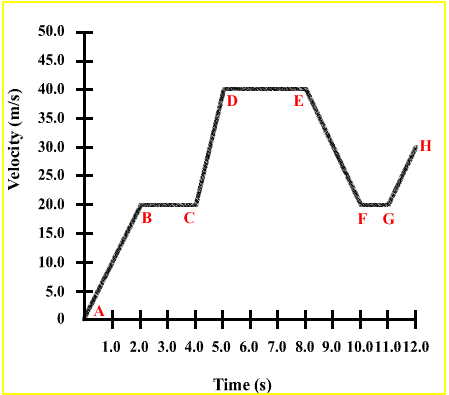

The gradient of a velocity-time graph represents (a) .
The area under a velocity-time graph represents (a) .

Calculate the distance travelled in section B.
(a)

Calculate the distance travelled in section C.
(a)

Explain the motion from 0-1s
Stationary
Constant speed
Constant acceleration
Non-constant acceleration
Explain the motion from 1-3s
Stationary
Constant speed
Constant acceleration
Non-constant acceleration
Explain the motion from 3-5s
Stationary
Constant speed
Constant acceleration
Non-constant acceleration
Explain the motion from 5-7s
Stationary
Constant speed
Constant acceleration
Constant deceleration
Explain the motion from 8s onwards. The blue line runs along the x-axis. Hint: What is the velocity from 8s onwards.
Stationary
Constant speed
Constant acceleration
Constant deceleration

Where is the acceleration the highest?
0-1s
1-3s
3-5s

Explain the motion
Stationary
Constant speed
Constant acceleration
Non-constant acceleration
The acceleration from 0-1s is (a) m/s2.
The acceleration from 3-5s is (a) m/s2.
The deceleration from 5-7s is (a) m/s2.
Calculate the total distance traveled in the first 1s.
(a)
Calculate the total distance traveled in the first 3s.
(a)
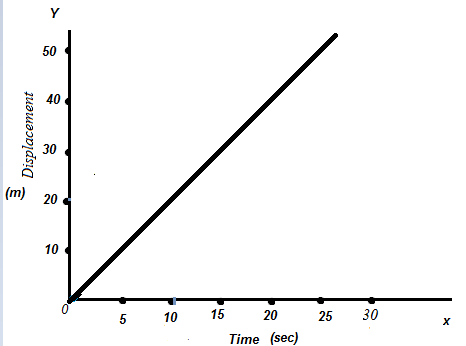
What is shown in this displacement vs time graph?
uniform velocity
uniform speed
no speed (at rest)
acceleration
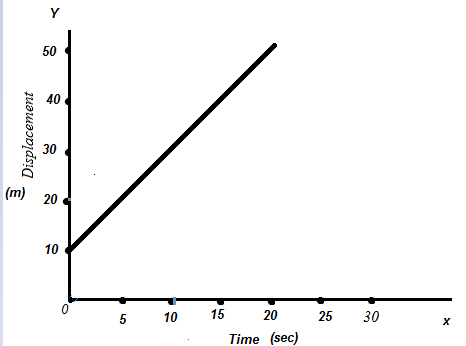
What is shown in this graph?
uniform velocity and initial displacement 10m
uniform velocity and initial velocity 10m
acceleration
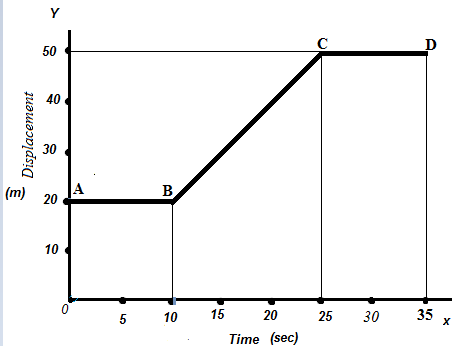
What is happening between B and C in this graph?
constant acceleration
uniform velocity
at rest
What is happening between C and D in this graph?
constant acceleration
uniform velocity
at rest
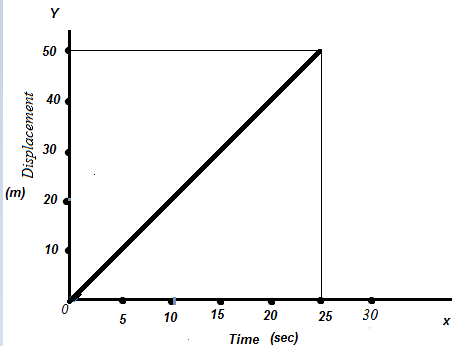
Find the velocity from the given graph.
2 m/s
21 m/s
100 m/s
-2m/s
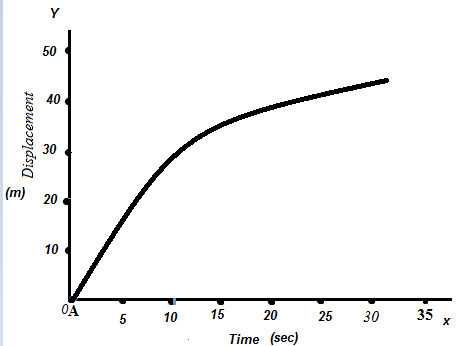
what is shown in this graph?
negative velocity
positive velocity
negative acceleration deceleration
positive acceleration
Calculate the displacement traveled in section C. Hint: Remember the area under a v-t graph = displacement and you will need to use TWO shapes!
200 m
100 m
50 m
400 m

Select the description of motion from A - B.
Slowing down away from the origin
Speeding up away from the origin
Constant velocity away from the origin
Constant velocity towards the origin

What segment of the graph shows no motion, or standing still?
A - B
B - C
C - D
None
What does a horizontal line (not on the x-axis) mean on a V-T graph?
No movement
Constant velocity
Changing velocity
Change in direction
Calculate the displacement traveled in section D. Hint: Remember the area under a v-t graph = displacement!
250 m
50 m
100 m
200 m
150 m
Calculate the displacement traveled in section A. Hint: Remember the area under a v-t graph = displacement!
75m
50 m
100 m
125 m
150 m
A force is a _____
push
pull
Both push and pull
Object
When we throw anything in air it always falls down because of _____
Friction
Gravity
Solid
motion
If negative charge is developed on two objects they will__
attract each other
repel each other
Which force acts backwards and prevent us form slipping on a wet floor?
Gravitational force
Magnetic force
Frictional force
Electrostatic force
In what condition the magnetic poles attract each other?
South-South
North-North
North-South
All of the above
When you rub your hand heat energy is generated because of _____
Magnetism
Muscular force
Electrostatic force
Friction

What force ultimately slows the roller coaster to a stop?
Applied
Normal
Friction
Gravitational


Rina’s mother asked her to help move some items from the hall closet to the garage. One item she wanted to move was a large box of old school books. Rina tried to lift the box, but could not pick it up. What force was Rina NOT able to overcome?
frictional force
gravitational force
applied force
normal force
Leanna decided to rearrange her bedroom by moving her dresser to the opposite wall. She tried pushing it, but found that the dresser would not move. What force was Leanne NOT able to overcome?
normal force
gravitational force
tension force
frictional force
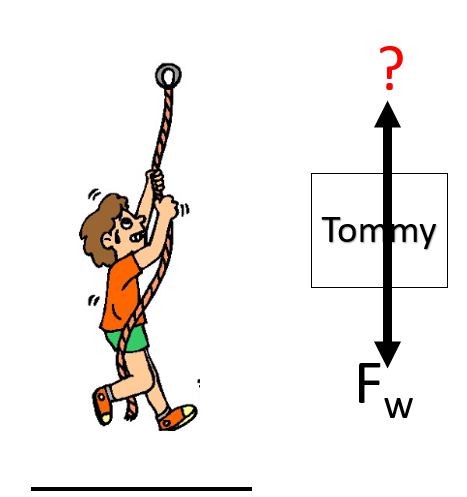
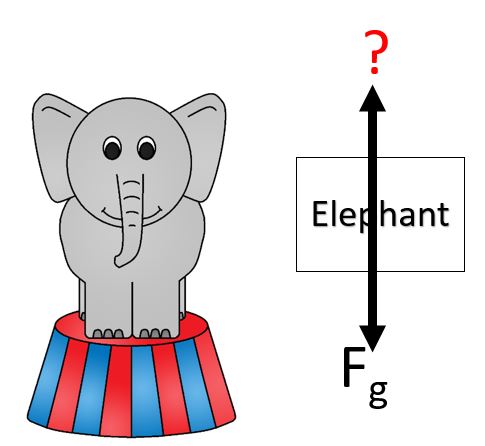


What type of friction is not moving?
static
kinetic
fluid

How do the magnitudes of static and kinetic friction compare?
They are equal
The magnitude of kinetic friction is greater
The magnitude of static friction is greater


Sarah pulls a wooden block along a smooth surface using a spring balance.
If she repeats the experiment on a rough surface, what will happen to the reading on the balance?
It will be higher.
It will be lower.
It will stay the same.

The image shows three road surfaces. Which of these surfaces would cause the lowest amount of friction?
A
B
C

This is a spring balance.
A spring balance is an instrument used to measure ____
Length
Volume
Temperature
Mass
Force
What unit does the instrument used to measure friction use?
Centimetres
Amperes
Degrees Celsius
Kilograms
Newtons

Which of the following materials causes the most friction?
A
B
C
Which of the following materials causes the least friction?
A
B
C

Which surface affects the amount of friction?
A) Both the spring balance and the wooden block
B) Both the wooden block and the table
C) The wooden block only
D) The spring balance only
E) The table only

Ice skates have smooth metal blades underneath them.
What is the purpose of this metal blade?
It improves the balance of the skater.
It decreases the weight of the skater.
It increases friction between the skater and the ice.
It decreases friction between the skater and the ice.

Driving in the rain can be more dangerous than driving in dry weather.
Why is this the case?
There is no friction.
There is less friction.
There is more friction.
There is the same amount of friction.
he rougher the materials, the __ the amount of friction between two surfaces.
Smaller
Lower
Faster
Larger


What is being exerted on the soccer ball by the player?
Gravity
Air Resistance
An Unbalanced Force
A balanced Force


Which set of students represent forces that have to be added together to get the net force?
A
B
C
All must be added

If the net force of this combination is changed to 5 N to the right which arrow would need to be drawn with more length?
Blue
Red

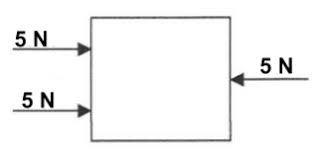
Is the net force balanced or unbalanced?
Balanced
Unbalanced

6 N Left
3 N Left
9N Left
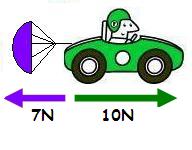
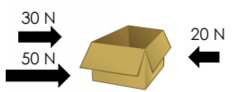
Calculate the net force.
To have a balanced force, the forces must ..........
have the same strength and same direction
have different strength and same direction
have the same strength and opposite direction
have different strength and opposite direction

If this car had a mass of 60 kg, calculate the acceleration.
Do not round your answer.
(a)

