
 Worksheets
Kinetic and Potential Energy Review
Total questions: 15
Worksheet time: 19mins

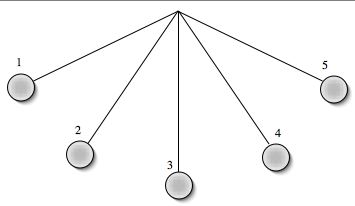
When a pendulum swings, at which point is kinetic energy highest?
1
2
3
4
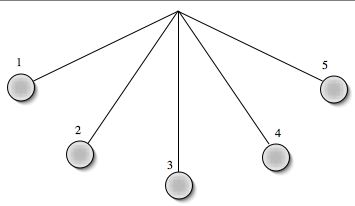
When a pendulum swings, at which point is potential energy at its greatest?
1
2
3
4
The unit of measurement for potential and kinetic energy is _____________.
Joule
Watt
Kilogram
Newton
The amount of kinetic energy in an object depends on its ________ and ____________.
Mass and Speed
Speed and height
Mass and Height
Speed and Velocity
Potential energy depends on the ________ and ________ of the object.
Height (position)
Mass
Speed
Friction
The equation E = 1⁄2 m x v2 is used to find which energy store?
Kinetic Energy
Gravitational Potential Energy
The equation E = mass x gravity x height is used to find which energy store?
Kinetic Energy
Gravitational Potential Energy
Which of the following has the largest kinetic energy?


What is potential energy?
The stored energy of an object due to its position or condition.
The energy that an object has due to its motion.
The energy an object has due to its speed.
The energy an object has due to its volume.

