
 Worksheets
RawMaterial
Total questions: 111
Worksheet time: 2hrs 15mins

What happens when one bulb goes out in this circuit
the rest will go out
the other become brighter

When more bulbs are added to this circuit what happens
The other bulbs will go out
The other bulbs will get dimmer

What type of circuit is this considered
Parallel
Series
When two bulbs are wired in this way, when one bulb goes out, the other goes out.
Parallel
Series

What type of circuit is this
Parellel
Series

What will happen if one light bulb is removed from this circuit?
The other bulbs will go out
The other bulb will stay on

Pick the correct sentence
This circuit will work because it is a closed circuit.
This circuit will not work because there is no energy source.
What are three things all circuits must have?
Switch, conductor, light bulb
Power source, conductor, load (such as a light bulb)
Which of these materials is a good insulator?
Plastic and rubber
Metal and rubber
This circuit has more than one loop. When one light goes out, the others stay on.
closed
parallel
A material that allows electricity to flow easily
resistance
conductor
Metal is a _____.
Insulator
Conductor
Wood is a ______.
Insulator
Conductor

If the ammeter says the current is 5A, what is the current flowing through one bulb?
5A
0
What can you say about the current in the series circuit?
it changes constantly
it is the same everywhere
lets you turn the energy on and off
a closed path where where electricity flows

a DC current source
a battery

Lamp
Loudspeaker
Current is measured in
Seconds
Amps
What is the name of the device which measures current?
ammeter
voltmeter
In a parallel circuit which of the following is the same throughout each branch of the circuit?
Voltage
Current
Current
Ohms Law
What happens to my total current as I add more branches to a parallel circuit?
Increases
Stays the same
neutrons
electrons
Ω (Ohms)
A (Amps)
1 Ohm
4 Ohms
Ω (Ohms)
V (Volts)
(I X R)
Power
Voltage
Voltage divided by Resistance
(V / R)
Current
Power
10 volt
5 volts

What needs to be done to this circuit so that the lamp lights up?
Close the switch
Add a source and close the switch
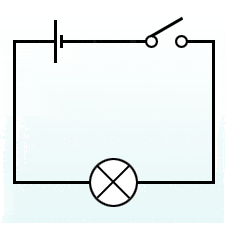
This circuit is .....?
open
closed
Faraday's Law
Ohm's Law

resistor
battery
current
circuit
A battery
The ability to reduce the flow of electrons

Morse code works with pulses through __________ to another machine.
Sound
Electricity

The Morse code’s letters and numbers are a sequence of short and long pulses which would be thought of as __________
Dots and commas
Dots and dashes
A device that increases or deceases voltage, which often consists of two separate coils of insulated wire wrapped around an iron core.
transformer
solenoid
A device that transforms mechanical energy into electrical energy
generator
magnet
The process of generating an electric current from the motion of a conductor through a magnetic field
electromagnetic induction
static electricity
A coil of wire with a current
solenoid
electric motor
The relationship between electricity and magnetism
electromagnetism
static electricity
The region around a magnet where the magnetic force is exerted
magnetic field
magnetic pole
The ends of a magnetic object, where the magnetic force is the strongest
magnetic pole
generator
A force produced when magnetic poles interact
magnetic force
magnetism
Any material that attracts iron and materials that contain iron
magnet
electron
A buildup of charges on an object
static electricity
electromagnetic induction
The region around a charged object where the object's electric force is exerted on other charged objects
electric field
electron
The force between charged objects
electric force
electric field
The force of attraction or repulsion of magnetic materials
magnetism
magnetic force

Motor or Generator?
Motor:
Input: electrical
Output: mechanical
Motor:
Input: mechanical
Output: electrical

metric ruler
microscope

All non-living things are made of cells
All cells come from pre-existing cells
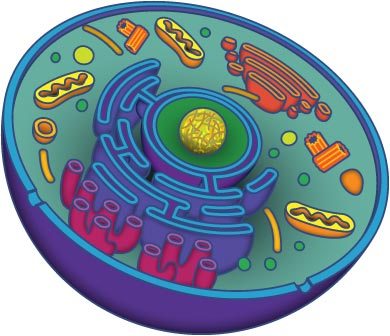
cells
organ
pre
pre-existing
atom
cell
There are three tenets of the Cell Theory. Which of the following is NOT a tenet?
Cells are the basic structure and function of life.
All living things are made of one or more cells.
The cell is the basic unit of matter.
All cells come from preexisting cells.
This organelle takes sugar and turns it into ENERGY for plant and animal cells.
Chloroplast
Mitochondria
nucleus
chloroplast

Lysosomes
Nucleus
nucleus
cell membrane
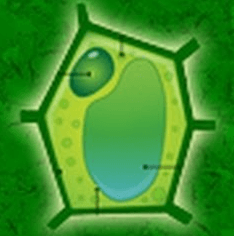
Cytoskeleton
Cell Wall
Vacuole
Nucleolus
I am fluid filled within the cell
Mitochondrion
cytoplasm
Photosynthesis is the process where:
Plants turn green
Plants make their own food
Photosynthesis could not happen without
The sun
Their flowers
The two REACTANTS of photosynthesis are
Water and Carbon Dioxide
Water and Oxygen
Photosynthesis takes place in a plant's...
Roots
Leaves
During photosynthesis, the energy from the sun is used to split water molecules into hydrogen and oxygen.
True
False
Why do humans NEED plants to survive?
We eat them for energy
We breath the oxygen they release
___ is the process that cells use to take energy from glucose.
cellular respiration
photosynthesis
The ___ is the cell part (organelle) inside cells where cellular respiration happens.
mitochondria
nucleus
In a cell, the mitochondria is like the ___.
powerhouse
kitchen
control center
highway system
___ is needed for cellular respiration, it is absorbed from the air.
oxygen
glucose
The primary purpose of cellular respiration is to produce ___.
ATP
sugar
Cellular respiration and photosynthesis are ___.
exact opposites
not important for life
Cellular respiration ___ glucose molecules.
breaks
makes
In the human body, our ___ system moves our blood - which contains both glucose and oxygen - to every cell.
circulatory
digestive
Which of the following is the word equation for cellular respiration?
glucose + oxygen ---> ATP + carbon dioxide + water
carbon dioxide + water ---> ATP + glucose + oxygen

What is a Neuron?
A cell
A transmitter to transmit messages to cells
What is the largest part of the brain?
Cerebrum
Dura mater
Help germs invade your body
Fight off sickness
Red blood cells
the skin
Which type of invader will antibiotics help your body fight off?
Virus
Bacteria

What micro-organism is responsible for causing disease?
Pathogen
Antibodies
Birds eat insects off the skin of cows. If the relationship is a type of mutualism, then the organisms that will benefit are
neither the birds or the cattle
both the birds and the cattle
hawks and shrubs
mountain lion and deer
energy pyramid
adaptation
food web
prey
autotroph
herbivore
lion eating a deer
grasshopper getting energy from grass
100 percent of all energy gets passed
10 percent of all energy gets passed

Termites are tiny insects that can cause severe damage to homes and other structures that consist of wood. Termites are an example of what type of factor.
Biotic
Abiotic

An arctic blast pushed its way through several of the Northern state in the United State. The temperatures dropped below freezing for several days. Temperature is an example of which type of factor?
Biotic
Abiotic
Which is an example of a seasonal change to a biotic factor?
Hours of sunlight increase the summer.
Birds fly south for the winter.
A prairie dog, a hawk, and a badger all are members of the same ________________.
niche
community
A(n) ______ is a group of organisms that are have similar characteristics and can mate with each other to produce offspring that can also mate and reproduce.
species
population
An organism that hunts other animals is a _______.
Predator
Prey
Which picture below is a decomposer?


Parasitism
Competition
A turtle and a snail that both eat grass live in a river
A honeybee pollinating a plant and receiving nectar for food

What would happen to the bird if the green fish died out?
the bird population would grow
the bird population would die out
Which organisms eat only producers?
Tertiary Consumers
Primary Consumers
Increases
Decreases
omnivore
herbivore
Type of symbiotic relationship where BOTH species benefit from the relationship.
Mutualism
Commensalism
Parasitism
_______ is when members of different species live in close association, and at least one species benefits.
Competition
Symbiosis
_____ is an interaction that results when a resource is in short supply.
Symbiosis
Competition
The primary voltage in a device is 25 V and the primary loops are 40. The secondary coil has 30 V. Calculate the secondary voltage in the device.

