
 Worksheets
cell structure
Total questions: 258
Worksheet time: 5hrs 43mins
Basic unit of all forms of life
Cell
Nucleus
Prokaryote
Eukaryote
Fundamental concept of biology that states that all living things are composed of cells
Cell Membrane
Cell Wall
Cell Theory
Cell Hypothesis
Thin, flexible barrier that surrounds all cells; regulates what enters and leaves the cell
Cell Wall
Cell Membrane
Nucleus
Golgi apparatus
Structure that contains the cell's genetic material in the form of DNA
Vacuole
Nucleolus
Nucleus
Ribosome
Organism whose cells contain a nucleus
Prokaryote
Eukaryote
Golgi apparatus
Chloroplast
Unicellular organism that lacks a nucleus
Eukaryote
Prokaryote
Vacuole
Lysosome
In eukaryotic cells, all cellular contents outside the nucleus; in prokaryotic cells, all of the cell's contents
Centriole
Chloroplast
Cytoplasm
Cytoskeleton
Specialized structure that performs important cellular functions within a cell
Vacuole
Ribosome
Organelle
Nucleus
Cell organelle that stores materials such as water, salts, proteins, and carbohydrates
Centriole
Vacuole
Ribosome
Lysosome
Cell organelle that breaks down lipids, carbohydrates, and proteins into small molecules that can be used by the rest of the cell
Vacuole
Chloroplast
Lysosome
Golgi apparatus
Network of protein filaments in a eukaryotic cell that gives the cell its shape and internal organization and is involved in movement
Cytoskeleton
Golgi apparatus
Ribosome
Endoplasmic reticulum
Structure in an animal cell that helps to organize cell division
Nucleus
Nucleolus
Endoplasmic reticulum
Centriole
Cell organelle consisting of RNA and protein found throughout the cytoplasm in a cell; the site of protein synthesis
Endoplasmic reticulum
Ribosome
Nucleus
Nucleolus
Internal membrane system found in eukaryotic cells; place where lipid components of the cell membrane are assembled
Golgi apparatus
Endoplasmic reticulum
Cytoskeleton
Organelle
Organelle in cells that modifies, sorts, and packages proteins and other materials from the endoplasmic reticulum for storage in the cell or release outside the cell
Golgi apparatus
Ribosome
Vacuole
Lysosome
Organelle found in cells of plants and some other organisms that captures the energy from sunlight and converts it into chemical energy
Chloroplast
Mitochondria
Cell Wall
Lipid Bilayer
Cell organelle that converts the chemical energy stored in food into compounds that are more convenient for the cell to use
Chloroplast
Mitochondria
Golgi apparatus
Endoplasmic reticulum
Strong, supporting layer around the cell membrane in some cells
Cytoskeleton
Cytoplasm
Cell wall
Nucleus
Flexible double-layered sheet that makes up the cell membrane and forms a barrier between the cell and its surroundings
Lipid bilayer
Endoplasmic reticulum
Cell Wall
Centriole
Property of biological membranes that allows some substances to pass across it while others cannot; also called semipermeable membrane
Cell Membrane
Cell Wall
Selectively Permeable
Cell Theory


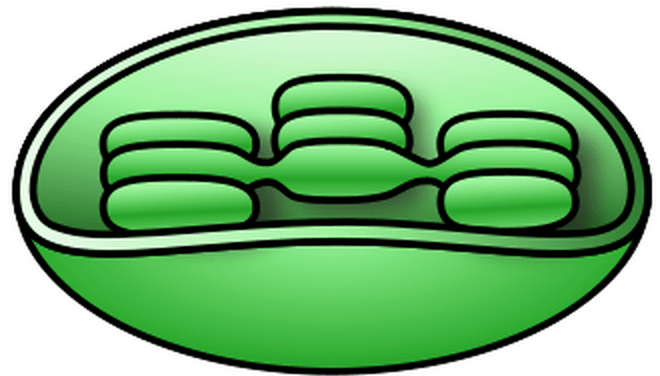




Organelles where photosynthesis occurs, are green due to chlorophyll pigment found in them.
Chloroplasts
Cell Wall
Cell Membrane
Cytoplasm
Powerhouse of the cell, organelle that is the site of ATP ( energy production ) and cellular respiration in plants and animals.
Nucleus
Ribosomes
Mitochondria
Vacuoles
Saclike structures that store materials such as water, salts, proteins, and carbohydrates.
Nucleus
Ribosomes
Organelles
Vacuoles
What organelle is associated with the production of proteins during protein synthesis?
nucleus
ribosome
mitochondria
cell membrane
The cell membrane is selectively permeable. What does "selectively permeable" mean?
Anything can enter.
Nothing can enter.
Some things can enter, while other things can't enter.


The function of flagella is:
Movement
Provide Energy
Protection
Make Proteins
Prokaryotic cells have all of the following parts EXCEPT:
Cell membrane
Ribosomes
Cytoplasm
Nuclear membrane
The function of the rough ER is to:
Produce and folding lipids
Produce and folding proteins
Produce and folding carbohydrates
Produce and folding Nucleic acids
The function of the smooth ER is to:
Make proteins
Make lipids
Make carbohydrates
Make nucleic acids

Identify the Cell shown in the figure
Red Blood Cell
Muscle cell
Nerve cell
Amoeba

Strong outer layer that protects the bacterial cell from infection by viruses and attack from immune cells.
Pilli
Cell wall
Capsule
Flagella
Layer outside the cell membrane that gives the bacterial cell a solid shape.
Cytoplasm
Cell wall
Plasma membrane
Pilli
Jelly like substance that fills the inside of the bacterial cell.
Flagella
Chromosome
Plasmid
Cytoplasm
Whip-like tail that allows bacteria to move
Pillus
Flagella
Cytoplasm
Cell wall
Small protrusions of cell membrane around the outside of the bacterial cell that allow bacteria to attach to one another, and share DNA.
Flagella
Cell membrane
Pilli
Cell wall
Is the bacterial DNA surrounded by a nucleus?
No
Yes
Bacterial cells are...
Prokaryotes
Eukaryotes
Small circular pieces of DNA that can be shared between bacteria.
Cytoplasm
Plasmid DNA
Chromosome
Ribosome
Small organelles that turn genes into proteins
Cytoplasm
Plasmid
Ribosomes
Nucleus
Bacterial cells reproduce by this process
Mitosis
Meiosis
Binary fission
Spawning
What is the function of the cell membrane?
Produces ATP
Produces proteins and lipids
Keep the organelles in place
Control what enters and leaves the cell


Bacteria are an example of a ____ cell.
prokaryotic
eukaryotic
plant
animal
An organelle involved in breaking down lipids, proteins, carbohydrates, damage organelles, and bacteria are ___
Golgi Appaparatus
Vesicles
Vacule
Lysosomes
Both mitochondria and chloroplasts ____
contain their own unique ribosomes that are different than the cells
contain their own unique DNA that are different than the cells
are specialized organelles that capture and release energy
are found in both in plants and animals
Encloses the cell, it acts like a gatekeeper, allowing some materials to pass through it but not others.
Chloroplasts
Cell Wall
Cell Membrane
Cytoplasm
A rigid structure that surrounds the cell membrane for support and protection of the cell.
Chloroplasts
Cell Wall
Cell Membrane
Cytoplasm
Organelles where photosynthesis occurs, are green due to chlorophyll pigment found in them.
Chloroplasts
Cell Wall
Cell Membrane
Cytoplasm
A gel like fluid that takes up most of the space inside the cell. The organelles are found scattered throughout it.
Chloroplasts
Cell Wall
Cell Membrane
Cytoplasm
Organelles that package cellular materials and transports them within the cell or out of the cell.
Golgi Body
Endoplasmic reticulum
Large central vacuole
Lysosomes
A fluid like vesicle that stores water and provides support for the cell.
Golgi Body
Endoplasmic reticulum
Large central vacuole
Lysosomes
A cell organelle that is responsible for waste removal in the cell.
Golgi Body
Endoplasmic reticulum
Large central vacuole
Lysosomes
Powerhouse of the cell, organelle that is the site of ATP ( energy production ) and cellular respiration in plants and animals.
Nucleus
Ribosomes
Mitochondria
Vacuoles
Is the structure located in a plant and animal cell that is home to DNA, where new cells are made and directs cell activity
Nucleus
Ribosomes
Mitochondria
Vacuoles
Where proteins are made in the cells.
Nucleus
Ribosomes
Mitochondria
Vacuoles
Small structures in the cytoplasm that do special jobs.
Nucleus
Ribosomes
Organelles
Vacuoles
Saclike structures that store materials such as water, salts, proteins, and carbohydrates.
Nucleus
Ribosomes
Organelles
Vacuoles
Function of the cell membrane to block the movement of certain sizes, shapes and kinds of particles from entering the cell.
permeable
impermeable
semi-permeable

Plant cells and animal cells
are both prokaryotic
are both eukaryotic
do not have a nucleus
do not have DNA

The function of the mitochondria is
is to make proteins for the cell.
transport materials in and out of the cell.
break down waste products for the cell.
break down glucose through cellular respiration and make energy for the cell.
Smooth endoplasmic reticulum
does not have ribosomes on the membrane and makes lipids for the cell.
has ribosomes on the membrane and makes proteins for the cell.
has ribosomes on the membrane and makes lipids for the cell.
does not have ribosomes on the membrane and make glucose for the cell.
Rough endoplasmic reticulum
does not have ribosomes on the membrane and transports proteins for the cell.
does not have ribosomes and makes energy for the cell.
does not have ribosomes and makes proteins for the cell.
has ribosomes on the membrane and transports proteins for the cell.

Check the three major differences between a plant cell and an animal cell.
cell wall
mitochondria
large central vacuole
chloroplasts


What is located in eukaryotic cells, all cellular contents outside of the nucleus and is in prokaryotic cells, all of the cells’ contents.
cytoplasm
golgi apparatus
nucleus
oragnelles
What are the specialized structure that performs important cellular functions within a cell called?
cytplasm
ribosome
golgi apparatus
organelles

What are the cell organelle's consisting of RNA and protein found throughout the cytoplasm in a cell and are the site of protein synthesis called?
golgi apparatus
lysosomes
ribosomes
nucleus

What is the internal membrane system found in eukaryotic cells? It is the place where lipid components of the cell membrane are assembled.
golgi apparatus
endoplasmic reticulum
nucleus
ribosome

What organelle in cells modifies, sorts, and packages proteins and other material from the endoplasmic reticulum for storage in the cell or release outside the cell?
vacuoles
endoplasmic reticulum
golgi apparatus
nucleus

What cell organelle stores materials such as water, salts, protein, and carbohydrates?
vacuole
lysosomes
nucleus
Cytoplam

What is the structure that contains the cell's genetic material in the form of DNA?
nucleus
lysosomes
cell wal
vacuole

What cell organelle breaks down lipids, carbohydrates, and proteins into small molecules that can be used by the rest of the cell?
mitochondria
cytoplasm
lysosomes
vacuole

What organelle found in cells of plants and some other organisms that captures the energy from sunlight and converts it into chemical energy?
chloroplast
cytoplasm
ribosome
mitochodria

What cell organelle converts the chemical energy stored in food into compounds that are more convenient for the cell to use.
golgi apparatus
chloroplast
nuclues
mitochondria

What is the thin, flexible barrier that surrounds all cells and regulates what enters and leaves the cell?
cell wall
cytoskeleton
cell membrane
endoplasmic reticulum

What is the strong, supporting layer around the cell membrane in some cells?
chloroplast
cell wall
cell membrane
golgi apparatus
Which of the following is not part of the cell theory?
All living things are made of cells
Cells are the basic unit of life
Cells only exist is eukaryotes
All cells come from pre-existing cells
German scientists Schleiden and Schwann determined that the basic unit of structure and function in living things is the
atom
cell
molecule
nucleus
Which statement is not part of the cell theory?
All cells have a nucleus.
All cells come from preexisting cells.
All living things have one or more cells.
Cells are a living thing's basic unit of structure and function.
Which of these structures are present in plant cells, but not animal cells?
cell wall and cell membrane
cell membrane and mitochondria
cell wall and chloroplasts
mitochondria and chloroplasts
An organelle is:
a strong, supporting layer around the cell membrane in some cells
an internal membrane system found in eukaryotic cells; place where lipid components of the cell are assembled.
a specialized structure that performs important cellular functions within a eukaryotic cell
in a cell; it's a structure that contains the cell's genetic material in the form of DNA
The nucleus contains nearly all the cell's __________.
Ribosomes
DNA
Lysosomes
Mitochondria
Proteins are assembled on ____________.
ribosomes
the nuclear membrane
on the cell wall
lysosomes
The ___________ is referred to as the "packaging system" within a cell. It "packages" proteins and ship them to the Golgi Body.
cytoplasm
endoplasmic reticulum
nucleus
vacuole
The ______________ is known as a customization shop because finishing touches are put on proteins before they are ready to leave the "factory". Proteins are shipped from here to their final destinations.
Mitochondria
Nucleus
Lysosomes
Golgi Apparatus
___________ "stores" materials like water, salts, proteins, and carbohydrates.
Microfilaments
Microtubules
Vacuoles
Chloroplasts
The ____________ maintains the cell's shape, moves cell parts, and helps the cell move. Microfilaments and microtubules are examples.
cytoskeleton
chlorplasts
lysosome
endoplasmic reticulum
____________ capture the energy from sunlight and convert it into chemical energy stored in food during photosynthesis.
Chloroplasts
Lysosomes
Vacuoles
Mitochondria
The ___________ is the "waste removal expert" within a cell, removing unwanted material. It is also used to digest old or worn out cell parts.
mitochondria
golgi apparatus
lysosome
vacuole
The ____________ is known as the "power house" of the cell and is found in both plant and animal cells and converts sugars into energy.
ribosome
golgi apparatus
mitochondria
vacuole
The ____________ regulates what enters and leaves the cell and also protects and supports the cell.
chloroplasts
cell membrane
mitochondria
microtubules
The ___________ is the "brain" of the cell or the "control center" for everything happening within the cell.
mitochondria
nucleus
chloroplast
golgi apparatus
____________ is the supporting layer around the cell membrane found in plants.
lysosome
ribosome
vacuole
cell wall
Unicellular organisms are
only Prokaryotic cells
only Eukaryotic cells
made of one cell
made of many cells
The jelly-like fluid that supports the organelles in place.
chloroplast
cytoplasm
vacuole
ribosome

Bacteria are this type of cell
Prokaryotic
Eukaryotic
Cell type that is very small in size
Prokaryotic
Eukaryotic

This type of cell contains no organelles except ribosomes
Prokaryotic
Eukaryotic

This type of cell has a nucleus
Prokaryotic
Eukaryotic

Plants, animals, protists, and fungi
have this cell type
Prokaryotic
Eukaryotic
This type of cell has many organelles such as chloroplasts, mitochondria, nuclei, the Golgi apparatus, and the endoplasmic reticulum.
Prokaryotic
Eukaryotic
This type of cell is typically 10 times larger than the other cell type.
Prokaryotic
Eukaryotic
Organelle that produces the energy a cell needs to carry out its function
Mitochondria
Golgi Apparatus
Ribosome
Endoplasmic Reticulum
Controls what comes into and out of a cell; found in plant and animal cells:
Cell membrane
Central vacuole
Cell wall
Nucleus
Assembles amino acids to make proteins
Cytoplasm
Endoplasmic reticulum
Ribosome
Golgi apparatus
Captures energy from the sun and uses it to produce food in plant cells
Ribosome
Chloroplast
Golgi apparatus
Endoplasmic reticulum
Receives proteins & materials from the ER, packages them, and distributes them
Nucleus
Ribosome
Golgi apparatus
Endoplasmic reticulum
Outer bilipid boundary of a nucleus
Cytoplasm
Nuclear envelope
Cell membrane
Cell Wall
Cell structure that contains genetic information
Golgi apparatus
Ribosome
Plasma membrane
Nucleus
This type of cell contains a nucleus and other organelles that are bound by membranes.
Prokaryotic
Eukaryotic
All cells have...
(select all that apply)
Cell membrane
Cytoplasm
DNA (genetic material)
A nucleus
Eukaryotic cells include...
(Select all that apply)
Animal cells
Plant cells
Bacteria cells
Viruses

A type of cell with no nucleus
Prokaryotic
Eukaryotic
Basic unit of all forms of life
Cell
Nucleus
Prokaryote
Eukaryote
Thin, flexible barrier that surrounds all cells; regulates what enters and leaves the cell
Cell Wall
Cell Membrane
Nucleus
Golgi apparatus
Organism whose cells contain a nucleus
Prokaryote
Eukaryote
Golgi apparatus
Chloroplast
Unicellular organism that lacks a nucleus
Eukaryote
Prokaryote
Vacuole
Lysosome
Cell organelle that stores materials such as water, salts, proteins, and carbohydrates
Centriole
Vacuole
Ribosome
Lysosome
Cell organelle consisting of RNA and protein found throughout the cytoplasm in a cell; the site of protein synthesis
Endoplasmic reticulum
Ribosome
Nucleus
Nucleolus
Organelle in cells that modifies, sorts, and packages proteins and other materials from the endoplasmic reticulum for storage in the cell or release outside the cell
Golgi apparatus
Ribosome
Vacuole
Lysosome
Organelle in cells that modifies, sorts, and packages proteins and other materials from the endoplasmic reticulum for storage in the cell or release outside the cell
Golgi apparatus
Ribosome
Vacuole
Lysosome
Strong, supporting layer around the cell membrane in some cells
Cytoskeleton
Cytoplasm
Cell wall
Nucleus
Cell organelle that converts the chemical energy stored in food into compounds that are more convenient for the cell to use
Chloroplast
Mitochondria
Golgi apparatus
Endoplasmic reticulum


A thin, flexible layer that is found in all cells and separates the inside of the cell from the outside environment.
protein coat
cell membrane
protein membrane
cytoplasma
What is the function of the vacuole?
Sac that stores water, nutrients, and waste products
Sac filled with digestive chemicals
Jelly-like substance within the plasma membrane
Stack of membranes that packages chemicals
What organelle helps with cell digestion?
lysosomes
ribosomes
golgi complex
endoplasmic reticulum
What organelle is called the "powerhouse" of the cell?
Endoplasmic Reticulum
Nucleus
Mitochondria
Nucleolus
I make proteins for the cell. What am I?
ribosome
mitochondria
chloroplast
lysosome
What is the function of the nucleus?
Structure that organizes motion of chromosomes
Structure that stores genetic information and directs the cell
Membrane that surrounds and protects the cell
Stack of membranes that packages chemicals
Where does photosynthesis occur?
mitochondria
stomata
xylem
chloroplast
Amino acids link together to form proteins. In which organelle does this process occur?
lysosome
ribosome
centriole
mitochondria
The organelle that links amino acids together to make proteins.
ribosome
vacuole
endoplasmic reticulum
nucleus
A double-layer of phospholipids that forms a boundary between the cell and surrounding environment and controls the passage of materials into and out of the cell.
cytoplasm
cell membrane
cell wall
lysosome
Name the cell structure.
Principle site of energy production.
(a)
Name the cell structure.
Functions as a processing, packaging and transport centre of carbohydrates, proteins and glycoproteins.
(a)
Name the cell structure.
It controls the movement os substances into and out of the cell.
(a)
Name the cell structure.
Contains hydrolytic enzymes.
(a)
Name the cell structure.
Controls all cellular activities.
(a)
Name the cell structure.
Site of proteins synthesis.
(a)
Name the cell structure.
Consists of a system of interconnected folded flattened sacs
(a)
Name the cell structure.
Liquid-filled sac, which is the cell sap.
(a)
Name the cell structure.
Contains chlorophyll pigments in the grana that give plants a green colour.
(a)
Name the cell structure.
Acts as a medium for biochemical reactions in cells
(a)
Name the cell structure.
Made from cellulose fibre.
(a)
Both animal and plant cells are made of nucleus, cytoplasm, plasma membrane, Golgi apparatus, mitochondrion, endoplasmic reticulum and ribosomes.
True
False
Plant cells have centrioles.
True
False
Stores carbohydrate in the form of glycogen.
Animal cells
Plant cells
________ has a large vacuole.
Animal cells
Plant cells

