
Font size
 Worksheets
Humanism and Renaissance
Total questions: 69
Worksheet time: 38mins
Who proposed the Heliocentric model?
Galileo Galilei
Leonardo Da Vinci
Nicolaus Copernicus
Albert Einstein
Who invented the printing press?
Durer
Luther
Johannes Gutenberg
Antonio de Nebrija
Anthropocentrism
Considered God the centre of the universe
Considered man the centre of the universe
Who painted the Last Supper?
Filippo Brunelleschi
Tiziano
Durer
Leonardo Da Vinci

How did Gutenberg's printing press impact Europe?
It decreased literacy throughout Europe.
It allowed more books to be printed.
It allowed for more men to train and join the priesthood.
It decreased the production of navigational maps.
Which ancient classical civilization was an important influence on the Renaissance humanists?
river valley civilizations
Mesoamerican and North American civilizations
Greek and Roman civilizations
feudalism

Humanists believe...
reason provides the best method for understanding the universe.
religion is needed for a complete understanding of the universe.

What is Humanism?
A religion
A philosophy or worldview that favours reason and logic over superstition or faith
A code of conduct to follow in life
What did the printing press do? Select all that apply.
Allowed for the faster spread of knowledge.
More people learned to read.
People were able to buy the printing press.
It was able to make paper.
What was the importance of the Printing Press?
It saved animals.
It made work harder.
Before, books were written by hand. This took a long time. The new press could produce 300 pages in a single day.
It caused people to hate reading.
True or False: Interest in classical culture decreased during the Renaissance.
True
False
Which of the following subjects would a Humanist find interesting?Select all that apply.
Learning languages like Spanish, French, and Italian
History of Ancient Rome and Anciet Greece
Astronomy
Learning Musical Instruments
Humanism was...
a historical movement that began in France in the 15th century.
...a cultural movement that began in Spain in the 16th century.
...a cultural movement that began in Italy in the 15th century.
...a historial movement that began in Italy in the 16th century.
Intelectuals and artists were supported by (a) , who offered economic support.
Humanism had no interest in scientific and technological progress.
True
False
Which was the name of the invention that contributed the most to the spread of humanism?
(a)
What event marks the beginning of the Early Modern Age?
The discovery of America
The invasion of Rome
The French Revolution
What are the main pilars of humanist philosophy?
Theocentrism and by the use of the vernacular languages.
Anthropocentrism and a renewed interest in classical culture.
Optimism, a renewed interest in classical culture and the use of Latin.
In which phase of the Renaissance did the Italian capital become the most important style centre?
Trecento
Cinquecento
Quattrocento
What types of civil buildings were important in the Renaissance?
Religious buildings
Religious and civil buildings
Civil buildings
What classical architectural features regained popularity in the Renaissance?
Greek style columns, pointed arched, coffered ceilings.
Geometric decoration, semicircular arches, ostentatious decoration.
Triangular pediments, domes, classical columns.
What is idealism in art?
Representing reality as it is.
Attempting to represent a perfect beauty.
To believe that art itself is the end result.
What skills did they use to represent perspective?
Using linear perspective for backgrounds.
Using linear perspective for foregrounds.
Using linear perspective, hierarchical and aerial perspectives.
The term "Renaissance" means-
Turning away from God and pursuing human-centered interests and ideas
Studying lost languages like Latin, Greek, and Sanskrit
The "rebirth" of Classical culture , particulary Roman and Greek ones.
Renaissance artist tried to represent the correct proportions and perspective to give their work depth.
True
False
Renaissance artists enjoyed great social prestige, that is the reason why they didn't sign their work.
True
False
The Renaissance is divided in 2 main periods, that are....
Doscento and trescento
Quattrocento and Cinquecento
Quattrocento and Novecento
Quattrocento and Seicento

What is this?
THE VILLA ROTONDA. (PALLADIO)
Florence Cathedral. (Filippo Brunelleschi)
SANTA MARIA NOVELLA
(LEON BATTISTA ALBERTI)
SAINT PETER’S BASILICA (SAN PEDRO DEL VATICANO)
MIGUEL ANGEL, BRAMANTE, BERNINI
CHURCH OF SAN PIETRO IN MONTORIO
(BRAMANTE)

What is this?
THE VILLA ROTONDA. (PALLADIO)
Florence Cathedral. (Filippo Brunelleschi)
SANTA MARIA NOVELLA
(LEON BATTISTA ALBERTI)
SAINT PETER’S BASILICA (SAN PEDRO DEL VATICANO)
MIGUEL ANGEL, BRAMANTE, BERNINI
CHURCH OF SAN PIETRO IN MONTORIO
(BRAMANTE)

What is this?
THE VILLA ROTONDA. (PALLADIO)
Florence Cathedral. (Filippo Brunelleschi)
SANTA MARIA NOVELLA
(LEON BATTISTA ALBERTI)
SAINT PETER’S BASILICA (SAN PEDRO DEL VATICANO)
MIGUEL ANGEL, BRAMANTE, BERNINI
CHURCH OF SAN PIETRO IN MONTORIO
(BRAMANTE)

What is this?
THE VILLA ROTONDA. (PALLADIO)
Florence Cathedral. (Filippo Brunelleschi)
SANTA MARIA NOVELLA
(LEON BATTISTA ALBERTI)
SAINT PETER’S BASILICA (SAN PEDRO DEL VATICANO)
MIGUEL ANGEL, BRAMANTE, BERNINI
CHURCH OF SAN PIETRO IN MONTORIO
(BRAMANTE)

What is this?
MOSES
(Michelangelo)
DAVID
(Michelangelo)
DAVID
(Donatello)
DAVID
(Bramante)

What is this?
MOSES
(Michelangelo)
DAVID
(Michelangelo)
DAVID
(Donatello)
DAVID
(Bramante)

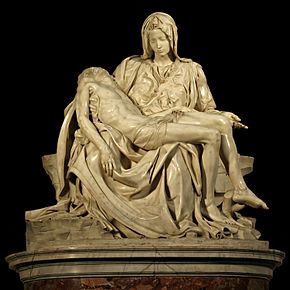
What is this?
PIETÁ
(BOTICELLI)
PIETÁ
(MICHELANGELO)
PIETÁ
(Donatello)
PIETÁ
(Bramante)

The last supper (Michelangelo)
The last supper (Da Vinci)
Last Judgement (Michelangelo)
Last Judgement (Da Vinci)

Creation of Adam (Michelangelo)
Creation of Adam (Da Vinci)
Last Judgement (Michelangelo)
Last Judgement (Da Vinci)

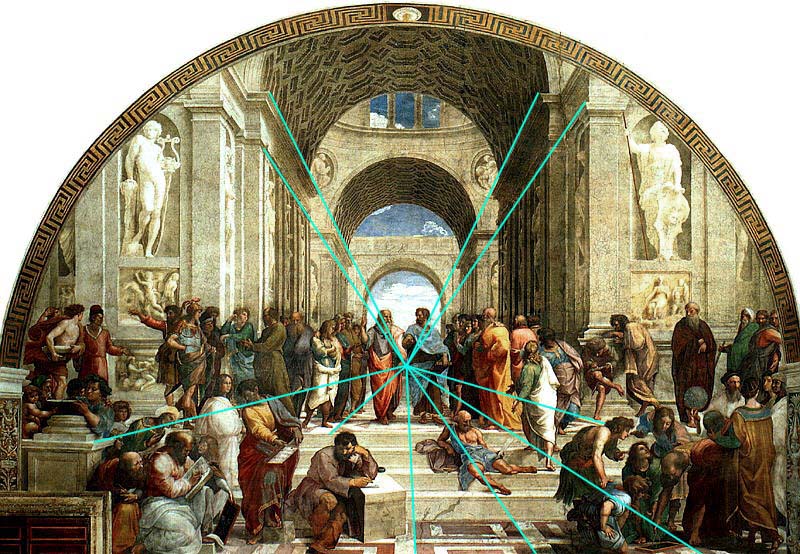
The School of Athens
(Tiziano)
The School of Athens
(Raphael)
The School of Athens
(Da Vinci)
The School of Athens
(Donatello)

The Birth of Venus
(Da Vinci)
The Birth of Venus
(Raphael)
The Birth of Venus
(Michelangelo)
The Birth of Venus
(Boticelli)
Which of the following features did Renaissance use?
Semi-circular arches
Columns with classical orders
All options are correct

Where did the Renaissance BEGIN?
Italy
France
Spain
Germany

Which three artists were part of the Cinquecento
Donatello
Leonardo da Vinci
Michelangelo
Raphael

When did the Renaissance take place?
15-16th centuries
15-17th centuries
12-13th centuries
14-15th centuries

The title of this work of art is?
School of Athens
Last Judgment
Last Supper
Sistine Chapel
Where did the Renaissance develop in the Quattrocento?
Florence
Rome
Seville
Paris

Who built the dome of Florence?
Alberti
Brunelleschi
Michelangelo
Andrea Palladio
Artists could dedicate exclusively to creation because they were supported by patrons such as... ( Select all that apply)
The Medici
The Buonarotti
The Draghi
The Popes
Which ones of the following artists belong to "Quattrocento"?
Michelangelo
Brunelleschi
Alberti
Leonardo
Donatello
Which ones of the following artists were sculptors?
Brunelleschi
Donatello
Ghiberti
Fra Angelico
Botticelli
Which ones of the following artists belong to "Cinquecento"?
Michelangelo
Raphael
Alberti
Leonardo
Donatello
Which ones of the following artworks belonged to Michelangelo?


Which one of the following paintings was made by Raphael?


The Quattrocento develop in the 14th century.
True
False
The Cinquecento developed in the 16th century.
True
False

what is the technique used in this painting?
Sfumato
Foreshortening
Chiaroscuro

what is the technique used in this painting?
Sfumato
Foreshortening
Chiaroscuro
Who among the figures of the Renaissance is considered to exemplify the true 'Renaissance Man'?
Machiavelli
Michelangelo
da Vinci
Gutenberg
He proposed a new model of social organisation in his book UTOPIA published in 1516.
(a)
He wrote the PRAISE OF FOLLY which is considered the best representation of CHRISTIAN HUMANISM.
(a)
This movement focused on the potential of the individual.
Renaissance
Classical
Humanism
Perspective
This concept refers to a revival in the arts and literature.
Middle Ages
Renaissance
Reformation
Scientific Revolution
Which of the following best reflects the worldview during the Italian Renaissance?
If you strictly focus on the teachings of the Roman Catholic church, you will know the meaning of life and how to make discoveries in other parts of the world.
Look to the Middle Ages for solutions on solving problems.
It is not necessary to get involved in government. You must trust that the rulers are making the correct decisions.
People can use the power of reason and thinking to discover knowledge about themselves and society.
OPPOSED TO ANTHROPOCENTRISMOpposed to GEOCENTRIC
(a)

