wayground logo

Free Printable Worksheets

NEW

Font size

S
M
L
XL
Worksheets

Evolution review

Total questions: 17

Worksheet time: 15mins
Name
Class
Date
1.
This scientist came up with the idea of natural selection.
a)
Jean Baptiste Lamarck
b)
Gregor Mendel
c)
Charles Darwin
d)
Thomas Malthus
2.
Inherited trait that helps an organism survive is a(n) __________.
a)
Fossil
b)
Adaptation
c)
Ancestor
d)
Natural selection
3.
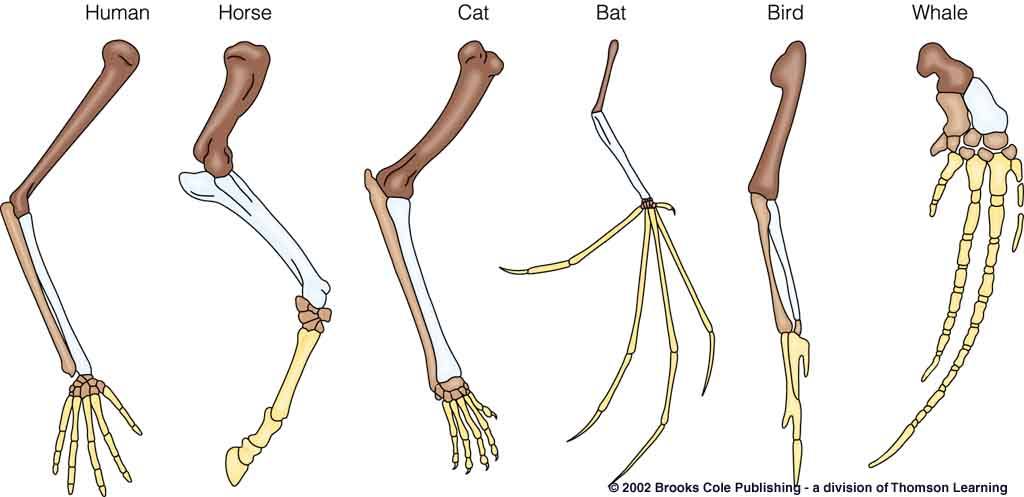
Structures with the same parts have different functions; suggests that organisms share a common ancestry
a)
vestigial structures
b)
homologous structures
c)
adaptive radiation
d)
fossil
4.
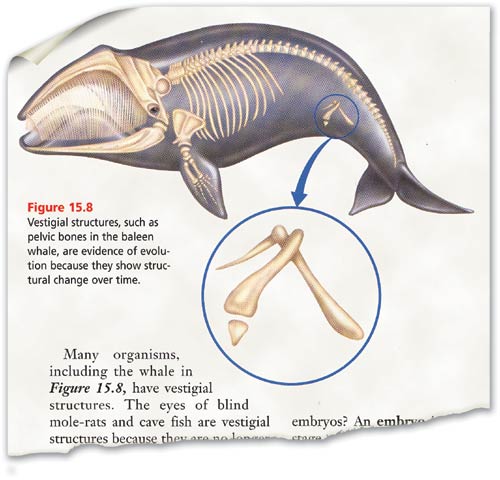
Which of the following is an example of a vestigial structure?
a)
the wings of a red-tailed hawk
b)
the hind limbs of a house cat
c)
the fins of sharks
d)
the tailbone of a human
5.
The diagram shows fossils in different rock layers. Which of these statements about the age of these fossils is most likely correct?
a)
Fossil A and C are the same age
b)
Fossil B is older than fossil C
c)
Fossils A is older than fossil B
d)
Fossil D is older than fossil C
6.
When an organism completely dies out, it is called.....
a)
Adaption
b)
Extinction
c)
Fossilization
d)
Mutation
7.
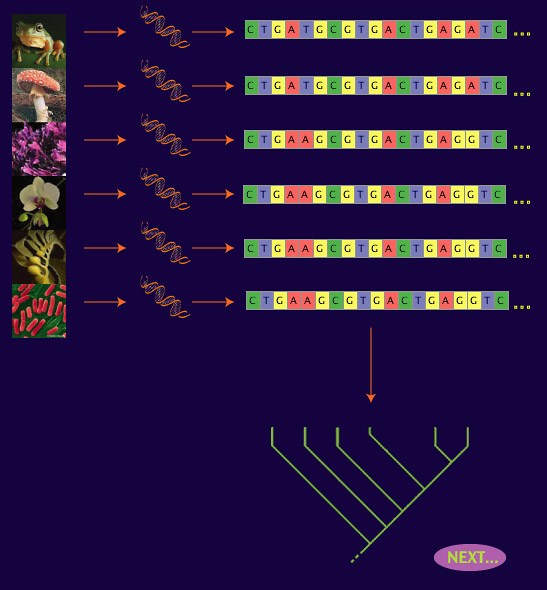
Two organisms that are closely related would have
a)
very similar DNA sequence
b)
exactly the same DNA sequences
c)
no proteins in common
d)
completely different DNA sequence
8.
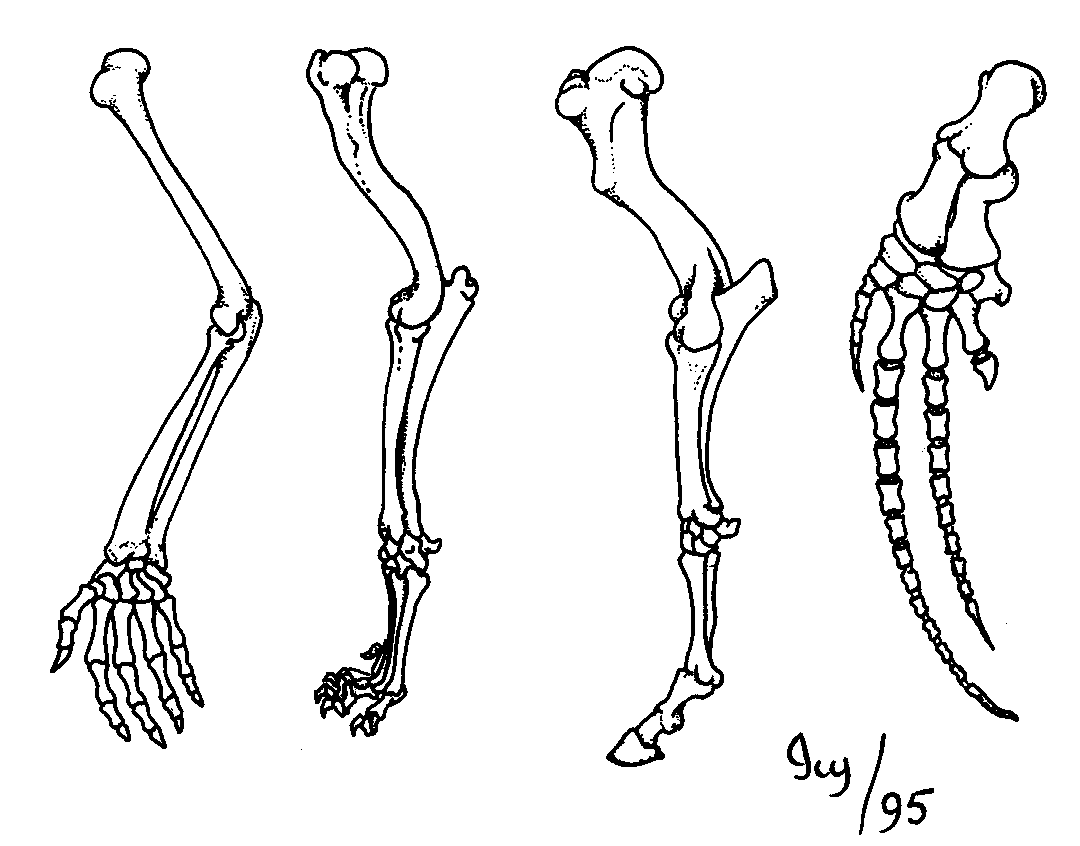
The structures shown are_________
a)
homologous
b)
heterologous
c)
analogous
d)
vestigial
9.
The long and sharp beak of a woodpecker is an example of:
a)
Natural Selection
b)
Selective Breeding
10.
An error in DNA copying that results in a new trait
a)
Homeostasis
b)
Mutation
c)
Natural Selection
d)
Selective Breeding
11.

these are parts of animals that are used for the same purpose but are structurally very different

a)

anatomy

b)

analogous structures

c)

homologous structures

d)

embryology

12.
Scientists compare organisms' DNA to support the theory that all species share a common _________________
a)
separation
b)
ancestor
c)
population
d)
environment
13.

What can be determined from this diagram?

a)

The organisms share a common ancestry.

b)

The organisms belong to the same species

c)

The organisms are native to the same geographic areas.

d)

The organisms will grow into anatomically similar adults.

14.

Which of the following is an example of a vestigial structure?

a)

the wings of a red-tailed hawk

b)

the hind limbs of a house cat

c)

the fins of sharks

d)

the tailbone of a human

15.

Insulin in chickens and humans: 64% identical

Insulin in humans and chimpanzees: 98% identical

What do these numbers suggest?

a)

Humans are more closely related to chimpanzees than chickens

b)

Humans are more closely related to chickens than chimpanzees

c)

Chickens and chimpanzees are related

d)

Insulin is produced in all living things

16.

What does carbon dating allow us to do?

a)

Determine the approximate age of a fossil

b)

Determine the chemical composition of a rock

c)

Evaluate the quality of the fossil

d)

Determine the location where the fossil was found

17.

What happened to the peppered moth population after the Industrial Revolution?

a)

There were MORE LIGHT moths because the bird couldn't see them on the DARK TREES

b)

There were MORE DARK moths because the bird couldn't see them on the DARK TREES

c)

There were MORE DARK moths because the bird couldn't see them on the LIGHT TREES