
 Worksheets
Mineral identification chart
Total questions: 34
Worksheet time: 2hrs 42mins
The color left by a mineral in its powdered form.
streak
density
hardness
smudge
The way that a mineral reflects light. It can be metallic or non-metallic.
streak
hardness
fracture
luster
What equipment would you need to do a mineral streak test?
a long pointed iron rod
a rough white ceramic tile
a disposable sample of talc
a low powered microscope
What is the number of the most easily scratched mineral on the Mohs Hardness Scale?
1
4
7
10

This mineral is the softest mineral (1) and has a soapy feel.
Gypsum
Graphite
Halite
Talc

Guess the Mineral!
This mineral is the hardest naturally occurring mineral. It is most often used in jewelry but can also be used on the tips of saw blades. What is the name of the mineral?
Fluorite.
Talc.
Diamond.
Sulfur.


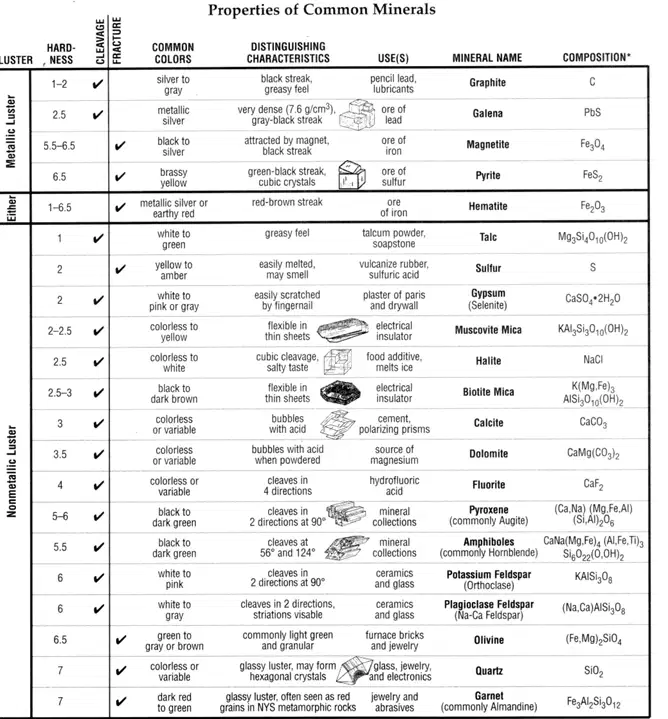
This mineral has a hardness of 6.5 and is brassy gold with cubic crystals. It does not tarnish.
Pyrite
Chalcopyrite
Olivine
Chalcedony
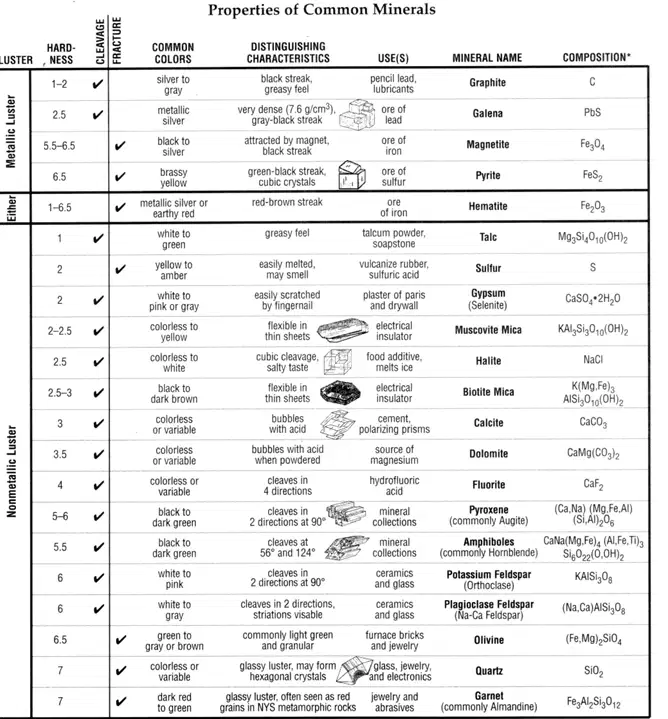
This mineral has 2 cleavages at 90, contains exsolution, and is typically a orange to green color with a hardness of 6.
Plagicolase
Orthoclase
Quartz
Talc
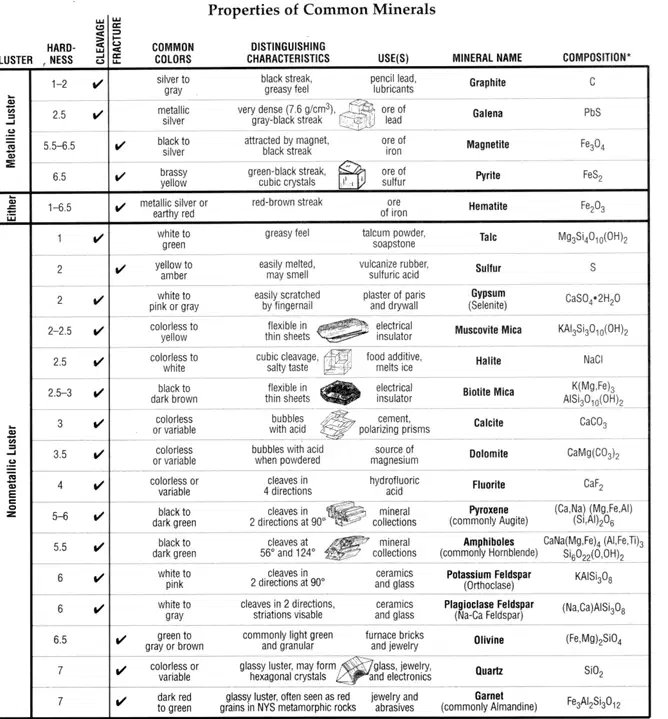
This mineral is magnetic, metallic, and has a grey to dark grey streak.
Hematite
Magnetite
Chalcopyrite
Galena
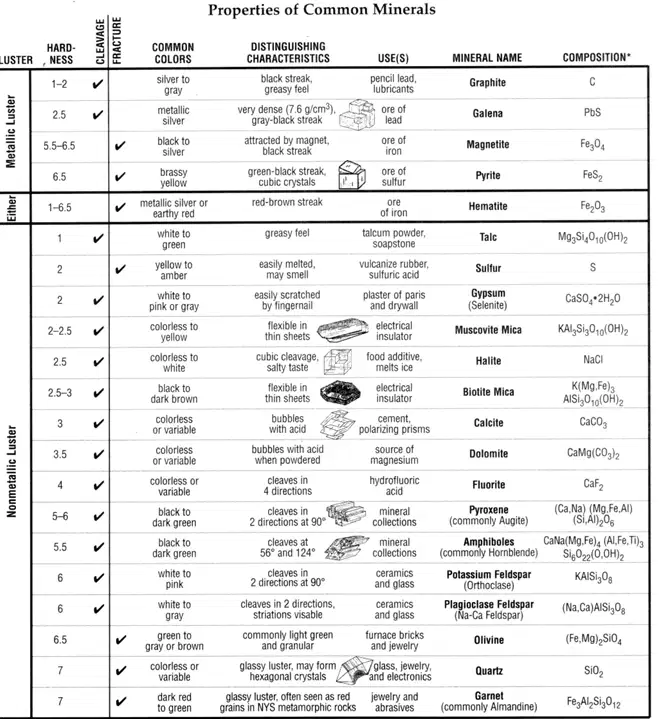
This mineral has 3 cleavages not at 90 (rhombohedral), hardness of 3.5 and fizzes with acid
Calcite
Gypsum
Fluorite
Quartz

This mineral is metallic, very brassy gold and can tarnish purple. It is soft 3.5 and not found in crystal form very often.
Magnetite
Galena
Chalcopyrite
Pyrite

This mineral forms very small crystals and is a glassy rich green to pale green color and will scratch glass.
Quartz
Olivine
Chalcedony
Orthoclase

This mineral is very soft (2), comes in several colors and forms such as orange, colorless or white, and does not fizz with acid or have a soapy feel
Talc
Gypsum
Calcite
Fluorite

THis mineral is very hard (7) can be found as hexagonal crystals but will fracture if broken. It comes in many colors (smoke, rose, orange, purple, white, colorless).
Fluorite
Calcite
Quartz
Garnet
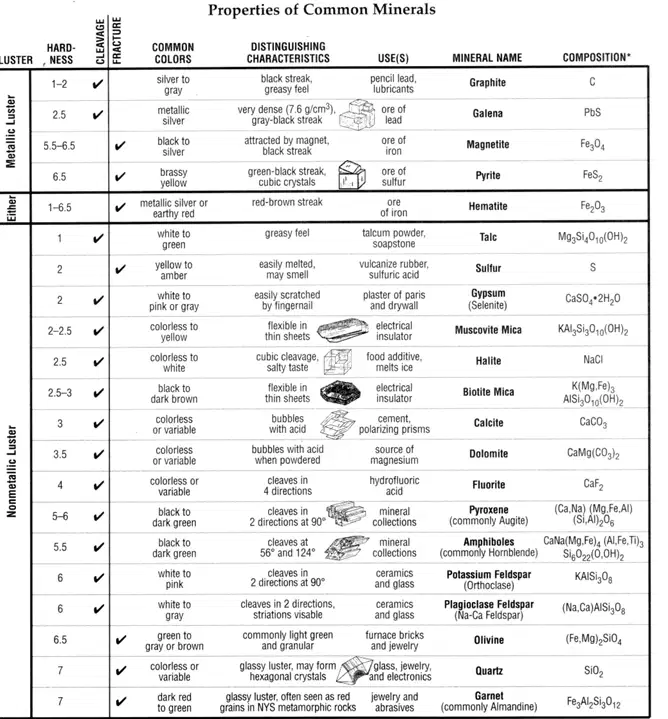
This mineral has 2 cleavage planes at 90 is typically light grey and may contain striations with a hardness of 6.
Plagioclase
Orthoclase
Hornblende
Biotite
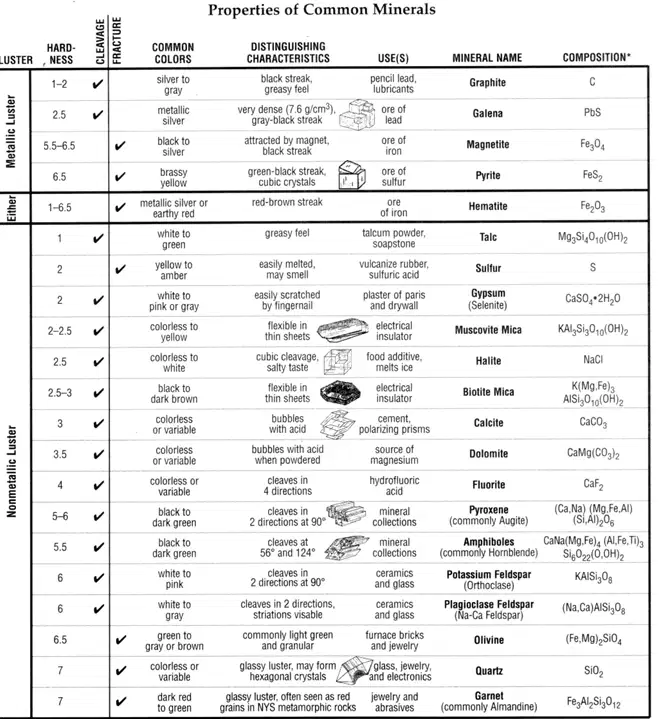
This mineral is the softest mineral (1) and has a soapy feel.
Gypsum
Graphite
Halite
Talc
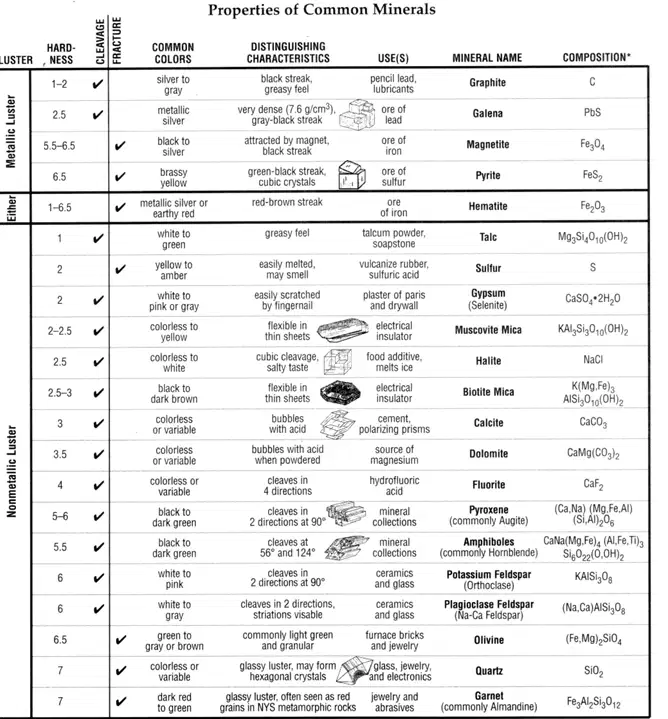
This mineral has 4 cleavage plans, is colorless, purple, or greenish and a hardness of 4.
Fluorite
Quartz
Calcite
Garnet
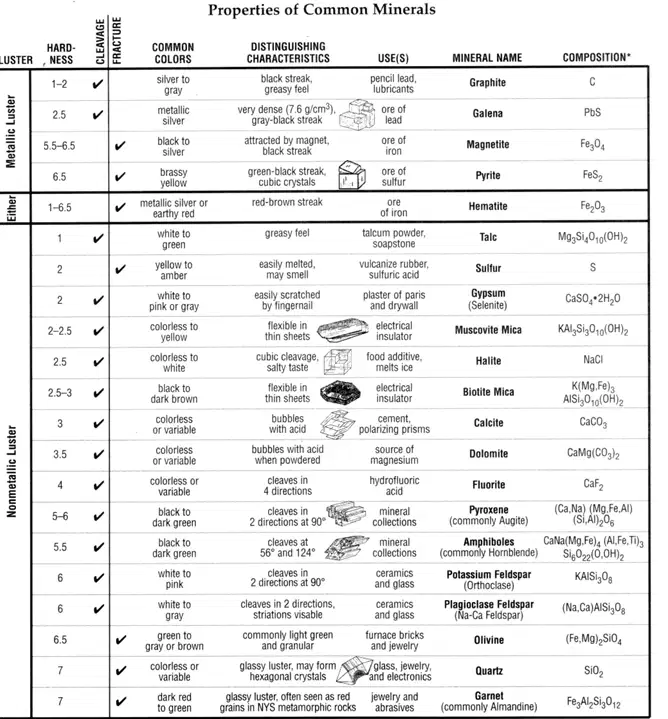
This mineral is colorless, glassy, has cubic cleavage (3 at 90) and a distinct salty taste.
Calcite
Halite
Fluorite
Gypsum
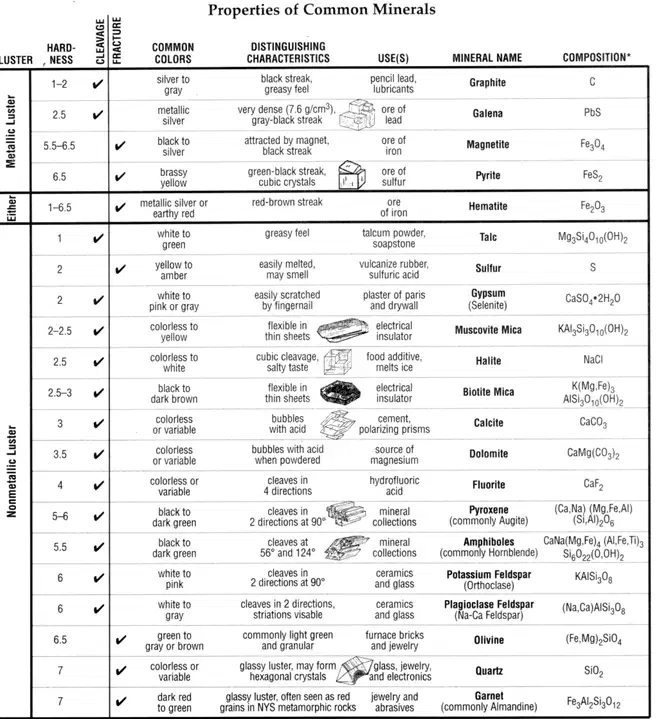
This mineral is very dense, can streak on paper, and has cubic cleavage (3 at 90)
Graphite
Garnet
Galena
Biotite
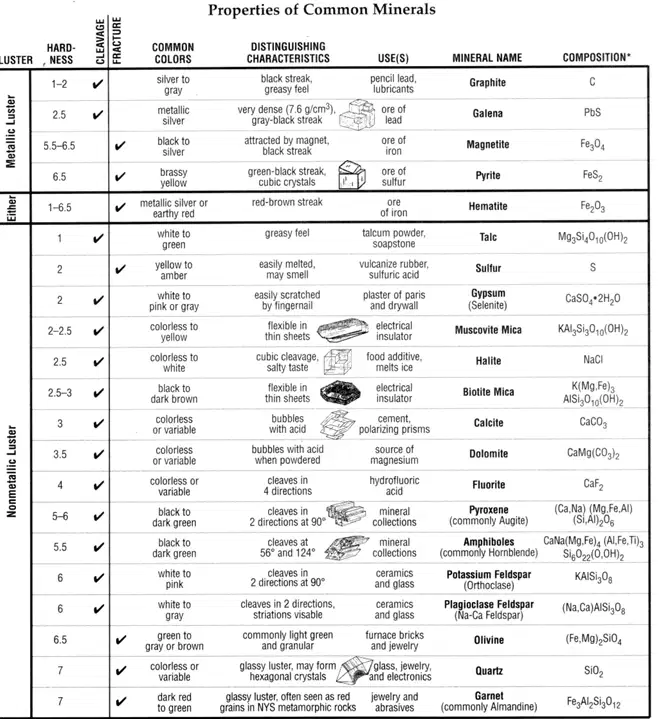
THis mineral is very hard (8), has dodecahedron crystals, fractures, and is typically a deep reddish brown color.
Garnet
Quartz
Olivine
Hematite
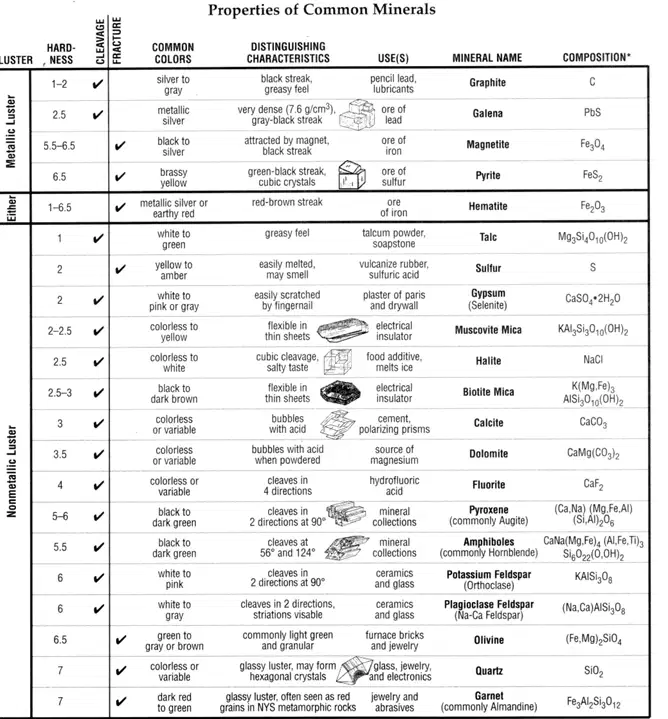
This mineral is dark black with a green tint, has poor cleavage but if present 2 at 90, and doesn't have much shiny to its cleavage.
Pyroxene
Hornblende
Olivine
Hematite
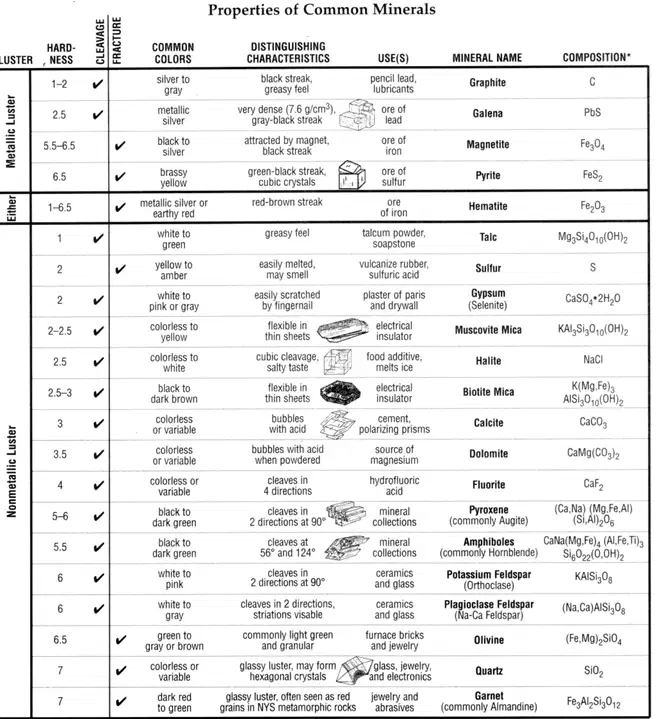
This mineral is Dark/Black with a very shiny surface. Its cleavage can be hard to see but has 2 not at 90 and will scratch glass.
Augite/Pyroxene
Amphibole/Hornblende
Garnet
Biotite
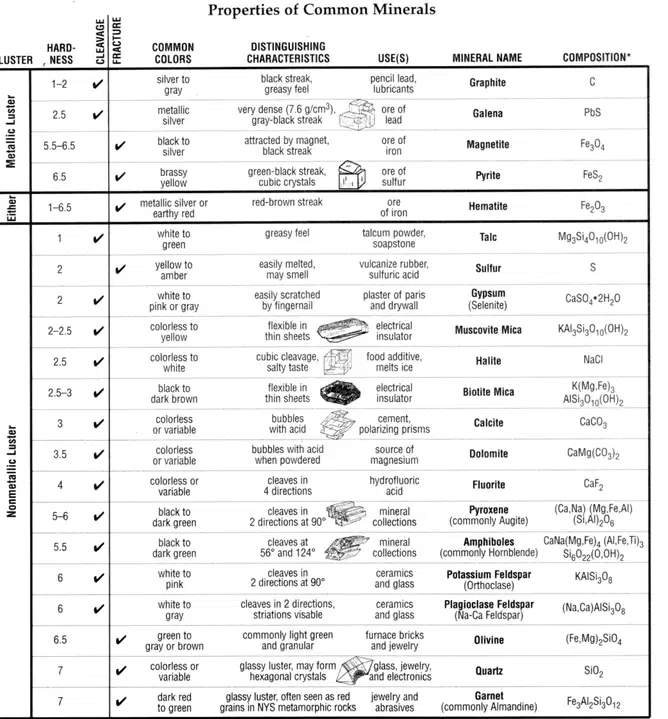
This mineral can be magnetic, can be dull/Earthy or very specular. It's must distinguishing property is its reddish brown streak.
Magnetite
Hematite
Graphite
Galena
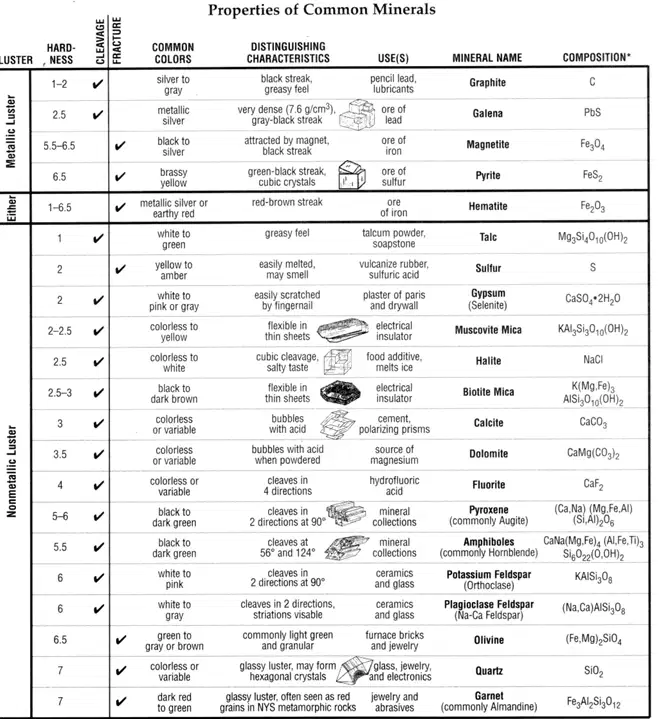
This mineral has 1 cleavage, is dark colored and can peel into sheets.
Muscovite
Biotite
Graphite
Plagioclase
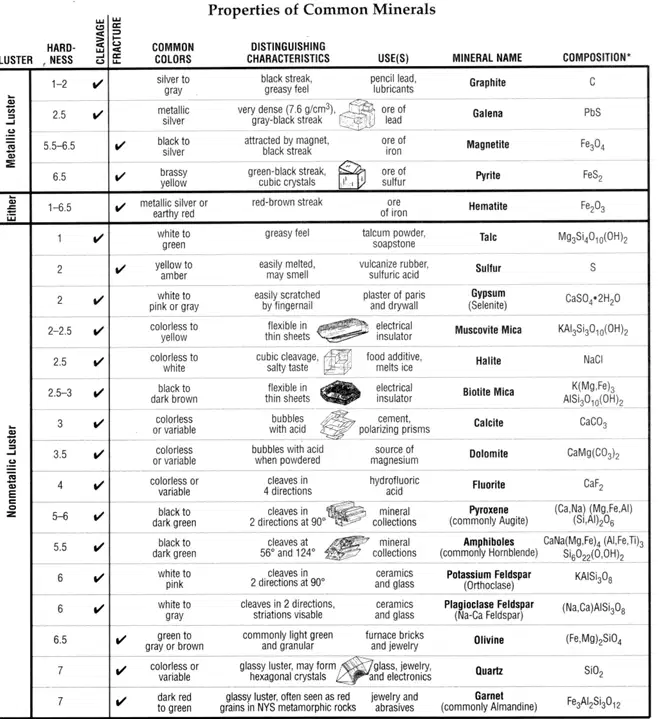
This mineral is light colored to transparent and has 1 cleavage and can peel into sheets.
Muscovite
Biotite
Graphite
Plagioclase
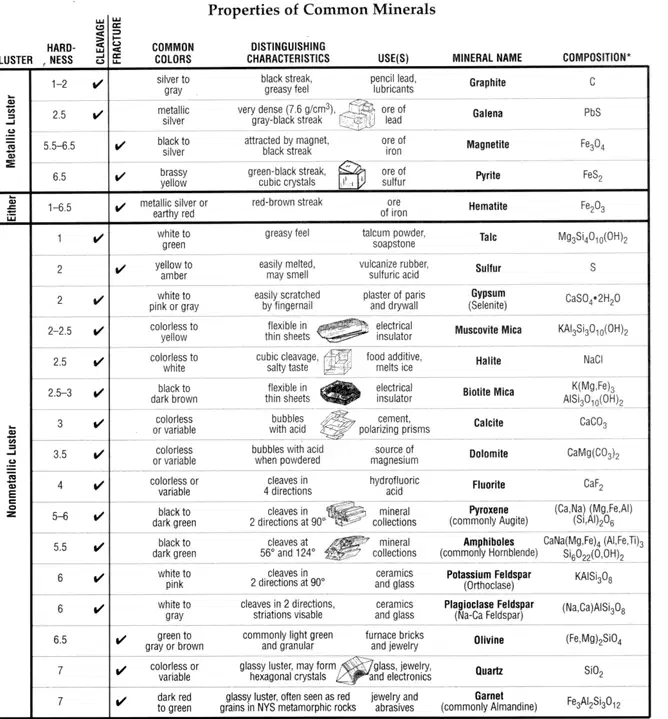
This mineral is very soft (less than a fingernail 1.5-2), is metallic and has a very low density for being metallic. It will easily write on paper and has no cleavage.
Muscovite
Biotite
Graphite
Galena

