
 Worksheets
Waves. Basic Physics II
Total questions: 12
Worksheet time: 12mins
Sound waves are ...
Fluid waves
Electromagnetic waves
Both: mechanical and electromagnetic waves
None
Types of waves
Mechanical and Electromagnetic
Kinetic and potential
Kinematics and Dynamics
A traveling wave that causes the elements of the disturbed medium to move parallel to the direction of propagation
Transverse wave
Longitudinal wave
Complex wave
None
The maximum displacement of an element from its normal position
Amplitude (A)
Wavelength (λ)
Periodo (T)
Crest of the wave
When a wave or pulse travels from medium A to medium B and vA > vB, it is inverted upon reflection
B is equally denser than A
B is denser than A
A is denser than B
None
When a part of the energy in the incident pulse is reflected and part passes, the phenomena is called ...
Reflection
Refraction
Transmission
Doppler Effect
The speed of the wave does not depend on the properties of the medium
True
False
In general, the speed of sound is slower in
Gases
Liquids
Solids
Equal in all of them
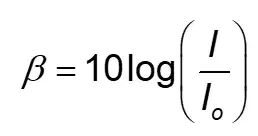
The sound level is measured in ...
Watt (W)
Decibels (dB)
Degree Celsius (°C)
Watt per meter squared (W/m2)
It is the apparent change in frequency (or wavelength) that occurs because of motion of the source or observer of a wave
Waves fronts
Transmission
Frequency Effect
None
The distance from a crest to the next one.
Amplitude (A)
Wavelength (λ)
Period (T)
Crest of the wave
The time interval required for two identical points of adjacent waves to pass by a point.
Amplitude (A)
Wavelength (λ)
Period (T)
Frequency (f)

