
NEW
Font size
 Worksheets
TRIAL QUIZ
Total questions: 28
Worksheet time: 17mins

Select the right name for the title of this image and the photographer
Noire et Blanche (Black andWhite) by Man Ray
The Tetons and the Snake Riverby Ansel Adams
Still life by Louis Jacques MandeDagurre
Leaf with Serrated Edge byWilliam Henry Fox Talbot
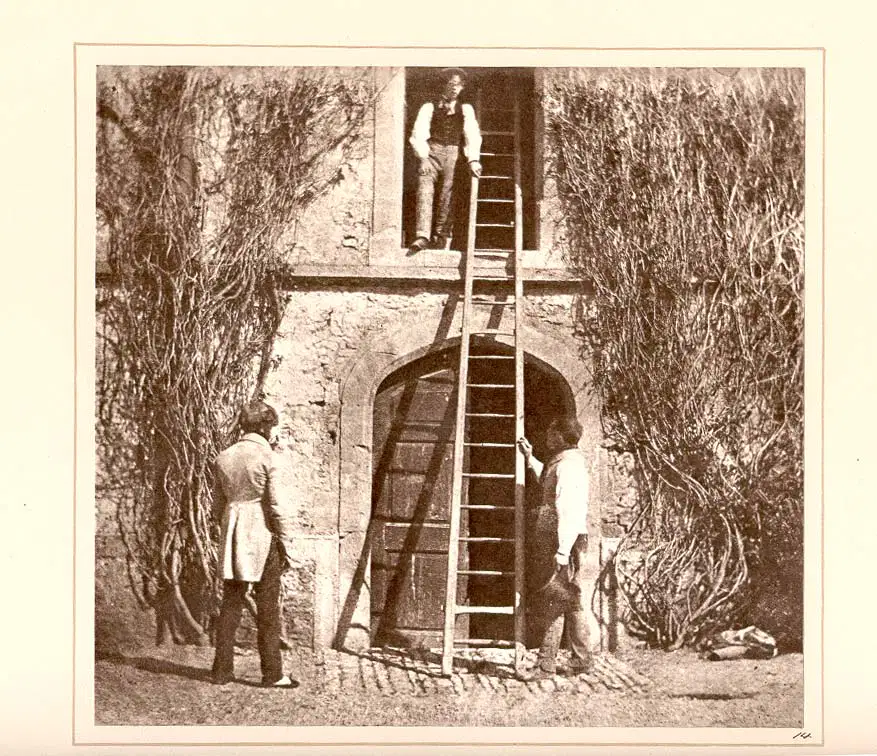
Select the right name for the title of this image and the photographer
Tartan Ribbon by James ClerkMaxwell
Le Pont de L’europe (The EuropeBridge) by Henri Cartier-Bresson
The Ladder by William Henry Fox Talbot
Tears by Man Ray

Select the right name for the title of this image and the photographer
Shell by Edward Weston
Five Cents a Spot by Jacob Riis
Girl Worker in Cotton Mill by Lewis Hine
The Tetons and the Snake River by Ansel Adams
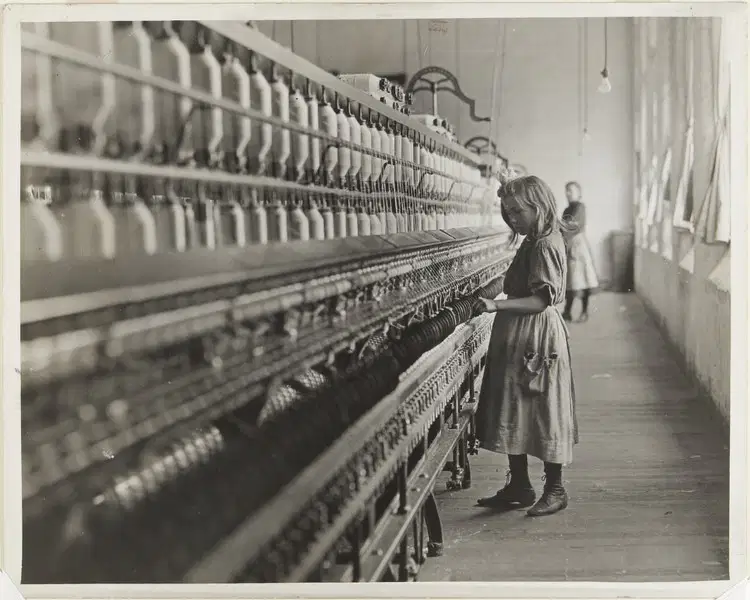
Select the right name for the title of this image and the photographer
The Tetons and the Snake River by Ansel Adams
Girl Worker in Cotton Mill by Lewis Hine
Five Cents a Spot by Jacob Riis
Shell by Edward Weston

Select the right name for the title of this image and the photographer
The Valley of the Shadow of Death by Roger Fenton
The Steerage by Alfred Stieglitz
Two Callas by Imogen Cunningham
Death of a Loyalist Soldier by Robert Capa

Select the right name for the title of this image and the photographer
Lady with Harp by John Herchel
The Steerage by Alfred Stieglitz
Death of a Loyalist Soldier by Robert Capa
“Bijou” of Montmarte by George Brassaï

Select the right name for the title of this image and the photographer
Lady with Harp by John Herchel
Princess Buonaparte Gabrielli by Disderi
The Horse in Motion by Eadweard Muybridge
“Bijou” of Montmarte by George Brassaï

Select the right name for the title of this image and the photographer
Two Callas by Imogen Cunningham
The Steerage by Alfred Stieglitz
The Horse in Motion by Eadweard Muybridge
View of the Boulevard du Temple by Louis-Jacques-Mandé Daguerre

Select the right name for the title of this image and the photographer
Two Callas by Imogen Cunningham
White Fence by Paul Strand
Pierrot the Photographer by Nadar
Sun's Rays by Alfred Stieglitz

Select the right name for the title of this image and the photographer
Migrant Mother by Dorothea Lange
White Fence by Paul Strand
The Magnificent Eleven: The D-Day by Robert Capa
Sun's Rays by Alfred Stieglitz
This camera which is another mechanical substitute for artistic skill invented by the Englishman William Hyde Wollaston in 1807 is called _______________
Camera Lucida
Camera Obscura
Camera Brownie
Camera Leica
In 1837, Daguerre made a brilliant detailed picture of a corner of his studio, using a modification of Niepce’s invention which is called _____________ process
Tintype
Calotype
Daguereotype
Talbottype
_____________ was trained as a pianist before turning to photography in 1927, famous with Zone System manual.
Thomas Wedgewood
Roger Fenton
George Eastman
Ansel Adam
Frederick Scott Archer invented the wet collodion process in year _____________
1851
1852
1853
1854
Around 1932, a number of younger photographers, greatly impressed by Edward Weston and his work formed a society to which they gave the named called ___________
Group f. 64
Group f. 66
Group f. 68
Group f. 62
In the year 1904, the Lumières patented the _____________ process in Paris, France
Chiaroscuro
Autochrome
Gravure
Rayograph
In the year 1904, the Lumières patented the Autochrome process in Paris, France.
TRUE
FALSE
The slogan You Press the Button, We Do the Rest was a famous advertising citation for Kodak Company in the year 1888
TRUE
FALSE
Robert Capa, George Rodger, David Seymour, and Henri Cartier-Bresson started the Magnum Picture Agency.
TRUE
FALSE
Cyanotype, a technique for reproducing images, uses drawings on a flat surface usually smooth stone, rather than a metal or wood recessed surface, as in engraving & etching
TRUE
FALSE
The Arabian scholar Hassan ibn Hassan (also known as Ibn al Haitam), in the 10th century, described what can be called a camera obscura in his writings. His essay Book of Light was a clear description of an instrumental known as camera obscura
TRUE
FALSE
The word photography came from two Arabic words that mean "writing with light." The first time the word "photography" was used was in 1839, the year the invention of the photographic process was made public, by Sir John Herschel
TRUE
FALSE
Carte-de-visite was invented by André-Adolphe-Eugène Disdéri. Called a card photograph in the United States, the carte-de-visite was a small photographic portrait mounted on a cardboard backing that was about the size of visiting card
TRUE
FALSE
Negative, positive, snapshot and photography was the four (4) terms that were introduced by Sir John Herschel in his invention on the photographic process using sensitize paper.
TRUE
FALSE
Brownie camera was introduced by Kodak Company in year 1898.
TRUE
FALSE
Which answer explains the correct principle of a camera obscura?
-Camera obscura is an optical device that projects an image of the outside world onto a surface.
-It consists of a dark room or box with a small hole (aperture) on one side.
-Light enters through the aperture and travels in a straight line.
-The light rays create an inverted image of the external scene on the opposite surface or screen inside the camera obscura.
-The size of the aperture affects the sharpness and brightness of the projected image.
-Artists used camera obscuras to trace images and achieve accurate perspective in their artwork.
-Scientists used camera obscuras to study light and observe natural phenomena.
-The camera obscura principle laid the foundation for modern camera designs.
-It is the basis for concepts like pinhole cameras, film cameras, and digital cameras.
-Camera obscura is a device that uses magical forces to create images of the outside world.
-It involves a brightly lit room with a large hole on one side.
-Light enters through the hole and zigzags randomly inside the room.
-The scattered light magically forms an upright image of the external scene on the opposite surface or screen.
-The size of the hole has no effect on the image quality.
-Artists used camera obscuras to summon spirits and capture their ethereal essence in their artwork.
-Scientists used camera obscuras to study supernatural phenomena and communicate with other dimensions.
-The camera obscura principle is based on mystical properties that cannot be explained by science.
-It has no relation to modern camera designs or photography techniques.
Which one correctly describes George Eastman's contribution?
George Eastman was known for inventing the "invisible camera," which captured images without the need for film or any physical medium.
He developed a line of "Magic Lens" cameras that could take pictures of future events before they happened.
Eastman introduced the concept of "thought photography," allowing people to capture images using only their minds.
He founded the "Fantasy Film Corporation," which produced movies entirely generated by imagination and dreams.
Eastman's philanthropic efforts focused on establishing a network of "Time Travel Institutes" to explore the possibilities of capturing images from different eras.
George Eastman's contributions in a nutshell:
Founded the Eastman Kodak Company, a major player in the photography industry.
Developed roll film, replacing cumbersome photographic plates.
Introduced the affordable and user-friendly Kodak Brownie camera.
Made photography accessible to the masses with the concept of "snapshot" photography.
Established Kodak as a leading film manufacturer.
Engaged in philanthropy, supporting educational institutions and dental care initiatives.
Overall, Eastman's innovations and vision transformed photography into a popular and accessible medium for capturing everyday moments.
Which one correctly describes Eadweard Muybridge's contribution?
Eadweard Muybridge invented the "Jump-o-Matic Camera," which allowed him to photograph people and objects mid-air while they were performing acrobatic jumps.
He pioneered the use of "Time-Warp Photography," capturing images that appeared to distort and manipulate time itself.
Muybridge developed a series of "Gravity-Defying Lenses" that could make subjects appear to float or fly in photographs.
He founded the "Upside-Down Studios," where he specialized in capturing inverted images that challenged the laws of physics.
Muybridge's philanthropic efforts involved establishing the "Levitation Academy," where he trained individuals to levitate and be photographed mid-air.
Pioneered motion photography: Muybridge is known for his groundbreaking work in capturing motion through photography. He developed techniques to photograph sequential images of human and animal movement, providing a scientific understanding of locomotion.
The "Horse in Motion" experiment: Muybridge conducted a famous experiment in 1878, using multiple cameras to capture a horse's movement. This series of photographs proved that all four hooves of a galloping horse are off the ground simultaneously.
Development of the zoopraxiscope: Muybridge invented the zoopraxiscope, a device that projected his motion photographs as moving images, considered an early precursor to motion pictures.
Influence on the development of film: Muybridge's work laid the foundation for the development of motion picture technology. His studies on motion and his use of multiple cameras influenced future filmmakers and contributed to the advancement of cinema.
Overall, Muybridge's pioneering work in motion photography and his experiments on capturing movement had a profound impact on the fields of photography and motion pictures.

