
 Worksheets
6.5 Exploring the universe
Total questions: 10
Worksheet time: 5mins

Which of the following correctly describes the solar system? (Remembering)
The Sun and all the moons in the universe.
The Sun and all the planets orbiting it.
The Milky Way galaxy and all its stars.
The Earth and all its neighbouring planets.
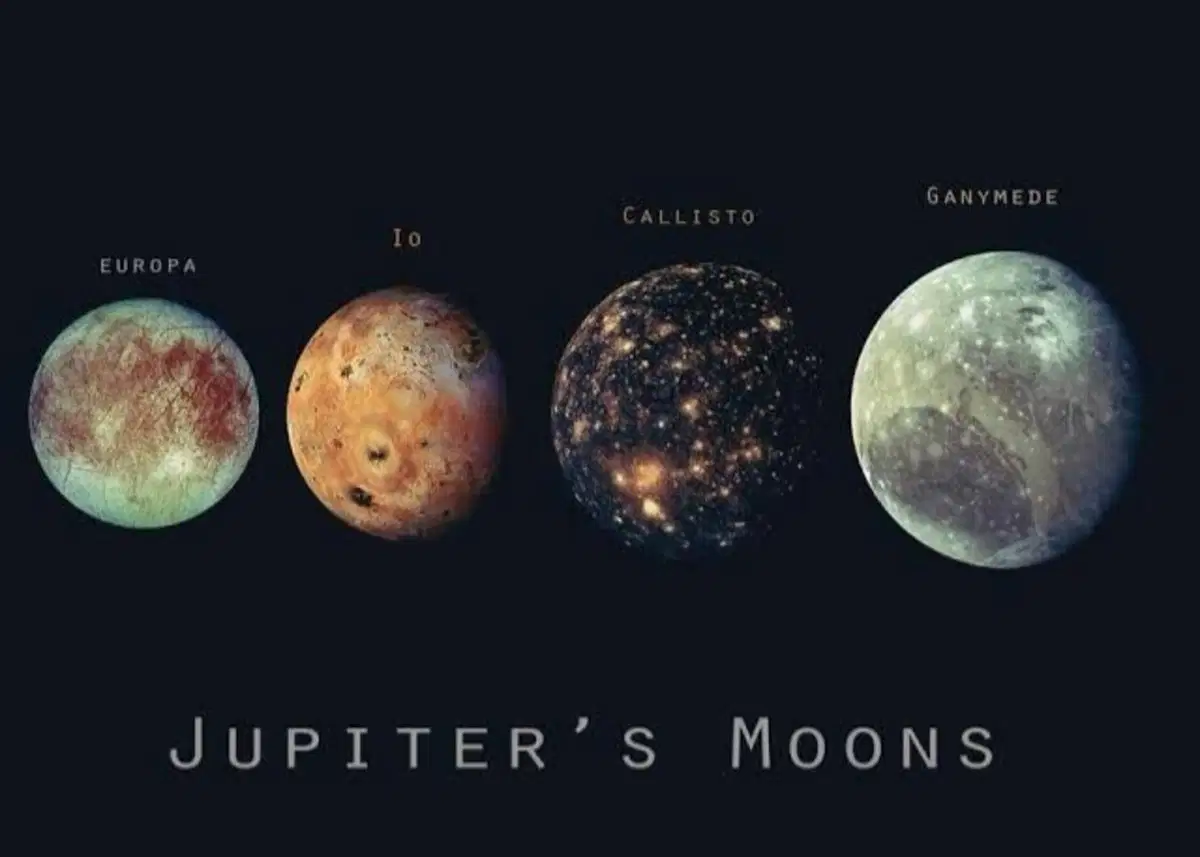
How many moons does Jupiter have? (Remembering)
8
27
60
100

What discovery was made about Saturn through the use of telescopes? (Understanding)
It has moons.
It has rings.
It has a strong gravitational pull.
It is the largest planet.

What did astronomers realise about our galaxy, the Milky Way, from using telescopes? (Understanding)
It is the only galaxy in the universe.
It is made up of billions of stars.
It is located in the centre of the universe.
It is shrinking in size.
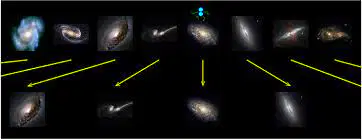
What did Edwin Hubble discover about galaxies? (Understanding)
Galaxies are stationary and do not move.
Galaxies are moving closer to each other.
Galaxies are moving away from each other.
Galaxies rotate around a central point.
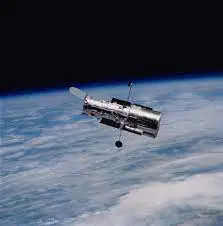
What is the name of the telescope that was built in space and named after Edwin Hubble? (Remembering)
Kepler Space Telescope
Hubble Space Telescope
James Webb Space Telescope
LUVOIR Telescope

What is the primary advantage of the Hubble Space Telescope compared to ground-based telescopes? (Understanding)
It is free from light distortion caused by the atmosphere.
It has a larger mirror for better resolution.
It is closer to the Moon for clearer observations.
It has a shorter exposure time for faster imaging.

What is the proposed name for the next-generation space telescope that will succeed the Hubble Space Telescope? (Remembering)
LUVOIR
Kepler
James Webb
Galileo

What is one of the challenges in astronomy that scientists still need to explain? (Understanding)
The structure of galaxies
The existence of black holes
The nature of dark matter
The behavior of comets
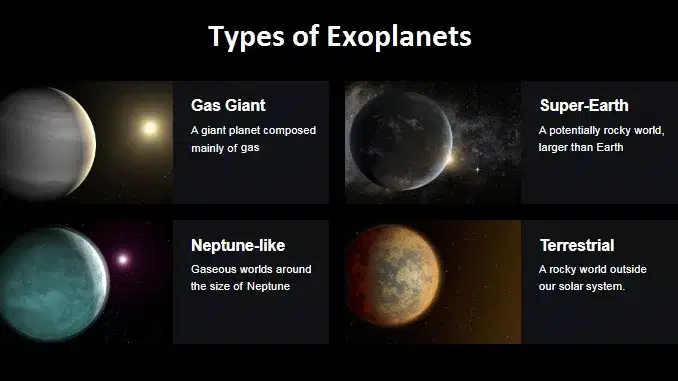
What is the main objective of LUVOIR, the proposed new telescope technology? (Understanding)
Analysing the atmospheres of exoplanets for signs of life
Exploring the asteroid belt for valuable resources
Mapping the surface of Mars in high resolution
Observing distant supernovae for cosmic expansion studies

