
 Worksheets
Year 8 Energy & SIS Revision
Total questions: 23
Worksheet time: 23mins
State the Law of Conservation of Energy
Energy is...
The ability to do work (make things happen)
Something that we all have
Possessed by all living things
Not always efficient
Select the answer with all 9 forms of energy that you have learnt about this term.
Kinetic, elastic potential, chemical, gravitational kinetic, nuclear, sound, heat, light and electrical.
Kinetic, elastic kinetic, chemical, gravitational potential, sparking, sound, heat, light and electrical.
Kinetic (mechanical), gravitational potential, elastic potential, chemical, nuclear, sound, heat, electromagnetic (light) and electrical.
Moving, gravitational potential, elastic kinetic, chemical, nuclear, sound, heat, electromagnetic (light) and electrical.
Energy is measured in...
Efficiency
millimetres, centimetres, and metres
Joules, kiloJoules, and MegaJoules
percentages
Convert 540 J to kJ
0.054 kJ
54 kJ
5.4 kJ
0.54 kJ
Convert 6000 kJ to MJ
600 MJ
60 MJ
6 MJ
0.6 MJ
(a) energy is the stored energy that an object may have based on its size, shape, position, or material that it is made from.
(a) , or mechanical energy is the energy that an object has because of its motion.
Which of the following are all types of potential energy?
Chemical, electromagnetic, elastic potential, gravitational potential.
Chemical, nuclear, elastic potential, and gravitational potential.
Nuclear, elastic potential, gravitational potential, and sound.
Sound, electromagnetic (light), thermal, electric.
Select all the forms of energy that are kinetic.
Electromagnetic (light) energy.
Thermal (heat) energy.
Sound energy.
Electrical energy.
Which of the following is NOT an example of electromagnetic energy.
Visible light.
X-rays.
UV rays.
Magents
Select each of the methods of heat transfer
Conduction
Convection
Ratiaton
Insulation
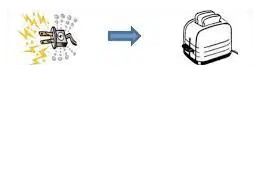
Which energy transformations are occurring in this image?
Electrical --> Heat & Light
Electrical --> Heat
Electrical --> Heat & Sound
Electrical --> Sound & Light
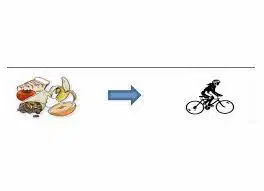
Which energy transformations are occurring in this image?
Chemical --> Mechanical kinetic + Heat + Sound
Chemical --> Mechanical kinetic
Chemical --> Mechanical kinetic + Electrical
Nuclear --> Mechanical kinetic + Heat + Sound
Which of the following statements is true?
An object can only posses one form of energy at a time.
Energy transfers and transformations can occur within the same process.
Every energy transformation is 100% efficient.
Energy can be created.
Identify the wasted energy when an electric drill is used.
Sound energy.
Heat energy.
Kinetic energy
What is the form of energy that is used to power a TV?
Electrical
Chemical
Nuclear
Select the best definition of 'energy efficiency'
A measure of how good the energy is at doing a desired task.
A measure of how much energy is transformed into useful energy for performing a task, compared to wasted energy.
Complete the formula. Energy efficiency =
input energy x 100 / useful energy
input energy / useful energy x 100
useful energy / input energy x 100
useful energy x 100
A hair straightener requires 180 kJ of energy to produce 120 kJ of heat energy. Calculate the energy efficiency, and show your working out.
An inference is...
Made using your 5 senses.
A conclusion reached based on evidence or prior knowledge.
A statement that seems to be true in most situations or for most people, but that may not be completely true in all cases.
A predition
A possible explanation based on observation and personal knowledge is called a(n)...
Observation
Generalisation
Hypothesis
Inference
An observation is...
Not something that you can see.
Made using your 5 senses.
Something that is visible.
A predition

