wayground logo

Free Printable Worksheets

Font size

S
M
L
XL
Worksheets

Science

Total questions: 121

Worksheet time: 2hrs 1mins

Name
Class
Date
1.

Earth spinning on its axis is an example of

a)

Rotation

b)

Revolution

2.

Earth traveling around the sun is an example of

a)

Rotation

b)

Revolution

3.

How long does it take the Earth to make a complete turn on its axis? Select all of the correct answers

a)

1 year

b)

24 hours

c)

1 day

d)

365 1/4 days

4.

___________ is the path an object takes around another object in space.

a)

Rotate

b)

Revolve`

c)

Axis

d)

Orbit

5.

How long does it take Earth to make one complete revolution around the sun? Select all of the correct answers

a)

1 year

b)

1 day

c)

24 hours

d)

365 1/4 days

6.
When an object orbits another object, it _________.
a)
explodes
b)
revolves
c)
vibrates
d)
rotates
7.
Day and night is caused by the _____________ of earth on its axis.
a)
revolution
b)
orbit
c)
rotation
d)
apparent motion
8.
About how long does it take the Earth to make one REVOLUTION around the Sun?
a)
12 hours
b)
24 hours
c)
365 days
d)
29.5 days
9.

The surface of the earth is

a)

curved

b)

flat

10.

Mark the objects which are sources of lights,

a)

Magnet

b)

Sun

c)

Dinosaur

d)

Binoculars

e)

Fire

11.

Light cannot pass through a dictionary. Why is this?

a)

Because a book is opaque.

b)

Because light travels fast.

c)

Because a book is transparent.

d)

Because the book would be too heavy.

12.

At what times of day are outside shadows longest? Find 2 answers.

a)

Early morning

b)

Noon

c)

Late Afternoon

d)

Evening

e)

Midnight

13.

A shadow is created when

a)

An object blocks the light.

b)

An object let light passes through

c)

An object above light

14.

Shadows are shortest

a)

At night

b)

In the morning

c)

In the middle of the day

d)

In the Evening

15.
What is this?
a)
Opaque
b)
transparent
c)
translucent
16.
What is this
a)
opaque
b)
transparent
c)
translucent
17.
what is this
a)
translucent
b)
transparent
c)
opaque
18.
The water is what
a)
opaque
b)
translucent
c)
transparent
19.
What is this
a)
translucent
b)
transparent
c)
opaque
20.
What is this
a)
translucent
b)
opaque
c)
transparent
21.
What is this
a)
translucent
b)
transparent
c)
opaque
22.
This is when some light passes through, but some light does NOT pass through.
a)
opaque
b)
translucent
c)
transparent
23.
What is this
a)
opaque
b)
transparent
c)
translucent
24.
When ALL of the light is blocked
a)
translucent
b)
opaque
c)
transparent
25.
When ALL of the light goes though an object
a)
opaque
b)
transparent
c)
translucent
26.
What is this
a)
translucent
b)
transparent
c)
opaque
27.
What is this
a)
translucent
b)
transparent
c)
opaque
28.

When an object blocks the path of light, what is formed?

a)

A problem

b)

A fog

c)

A reflection

d)

A shadow

29.

When an object moves closer to a light source, its shadow...

a)

Gets smaller

b)

Gets bigger

c)

Changes shape

d)

Stays the same size

30.

When the sun gets higher in the sky, shadows get ______.

a)

longer

b)

gone

c)

shorter

d)

darker

31.

1. What is our main source of light?

a)

sun

b)

moon

c)

trees

32.

1. What is the only form of energy we can see?

a)

prism

b)

light

c)

mirror

33.

Which object allows you to see your reflection?

a)

rock

b)

mirror

c)

paper

34.

Choose all pictures that are living things.

a)
b)
c)
d)
e)
35.

1. Living things need food and water to _____________

a)

Sleep

b)

live

c)

talk

d)

none of these

36.

2. Living things need air to __________

a)

Eat

b)

Drink

c)

Breathe

d)

none of these

37.

3. ___________ things do not eat

a)

living

b)

non living

38.

4. Identify living or non living

a)

living

b)

non living

39.

5. Identify

a)

Natural

b)

Man made

c)

living

d)

None of these

40.

6. Living things can reproduce

a)

True

b)

False

41.

7. Identify

a)

natural

b)

man made

42.

8. Identify the natural living thing

a)
b)
c)
d)
43.

9. Identify the natural non living thing

a)
b)
c)
d)
44.

10. Non living things can drink water

a)

True

b)

False

45.

11. living things can grow

a)

true

b)

false

46.

____________ things are made by people.

a)

Natural

b)

Living

c)

Man made

d)

None of these

47.

A habitat is a place where a creature can (a)   .

48.

A house is not a habitat.

a)

True

b)

False

49.

What is this habitat?

a)

Forest

b)

Grassland

c)

Savanah

d)

Desert

50.

All fish can survive in seas.

a)

True

b)

False

51.

All plants cannot survive in one habitat.

a)

True

b)

False

52.

Where do Arctic foxes live?

a)

Arctic

b)

Tundra

c)

Grassland

d)

Desert

53.

Do you like habitats?

4 lines
54.

The Arctic is very (a)  

55.

Choose all the microhabitats.

a)

Log

b)

Rock

c)

Tree

d)

Ant hill

56.

Are microhabitats small?

a)

Yes

b)

No

57.
A place where plants and animals live and grow naturally is called a ______________.
a)
shelter
b)
tree
c)
habitat
d)
organism
58.

What is the habitat shown in the picture?

a)

jungle

b)

desert

c)

arctic

d)

ocean

59.

What can we find in this habitat?

a)

polar bear

b)

tiger

c)

camel

d)

crocodile

60.

Where can we find this animal?

a)
b)
c)
61.

What is the habitat shown in the picture?

a)

ocean

b)

desert

c)

mountains

d)

jungle

62.

What animals do we find in this habitat?

Choose TWO.

a)
b)
c)
d)
63.

You find _______ in the jungle.

a)

coral

b)

trees

c)

polar bear

d)

shark

64.

Where do we find this animal?

a)
b)
c)
65.

Name the habitat.

a)

polar region

b)

ocean

c)

jungle

d)

desert

66.
What is true about habitats?
a)
they must be warm during the year for plants to survive
b)
they all have different kinds and amounts of soil, water, sunlight, and living things. 
67.
Where does this animal live?
a)
grassland
b)
jungle
c)
ocean
d)
arctic
68.
Habitat means . . .
a)
what an animal eats
b)
what an animal drinks
c)
baby animals
d)
where an animal lives
69.
Which habitat is very dry, has very little plant life, and is too hot to support many animals?
a)
Stream
b)
Forest
c)
Desert
d)
Polar Region
70.
What kind of environment is shown in the picture?
a)
swamp
b)
grassland
c)
forest
d)
desert
71.

A habitat is a specific place that an animal lives.

a)

True

b)

False

72.
All habitats are the same 
a)
True 
b)
False 
73.
Which plant grows in a desert and can store water in its stems?
a)
Cactus
b)
Kelp
c)
Grass
d)
Water lily 
74.
Any animal can live in any habitat. 
a)
True 
b)
False 
75.

This is a ........

a)

forest

b)

mountain

76.

Habitats provide all of the following, EXCEPT...

a)

Food

b)

toys

c)

Water

d)

Shelter

77.
Fish, dolphins, whales, sea turtles, and plants live here. What habitat is this describing?
a)
Stream
b)
Polar Region
c)
Rainforest
d)
Ocean
78.
A desert habitat is cold and wet.
a)
True
b)
False
79.
All habitats are the same 
a)
True 
b)
False 
80.
What animal would you most likely find in the forest habitat?
a)
Sea Turtle
b)
Dragon Fly
c)
Brown Bear
d)
Zebra
81.

What is the main reason why Penguin belongs to arctic?

a)

They like to play with snow

b)

There's plenty of fish in the sea to eat

c)

There's lots of snow

82.

What is the habitat of a Scorpion?

a)

arctic

b)

aquatic

c)

desert

d)

forest

83.
a)

polar region

b)

mountain

84.
What animal would you most likely find in the desert habitat?
a)
Squirrels 
b)
Foxes
c)
Camels
d)
Sharks
85.

What habitat has the most amount of trees?

a)

Forest

b)

Desert

c)

Aquatic

d)

Arctic

86.
A habitat with many trees with leaves that change with the color of the season is called a ___________________.
a)
forest
b)
rainforest
c)
tundra
d)
savanna
87.
a)

Healthy

b)

Unhealthy

88.
a)

Healthy

b)

Unhealthy

89.
a)

healthy

b)

unhealthy

90.
a)

Healthy

b)

Unhealthy

91.
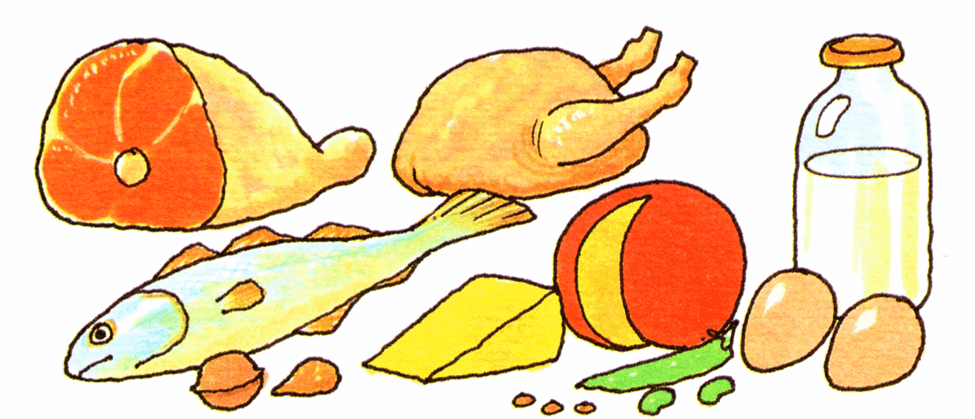
Eggs, meats, beans, and nuts are all part of what food group?
a)
fruit
b)
protein
c)
calcium
d)
grain
92.
Nutrients are the materials in food that are used by your body.  You need these nutrients and water to keep you .....
a)
strong
b)
healthy
c)
energetic
d)
all of these
93.
Which of the following food items is not a starch carbohydrate?
a)
rice
b)
pasta
c)
bread
d)
orange
94.
Processed sugar gives you energy and helps your body in other healthy ways as well.
a)
True
b)
False
c)
Partly true but processed sugar does not help your body in other ways
d)
Partly true except it doesn't give you energy.
95.
Bananas are a rich source of protein.
a)
True
b)
False
96.
Potatoes -------
a)
Grains
b)
Milk
c)
Protein
d)
Vegetable
97.
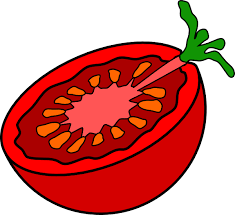
Tomatoes are a ...
a)
fruit
b)
vegetable
c)
fruit and vegetable
d)
grain
98.
Flounder is a ...
a)
milk
b)
protein
c)
grain
d)
fat, oils and sweets
99.
Chicken, fish and meat contain which nutrient?
a)
Protein
b)
Carbohydrate
c)
Fats
d)
Minerals
100.
Which component of a healthy, balance diet is responsible for providing energy before an event?
a)
Fats
b)
Proteins
c)
Carbohydrates
d)
Vitamins
101.
Not eating too much or too little means we are eating in ____________________.
a)
moderation
b)
sufficiently
c)
balanced
d)
variety
102.
__________________ are examples of high energy high nutrient food
a)
Fruits & vegetables
b)
Chocolate & Ice cream
c)
Milk & Cheese
d)
Pancake & Maple syrup
103.

Which of the following foods is a good source of protein?

a)

Fruit

b)

Salad

c)

Butter

d)

Meat

104.

Fruit and vegetables are a good source of ?

a)

Vitamins

b)

Minerals

c)

Both of the above

105.
The  ____________ provides all the initial energy to plants.
a)
sun
b)
moon
c)
environment
d)
water
106.
An animal that eats other animals is a....
a)
carnivore
b)
omnivore
c)
herbivore
d)
decomposer
107.
Animals that are being hunted and eaten by predators.
a)
prey
b)
extinct
108.
An animal that eats only plants is an...
a)
carnivore
b)
omnivore
c)
herbivore
d)
decomposer
109.
Where an animal lives is called the animal's ______
a)
wildlife
b)
habitat
c)
environment 
d)
carnivore 
110.
Which of the following is a producer?
a)
Maple tree
b)
Sunfish
c)
Bunny
d)
Bear
111.
Where does the energy start in this food chain?
a)
Plant
b)
Sun
c)
Deer
d)
Wolf
112.

What is a food chain?

a)

The flow of energy from one thing to another

b)

The way animals eat each other

c)

The way the sun makes everything

d)

How the plants grow

113.
What is a producer? 
a)
Organism that creates their own food.
b)
Organism that eat other organisms for energy
c)
Organism that eat other dead organisms
114.
What is a consumer? 
a)
Organism that creates their own food.
b)
Organism that eat other organisms for energy
c)
Organism that eat other dead organisms
115.
What do Herbivores eat? 
a)
Plants ONLY 
b)
Animals ONLY
c)
Plants AND Animals
116.
What are animals called in a food chain?
a)
Producers
b)
Consumers
c)
Decomposers
d)
Plants
117.
What are plants called in a food chain?
a)
Producers
b)
Consumers
c)
Decomposers
d)
Scavengers
118.
What is the role of a producer?
a)
Use sunlight to make food
b)
Gain energy from eating other organisms
c)
Keep other species from overpopulating
d)
Breaking down dead stuff 
119.
Which type of consumer eats meat and plants?
a)
Herbivores
b)
Carnivores
c)
Omnivores
d)
Plants
120.

Deer is

a)

a herbivore.

b)

an omnivore.

c)

a carnivore.

d)

a decomposer.

121.

Grass --> ________ --> lion. What is the missing part of this food chain?

a)

maize

b)

deer

c)

ant

d)

hawk