
 Worksheets
Physics-11 Sound
Total questions: 10
Worksheet time: 14mins

When the oscillations are (a) or from side to side like those above, the waves are called (b) . In transverse waves, the (c) are at (d) to the direction of travel.
Click on the longitudinal wave:

The (a) of the waves is measured in metres per second (m/s).
(b) This is the number of waves passing any point per second. The
SI unit of _____ is the (c) .
(d) This is the distance between any point on
a wave and the equivalent point on the next.
(e) This is the maximum distance a point moves
from its rest position when a wave passes.

What is the Frequency if the wavelength is 3 meters and the speed is 15m/s
(answer is in hertz)

Sound waves are (a) . The air (b) backwards and
forwards as the compressions and (c) pass through it. When a
compression passes, the air pressure rises. When a rarefaction passes, the pressure falls. The distance from one compression to the next is the (d) .

The material in which a sound waves travel is called the ______.
medium
vacuum
frequency
amplitude

Sound cannot travel through a (a) >

Match the following
gas
fast
liquid
faster
solid
fastest
vacuum
cannot travel through this

The number of oscillations per second is called the (a) . It is measured
in (b) (Hz) 赫兹. 100 Hz=100 oscillations in one second
Different frequencies sound different to the ear. You hear high frequencies
as high notes: musicians say that they have a (c) 高音调. You hear low
frequencies as low notes: they have a (d) 低音调.
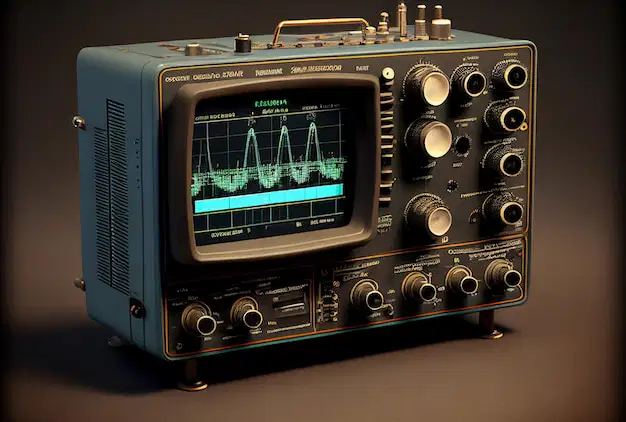
The (a) on the (b) is a graph showing how the air pressure varies with time as the sound waves enter the (c) . The horizontal line is the time axis.

