wayground logo

Free Printable Worksheets

NEW

Font size

S
M
L
XL
Worksheets

Yr8 Heating & Cooling Orientation

Total questions: 29

Worksheet time: 15mins

Name
Class
Date
1.
How do gases behave in a container?
a)
Cluster together
b)
form a solid
c)
They take the shape of their container
d)
leak out 
2.
Which states allow easy flow of particles
a)
Gas and Solid
b)
Gas and Liquid
c)
Solid and Liquid
d)
Gas only
3.
How do materials change from one state of matter to another?
a)
They gain or lose energy
b)
They break appart
c)
The particles get stickyer
d)
They are magnetised to themselves
4.
Which of the following is a property of a liquid
a)
Can't be compressed
b)
Can be compressed
c)
Particles are far appart
d)
Particles hold the object's shape 
5.
Can Solids be compressed?
a)
No
b)
Yes
c)
Sometimes (it depends what it's made of)
d)
Generally no
6.
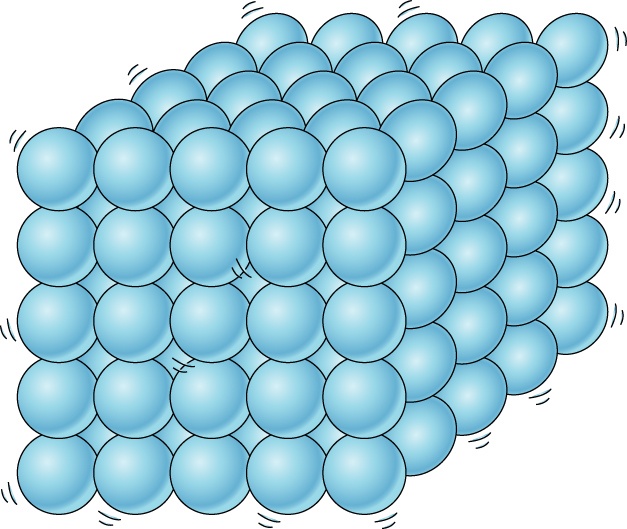
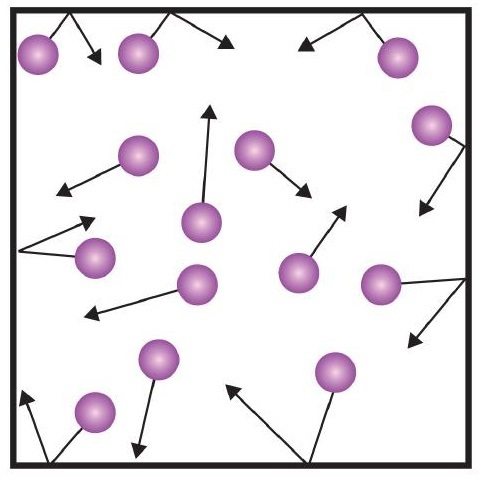
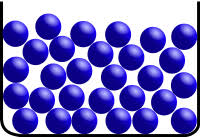
Which description best matches this particle model?
a)
Closely packed and can't move a lot. 
b)
Particles are close together but can move a little. 
c)
Particles have lots of energy and can move around. 
7.
Which description best matches this particle model?
a)
Closely packed and can't move a lot. 
b)
Particles are close together but can move a little. 
c)
Particles have lots of energy and can move around. 
8.
Which description best matches this particle model?
a)
Closely packed and can't move a lot. 
b)

Particles are touching but they can move a little. 

c)
Particles have lots of energy and can move around. 
9.
Which description best describes what a particle model shows?
a)
How many particles are in a solid, liquid or gas.
b)
How the particles in a solid, liquid or gas are arranged. 
c)
If there are any particles in a solid liquid or gas. 
10.

what state does this particle model diagram represent?

a)

solid

b)

liquid

c)

gas

11.

what state does this particle model represent?

a)

solid

b)

liquid

c)

gas

12.

what state does this particle model diagram represent?

a)

solid

b)

liquid

c)

gas

13.

NEW TOPIC: In heat transfer, thermal energy always flows from the _______________ substance to the _______________ substance.

a)

hotter to colder

b)

colder to hotter

c)

hotter to hotter

d)

colder to colder

14.

NEW TOPIC: Two objects at different temperatures are in contact. Which of the following happens to their thermal energy?

a)
Their thermal energies remain the same.
b)
Thermal energy passes from the cooler object to the warmer object
c)
Thermal energy passes from the warmer object to the cooler object.
d)
Thermal energy passes back and forth equally between the two objects.
15.

NEW TOPIC: What is the term that refers to a material being a poor conductor of heat?

a)

insulator

b)

conductor

c)

convector

d)

radiator

16.

NEW TOPIC: What causes hot and cold water to become the same temperature once they are combined?

a)

The cold energy moves from the cold water to the hot water

b)

The heat energy of the hot water runs out

c)

Thermal energy from the hot water is transferred to the cold water

d)

Thermal energy from the cold water is transferred to the hot water

17.

NEW TOPIC: If each of these objects is filled with water of the same temperature, which has the highest thermal energy?

a)

A drinking cup

b)

An Olympic swimming pool

c)

A hot water bottle

d)

A vacuum flask

18.

A hot drink has...

a)

Kinetic Energy

b)

Heat Energy

c)

Thermal Energy

d)

Nuclear Energy

19.

A cyclist at the top of a hill has...

a)

Kinetic Energy

b)

Chemical Potential Energy

c)

Elastic Potential Energy

d)

Gravitational Potential Energy

20.
What type of energy is stored in food and fuel?
a)
Chemical
b)
Thermal
c)
Potential
d)
Calories
21.
What form of energy is also described as "energy of motion"?
a)
Potential
b)
Mechanical
c)
Kinetic
d)
Electrical
22.

What kind of energy is stored in hot objects?

a)

Chemical energy

b)

Thermal energy

c)

Magnetic energy

d)

Gravitational energy

23.
True or false. Energy can be created and destroyed.
a)
True
b)
False
24.

What is energy?

a)

It makes stuff happen

b)

Stored energy

c)

Renewable energy

d)

The ability to do work.

25.

When particles gain thermal energy, they will start to move ......

a)

slower

b)

faster

c)

in more directions

d)

the same amount

26.
The SI unit in which kinetic energy is measured is 
a)
Newton
b)
Kilogram
c)
Joules
d)
Metres per second
27.

What are the three states of matter?

a)

Rock, Brick, Shoe

b)

Solid, Liquid, Gas

c)

Liquid, Water, Soda

d)

Rain, Sleet, Snow

28.
A tool used to measure temperature.
a)
scale
b)
graduated cylinder
c)
themometer
d)
magnifying glass
29.
When the temperature of matter increases the particles...
a)
speed up and move closer
b)
speed up and move farther apart
c)
slow down and move closer together
d)
slow down and move farther apart