
 Worksheets
Learners License Test
Total questions: 35
Worksheet time: 6mins
You can drive a moped on a car licence. True or False?
True
False
At night, what must a towed vehicle have at the back of it?
A white flag
Reflective tape
A white light
A red light
You are waiting at a railway level crossing and the red lights continue to flash after the train has passed. What should you do?
Drive on carefully
Stay stopped until the lights stop flashing
Check both ways and then drive on quickly
Count to 15 and then drive on
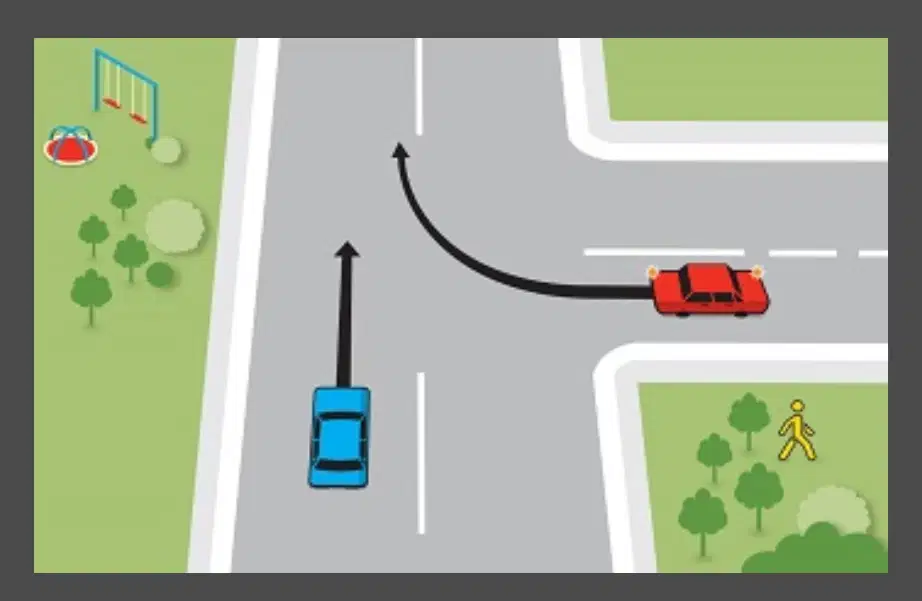
Does the driver of the blue car have to give way?
Yes
No
What is the maximum legal speed for a car towing a trailer on the open road?
70 km/h
80 km/h
90 km/h
100 km/h
When passing a horse and rider, what should you do?
Sound your horn on approach
Slow down and give plenty of room
Increase speed to pass quickly
Cross the centreline to pass
What is the safest way to carry goods inside a vehicle?
On the passenger seat
On the floor
On the back seat
Somewhere secure
If you are driving at night with your vehicle headlights on high beam, when MUST you dip them?
At all intersections
In a shopping area
For a police officer directing traffic
In a township
You can stop or park your vehicle over a fire hydrant (fire plug) if someone stays with the vehicle who can move it. True or False?
True
False
For the purpose of applying the give way rule, entrance ways into public car parks should be treated as:
As turning bays
As pedestrian crossings
As intersections
As residential driveways
When driving on an unlaned road, your vehicle should be positioned:
1 metre from the centre
1 metre from the left kerb
Close to the centre of the road
As close to the left side of the road as possible
What is the speed limit for vehicles passing a school bus that has stopped to let children on or off?
20 km/h
30 km/h
40 km/h
50 km/h

What does this traffic signal mean?
Drive on before the signal changes to red
Drive on because the signal will turn green
Stop if you can do so safely
Stop only if traffic is in the way
What is the closest distance your vehicle may be parked to a vehicle entrance?
0.5 metre
0.75 metre
1.00 metre
1.25 metres
What must be displayed on the back of a trailer being towed at night?
A white flag
A red light
A reflective flag
A white light
What is the maximum distance a load may overhang your vehicle behind the rear axle?
2 metres
4 metres
1.25 metres
1.50 metres
What must you do if glass falls on to the road from your vehicle?
Sweep it up within 2 hours
Sweep it up straight away if you can do so safely
Sweep it up within 24 hours
Tell a police officer
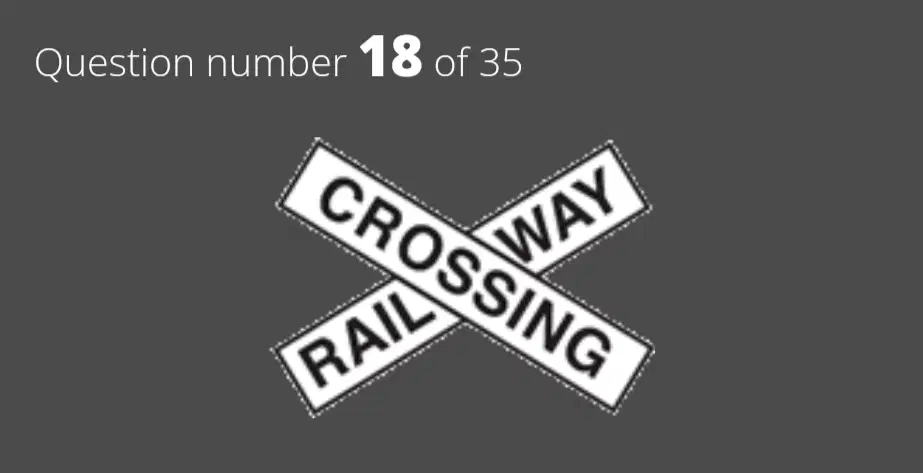
What does this sign mean?
Playground ahead
Railway station ahead
Railway crossing ahead
Railway bridge ahead
What is the maximum distance a load may extend in front of a car?
2 metres forward of the front edge of the front seat
4 metres forward of the front edge of the front seat
3 metres forward of the front edge of the front seat
2.5 metres forward of the front edge of the front seat
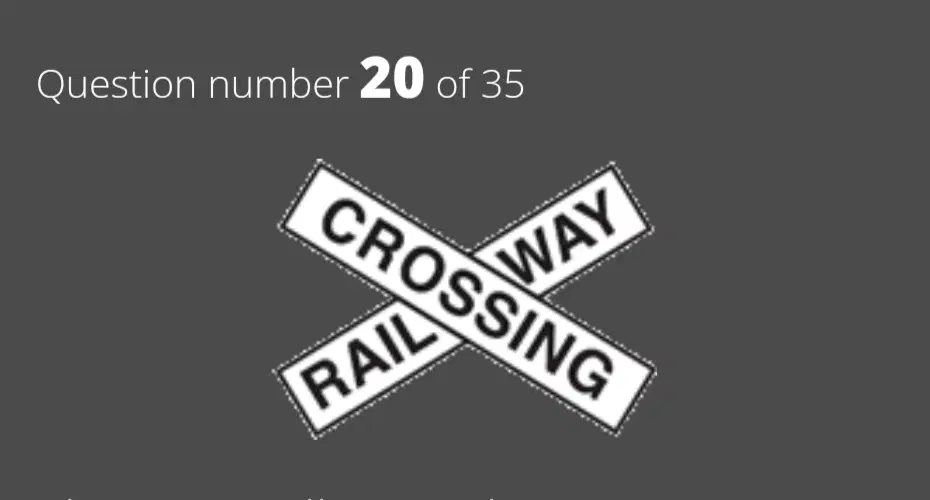
This sign tells you that you are coming up to a railway level crossing. What should you do?
Slow down so that you can look both ways before crossing
Stop before driving over the crossing
Slow down and sound your horn before crossing
Look right for trains
What rule should you use to judge a safe following distance in wet or frosty conditions if driving a car?
The 1-second rule
The 2-second rule
The 3-second rule
The 4-second rule
What will happen if you have a front tyre blow out?
The car will slowly come to a stop
The rear will sway from side to side
The car will always pull towards the left
The car will pull towards the side of the blowout
What is the minimum tread depth required for car tyres?
2.0 mm
1.5 mm
1.0 mm
0.5 mm
When traffic is merging, what is a good rule to follow?
Slow down to 40 km/h
Speed up to make room behind
Let a vehicle from the other lane go first, and then go
Let 2 vehicles in and go
You are driving on a country road at night when your vehicle headlights suddenly go out. What is the safest thing to do?
Carry on driving with your park lights on
Carry on driving but keep to the far left
Carry on driving with your vehicle's interior lights on
Slow down and move off the road to stop. Then turn your hazard lights on
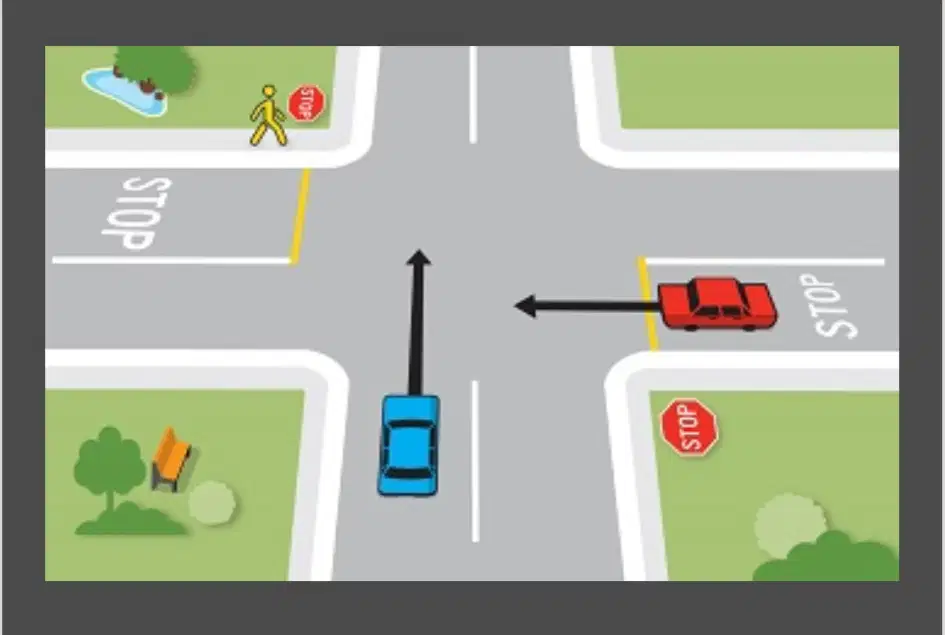
Does the driver of the blue car have to give way?
Yes
No
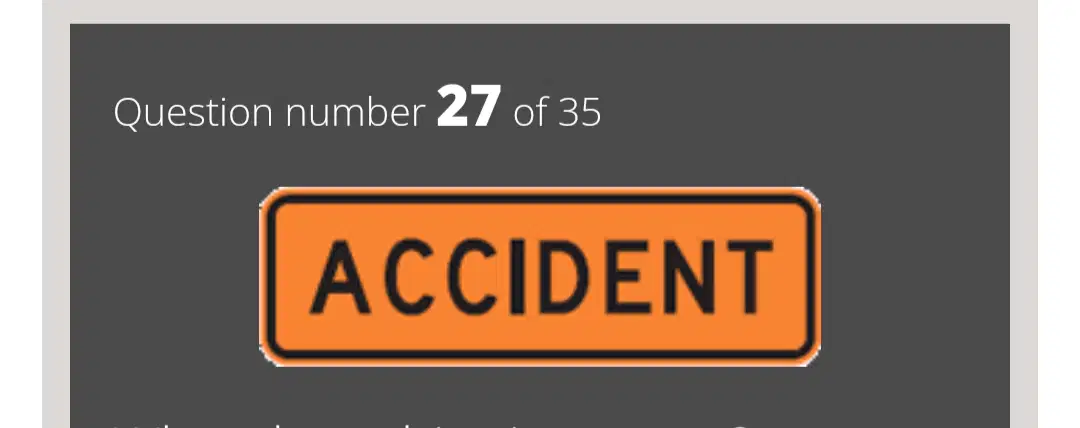
What does this sign mean?
Slow down to 20 km/h until you have passed the crash
Others have crashed here in the past
There has been a crash - slow to 30 km/h
There has been a crash - stop immediately
What must you do when you hear a siren or see red flashing lights from an ambulance or fire engine?
Speed up to get out of the way
Drive up over the footpath
Pull over and allow it to pass
Keep driving
When MUST you dip the headlights on your vehicle?
When coming up to an intersection
When driving in city shopping areas
When driving on a winding road
When you are following others
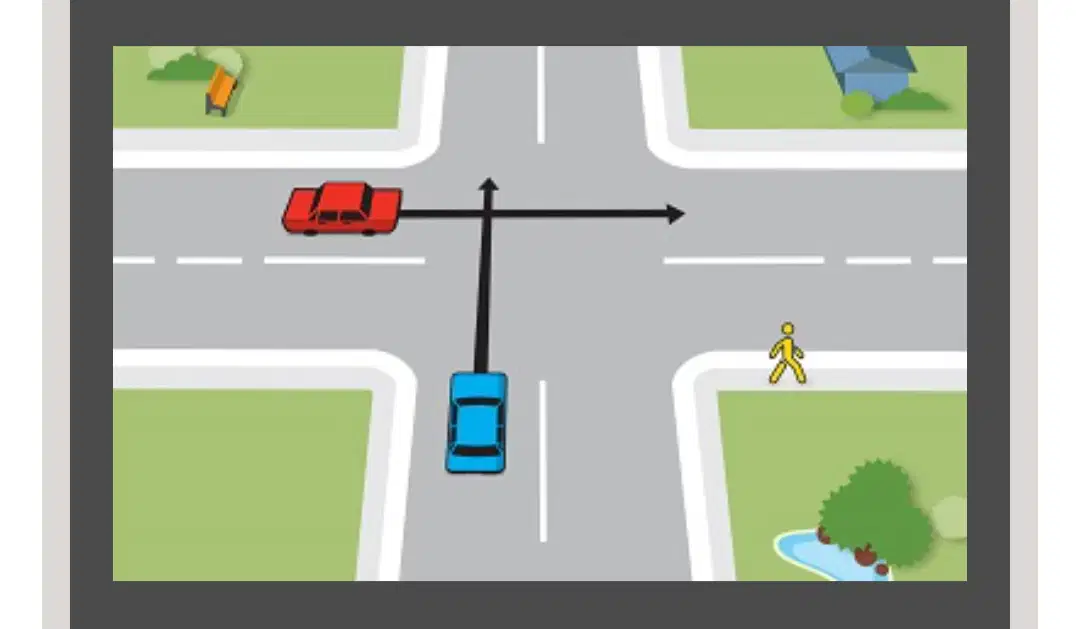
Does the driver of the blue car have to give way?
Yes
No
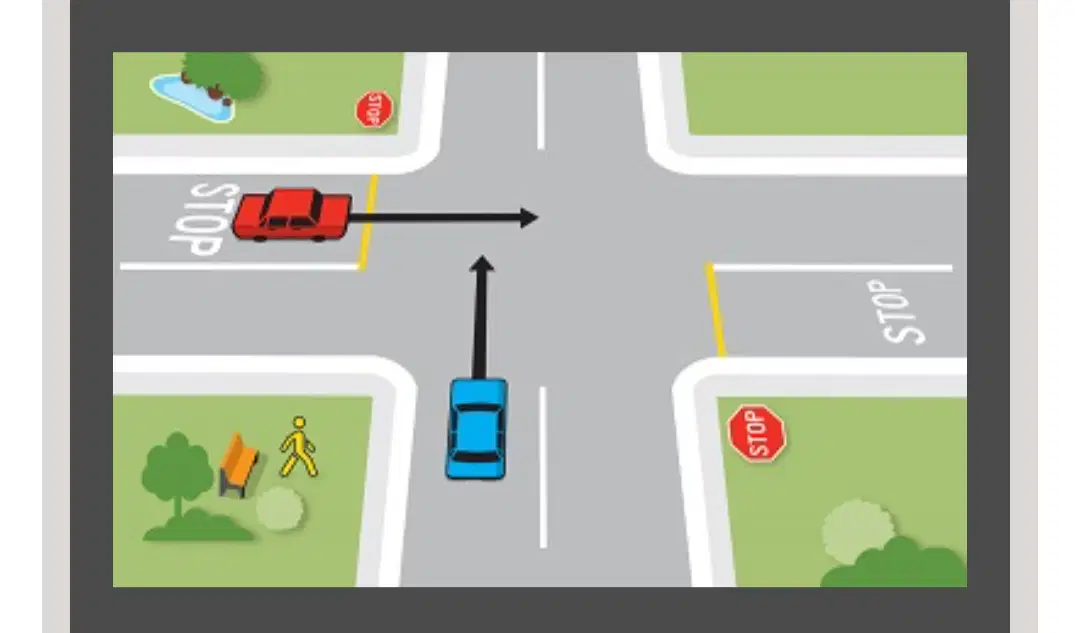
Does the driver of the blue car have to give way?
Yes
No
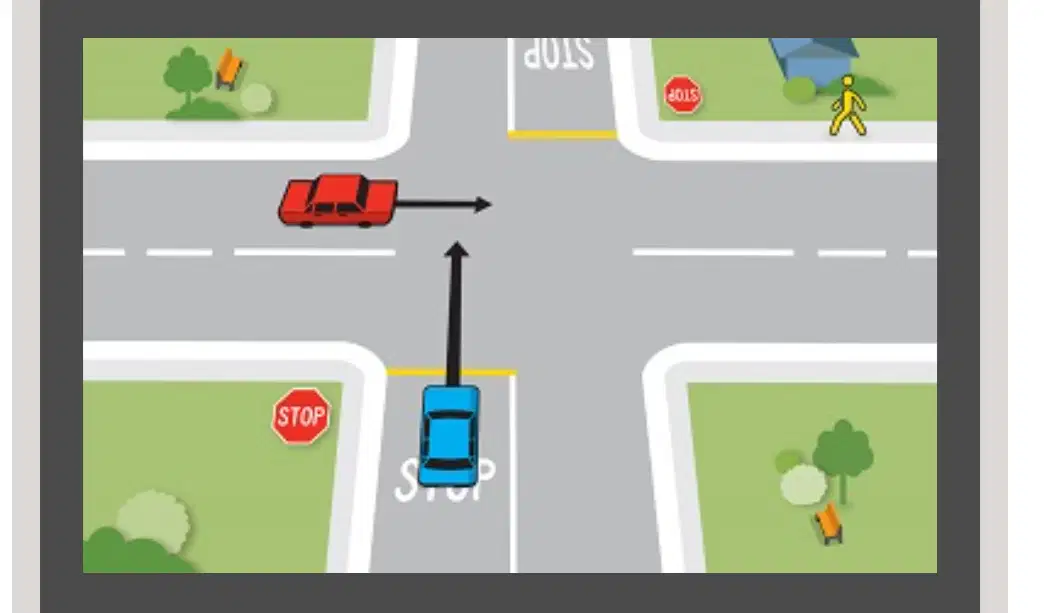
Does the driver of the blue car have to give way?
Yes
No
You are driving in a 100 km/h speed area and you see an accident sign. What speed must you slow down to?
75 km/h
50 km/h
35 km/h
20 km/h
If you tow another vehicle, what is the maximum distance allowed between the two vehicles?
2 metres
4 metres
The length of the vehicle you are driving
The length of the vehicle being towed
What should you do before any modification is carried out on your vehicle?
Ask someone to check whether the modifications are safe
If you can do it yourself you don't need to do anything
Make sure a trained professional is carrying out the modifications
Check with an approved WoF inspector that the modifications are legal

