
 Worksheets
Engg 2112
Total questions: 23
Worksheet time: 46mins
has the goal of re-creating the human brain
- Not only will the truly intelligent machine be able to sense and react to its environment, it will also be able to grow more
intelligent by ingesting new information/data presented to it.
- But AI also includes rule-based algorithms that do not learn to do things they were not programmed to do. These are often hard-coded by human experts.
Artificial intelligence
Machine learning
the subset of AI that learns from data and adapt to changes in the environment
- An ML-enabled system will be able to react to new inputs (never before encountered) and produce sensible outputs,
e.g. the Boston Robotics dog will be able to navigate a path it has not seen before, the Tesla self-driving car will be able to drive down any street and the Google Home can respond to new commands and sensor readings.
- Key idea is that ML algorithms are trained to perform an estimation or decision-making task using training data, and then are expected to perform that task well even on unseen data.
Artificial intelligence
Machine learning
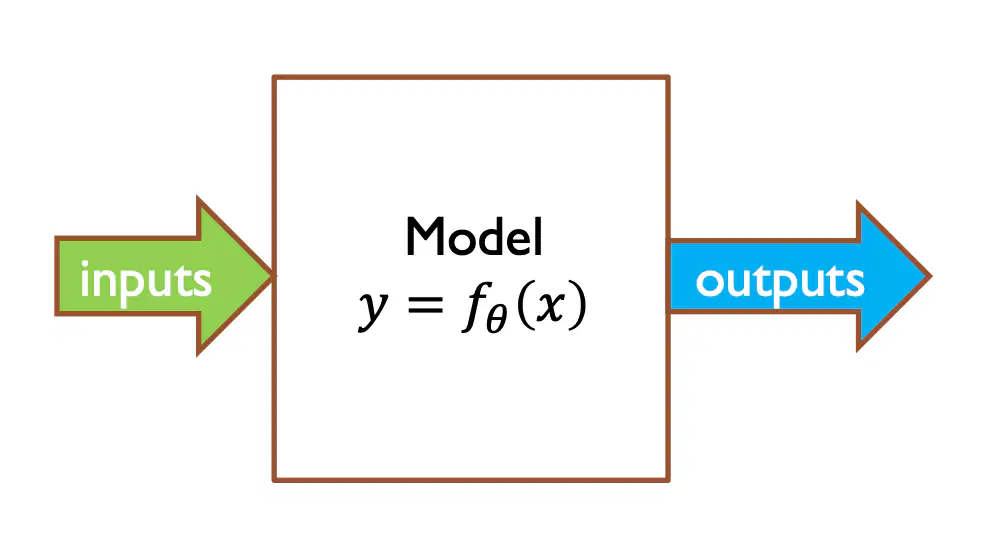
ABSTRACT VIEW OF MACHINE LEARNING: MODEL
First, define a model linking inputs to output(s)
This model has a set of parameters denoted 𝜃
The critical task of ML is to find the best values for the parameters 𝜃 using available data
This is accomplished in the training phase
1-2-3-4
4-3-2-1
ABSTRACT VIEW OF MACHINE LEARNING: MODEL
First, define a model linking inputs to output(s)
This model has a set of parameters denoted 𝜃
The critical task of ML is to find the (a) for the parameters 𝜃 using available data
This is accomplished in the training phase
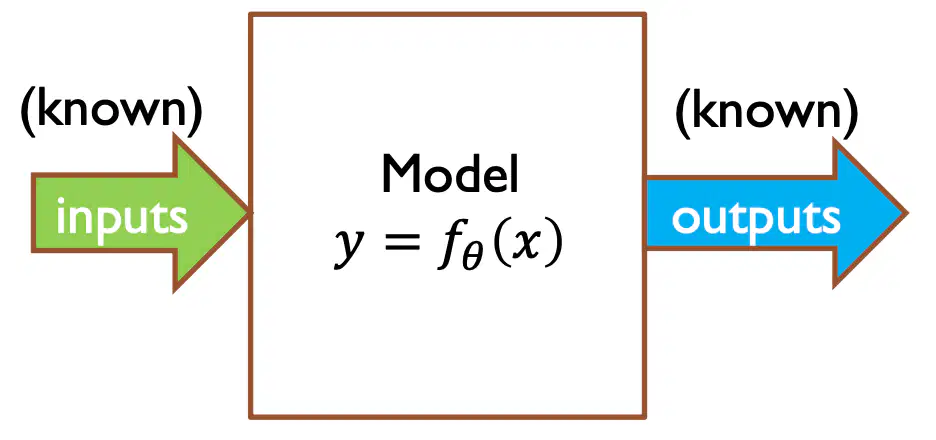
ABSTRACT VIEW OF MACHINE LEARNING: TRAINING/LEARNING
In training phase, use known inputs and outputs to find θ
branches
classification: spam/not spam
regression: output is continuous value price/probability
Supervised learning
Unsupervised learning
Reinforcement learning
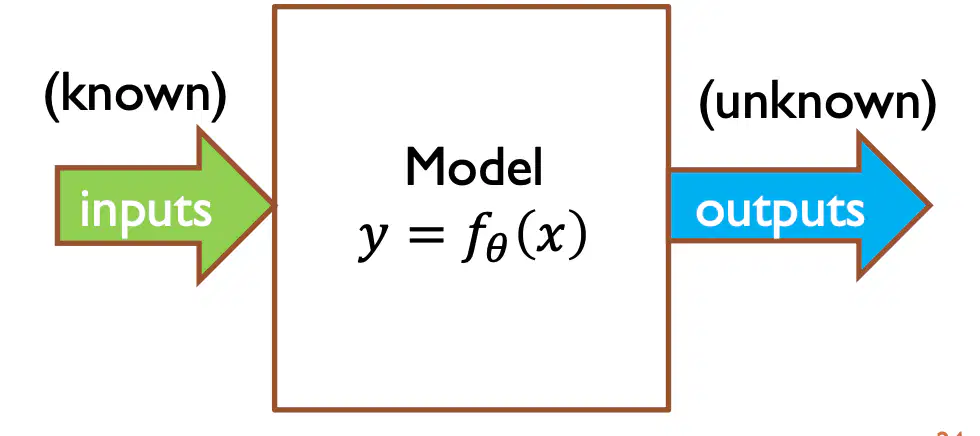
ABSTRACT VIEW OF MACHINE LEARNING: TRAINING/LEARNING
In training phase, input and output are not known so θ can not be found, so objective is to find pattern
clustering: groups similarities customers
association: looks for relationship between variables customer bought this and also bought this
Supervised learning
Unsupervised learning
Reinforcement learning
ABSTRACT VIEW OF MACHINE LEARNING: TRAINING/LEARNING
In training phase, learning which relies on feedback from the environment in response to an action taken by the machine to discover the model parameters.
Supervised learning
Unsupervised learning
Reinforcement learning

After training, we have the “best” setting for 𝜃 and are now ready to deploy the model. This stage is called “ (a) ”.
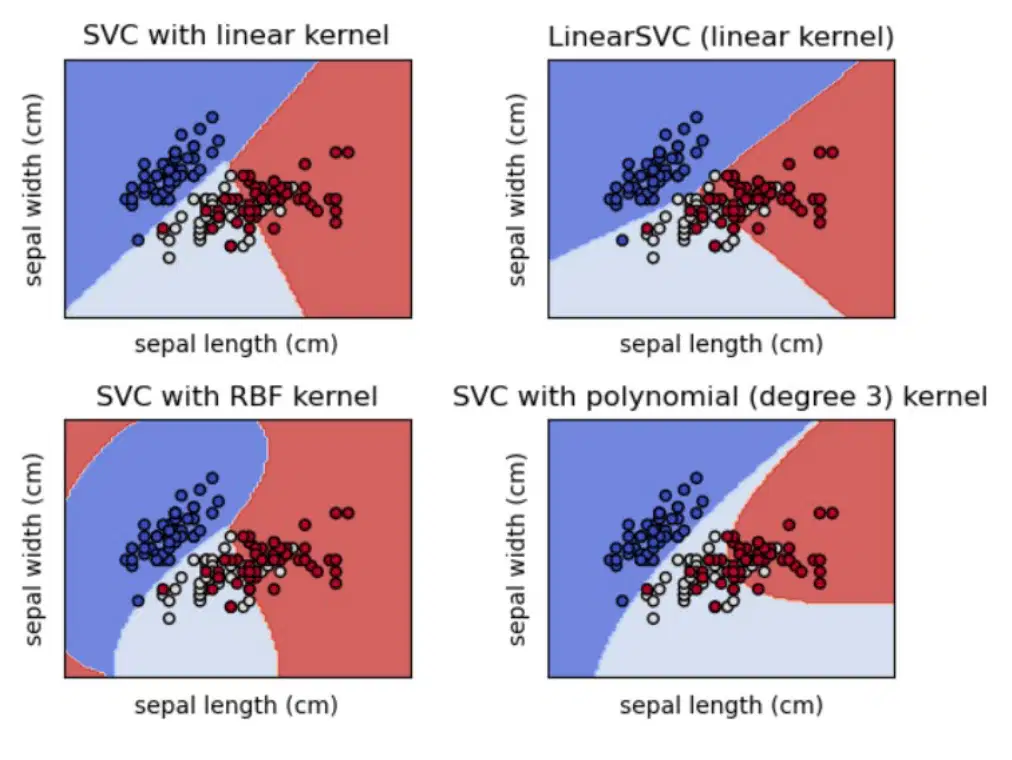
Set of all Sy is finite
To categorize inputs belonging to a particular class
eg. true/false
Classification
Regression
Set of all Sy is uncountable
To estimate the value of response variable given independent inputs
eg. predicting rainfall
Classification
Regression

C
Class of the object that is trying to identify
True positive
True negative
False positive
False negative

C∧
Estimate of the class
True positive
True negative
False positive
False negative
BINARY CLASSIFICATION TESTS
TN+TP+FN+FPTN + TP
Accuracy
Precision
Recall/Sensitivity
Specificity
BINARY CLASSIFICATION TESTS
fraction of truly positive samples correctly labelled as positive
TP+FNTP
Accuracy
Precision
Recall/Sensitivity
Specificity
BINARY CLASSIFICATION TESTS
fraction of truly negative samples correctly labelled as negative
TN+FPTN
Accuracy
Precision
Recall/Sensitivity
Specificity
BINARY CLASSIFICATION TESTS
fraction of truly positive decision that are truly positive
TP+FPTP
Accuracy
Precision
Recall/Sensitivity
Specificity

Graphical representation of the binary classification model for all classification thresholds
(a)

ROC
The larger the area under the curve the ____
the classifier is
better
more worse

Cross Validation
Ways of splitting data into training and testing
(a)

Cross Validation
The testing data is split into 5 folds for the model to learn
eg. Model 1 test: Fold1 train: Fold2-5
After all folds training is done get the average to see if it is accurate
OTHER FORMS OF DATA PRE-PROCESSING
- In sometimes have the case of one class being much more prevalent than the others. This can skew the training of the ML model. This phenomenon is known as ________
eg.
Class 0 (Non-Fraudulent): 95% of the samples
Class 1 (Fraudulent): 5% of the samples
To deal with this, we can perform downsampling (i.e. randomly sampling only a fraction of the majority class) and then upweighting those samples (i.e. giving them greater weight in the training calculations).
Imbalanced (or unbalanced) data
Categorical data
OTHER FORMS OF DATA PRE-PROCESSING
In dealing with ________ (i.e. non-numerical data), e.g. names, types, etc., we would normally have to convert these into a numerical representation since most ML classifiers take only numerical inputs.
One-hot encoding is a method for transforming categorical data to numbers.
Imbalanced (or unbalanced) data
Categorical data
Technique that allows categorical data (eg. fruits) translated to numbers for ML
(a)

