
Font size
 Worksheets
PE Aug 21
Total questions: 68
Worksheet time: 34mins
It means that the muscles of your body are aligned properly.
good posture
poor posture
corrective exercises
It means that the muscles of your body are not properly aligned.
good posture
poor posture
corrective exercises
THese exercises bring the body back into a neutral position so you can move freely.
good posture
poor posture
corrective exercises

neck exercises
shoulders and arms exercises

neck exercises
shoulders and arms exercises

neck exercises
shoulders and arms exercises

neck exercises
shoulders and arms exercises

neck exercises
shoulders and arms exercises

Does this show corrective exercises for the trunk and legs?


Does this show corrective exercises for the trunk and legs?

Does this show corrective exercises for the trunk and legs?

Does this show corrective exercises for the trunk and legs?

Does this show corrective exercises for the trunk and legs?
Wall push-up
Corrective exercise for the trunk
Corrective exercise for the legs
Squats
Corrective exercise for the trunk
Corrective exercise for the legs
Lunges
Corrective exercise for the trunk
Corrective exercise for the legs
Step up and Step down
Corrective exercise for the trunk
Corrective exercise for the legs
Corrective exercises for the trunk helps in boosting upper body strength.
true
false
Trunk is also called the torso.
true
false
The trunk is the middle part of the body.
true
false
Creative exercises for the legs also support the hips, knees, and ankles.
true
false
Legs are among the largest muscles in the body.
true
false
The shoulder is the most movable join of the body.
true
false
Juan slouches on the chair while surfing the internet.


While they were walking home, Marie noticed that he little sister is stetching her neck.
Alvin walks with rounder shoulders and back.
In class, Gina keeps her back straight. Both of her feet are flat on the floor.
Carlos loves playing the games in his cellphone. He has been looking down for more than an hour.
Cherry keeps her back straight and pulls her chest while walking.
Pedro tries the wall test to check if he is standing properly.

Hands on chest
Hands on waist
Hands on shoulders

Hands on the neck
Hands on the Chest
Hands on the Shoulders

Hands Upward
Hands Downward
Hands Sideward
Hands at side

hands on the chest
hands on the shoulders
hands on waist
hands on head

Arms Forward
Arms Forward
Arms Sideward
Arms Downward

Arms Forward
Arms Downward
Arms Sideward
Arms Downward

arms at his side
arms forward
arms downward
arms upward
Which picture is an example of a locomotor skill?


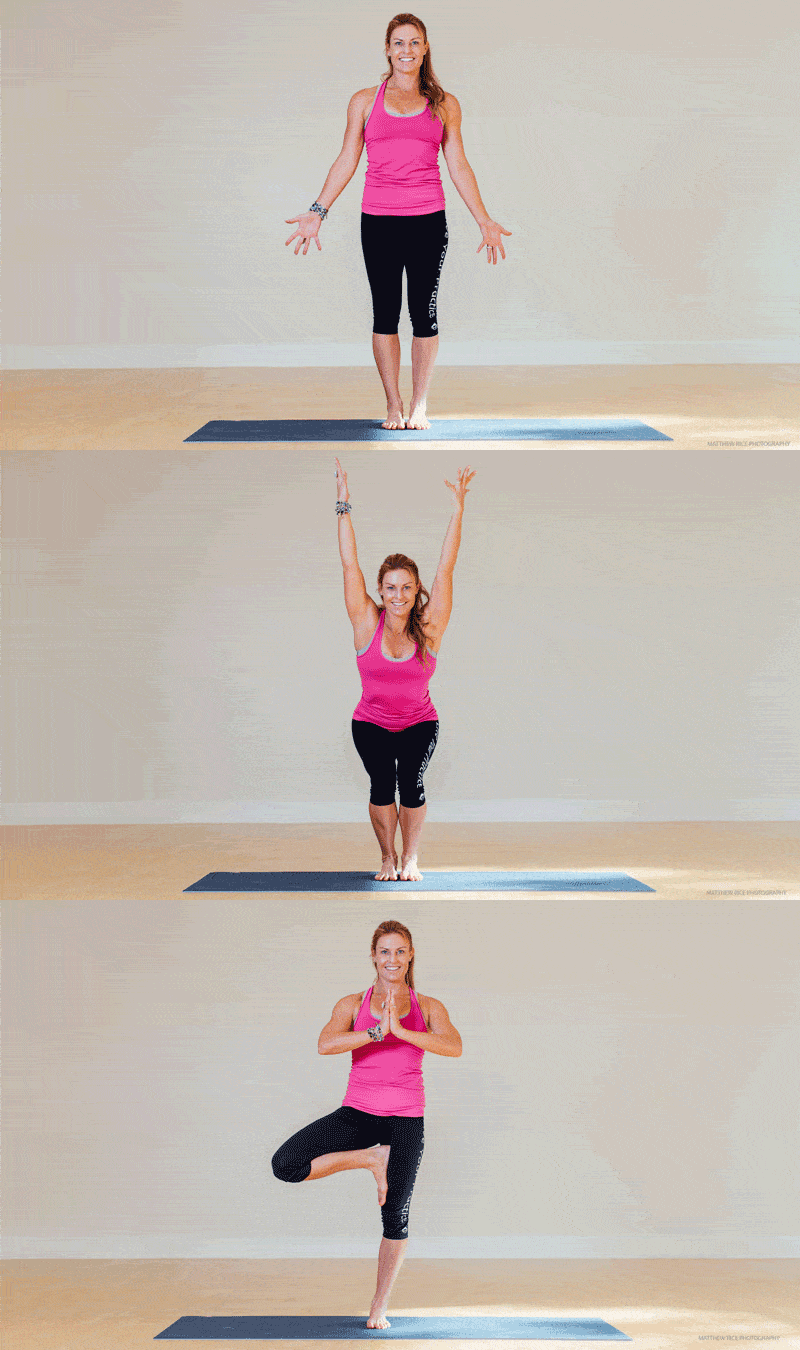


It is a movement that go one place to another.
Locomotor
Non locomotor

These are movements that stay in place.
Locomotor
Non locomotor

The following are locomotor movements except
running
jumping
stretching
hopping

Which describe the body shape in the picture.
angular
wide
round
A body shape is ________________ when left and right sides show exactly the same shape
symmetrical
asymmetrical
A body shape is __________ when its left and right sides show different shapes
symmetrical
asymmetrical
__________ is the body's ability to maintain equal distribution of weight to keep still in position without falling off and avoid injury
stand
balance
sit
True or False: When you are lying flat on your bed with arms straight on your sides, your body is in a long and thin asymmetrical shape.
true
false
What body shape do you form when you assume a T position?
wide
long and thin
wide and twisted
Can be done without moving from one place to another
Manipulative Skills
Locomotor Movements
Non- Locomotor Movements
Can be done without moving from one place to another
Manipulative Skills
Locomotor Movements
Non- Locomotor Movements
Use of apparatus and other tools in manipulation
Manipulative Skills
Locomotor Skills
Non-Locomotor
Body is used in transferring from one position to another
Locomotor Skills
Non-Locomotor Skills
Manipulative Skills
- Frog-like movement
- Springing on one foot and using the same foot upon landing
Hopping
Skipping
Leaping
- Can be used in active play
- 2 basic movements: a step and a hop
Jumping
Leaping
Skipping
- Can be used to pass through obstacles
- Springing from one foot and landing on the opposite foot
Jumping
Leaping
Running
Springing on one foot or both feet high and landing on both feet with bended knees
Hopping
Running
Jumping
Free movement from the hips and
starts from the heel of the foot going to the ball in a fast manner
Walking
Running
Jumping
Natural way of movement and eight transfer movement
starts from the heel of the foot going to the ball
Leaping
Skipping
Walking
Rotation of the body part from a ball or joint
Circling
Swaying
Pulling
A slow backward and forward movement
Swaying
Pulling
Pushing
Opposite of pushing and moving a person or an object closer to you
Pushing
Pulling
Twisting
Done by using one or both hands to move a person or object away
Twisting
Pulling
Pushing
Can be done starting from a standing position
and by raising the arms sideward parallel to the shoulder and rotate the upper body
Circling
Stretching
Twisting
Can be done through standing or sitting
and lock the fingers of the right and left hand and move the arms forward
Stretching
Bending
Pushing
Starting from a standing position with hands raised upward the bending hands left and right
Swaying
Stretching
Bending
Bouncing the ball to the floor
Passing
Kicking
Dribbling
Receiving the ball from a pass
Catching
Passing
Kicking
Swinging the feet backward and hitting the object hard
Dribbling
Kicking
Passing
Act of transferring an object from one person to another
Kicking
Passing
Dribbling

