
 Worksheets
Biochemistry
Total questions: 102
Worksheet time: 3hrs 31mins
Enzymes are what type of biomolecule?
Carbohydrates
Lipids
Proteins
Nucleic Acids
What is the largest level of organization?
(a)
What level of organization goes between the following:
... organ system, organism, (a) , community...
If you saw saturated fats on a nutrition label, what type of biomolecule would that be?
carbohydrates
lipids
proteins
nucleic acids

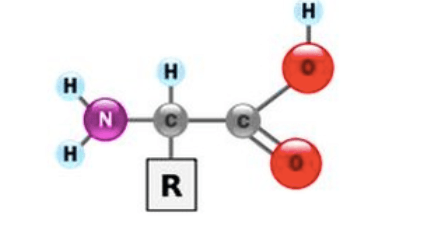
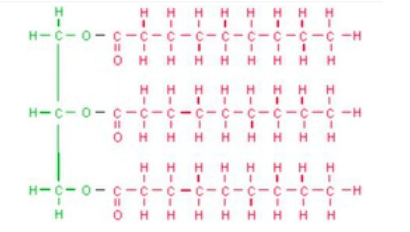
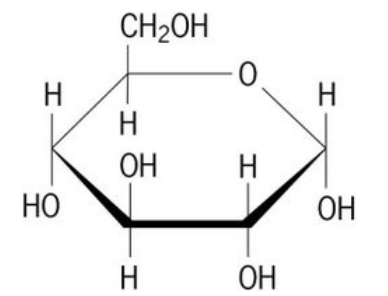
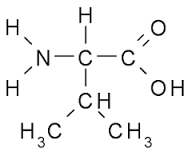
What type of biomolecule is in this image?
carbohydrates
lipids
proteins
nucleic acids
Which of these is the smallest level of organization present?
organism
organ
organ system
organelle
Which is the smallest of all levels of organization?
(a)
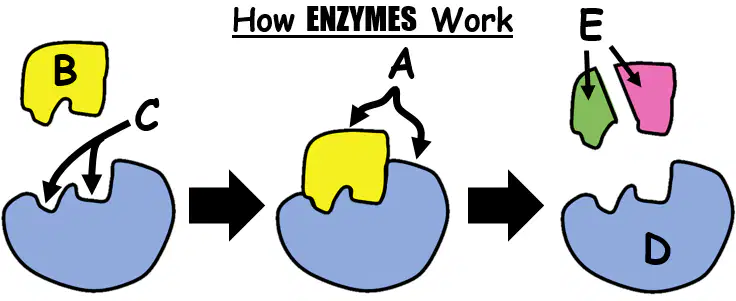
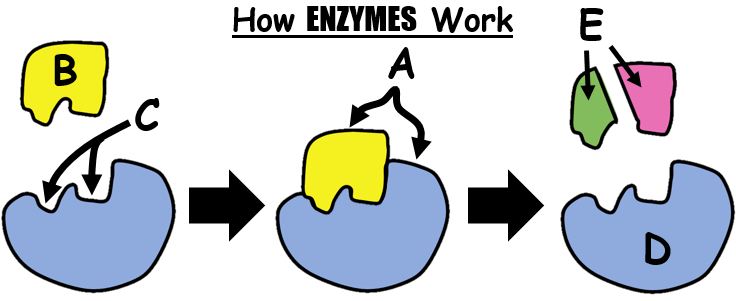
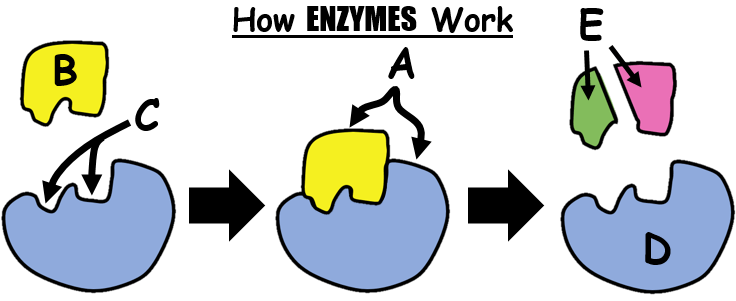
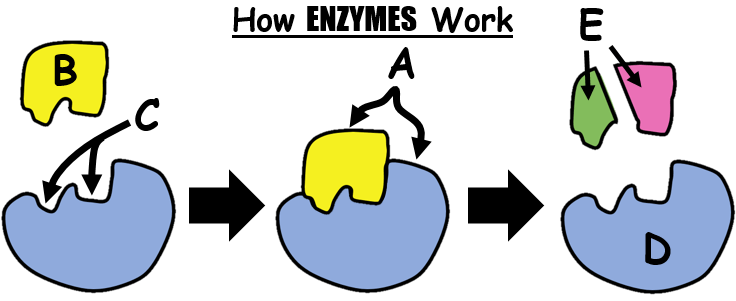
B is known as the reactant. It is also called the what?
active site
substrate
enzyme
products

C, the spot where the substrate fits in perfectly, is called what?
active site
substrate
enzyme-substrate complex
product

A is called the what?
enzyme
activation energy
enzyme-substrate complex
substrate
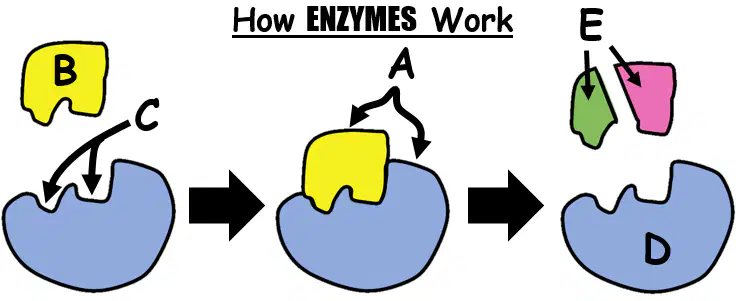
D in this image is the what?
enzyme
reactant
substrate
product
E in this image is the what?
enzyme
reactant
substrate
product
Which gives you more calories (energy) per gram?
carbohydrates
lipids
sugar
starch
Which is NOT a function of nucleic acids?
store genetic information
transmit genetic information
make proteins
growth and repair
Proteins and carbohydrates both serve what function?
structure
transmit genetic information
protective padding
catalyze reactions
Proteins serve which of the following functions? Select all correct answers.
structure
growth and repair
fight infections
catalyze reactions
What does the term "saccharide" mean?
fat
sugar
water
enzyme
What does the prefix "mono-" mean?
What does the prefix "poly-" mean?
Are enzymes consumed (used up) in chemical reactions?
No, they can be reused
Yes, they react less and less
No, but they lose effectiveness
Yes, they're used once and never again
What is the monomer (building block) of carbohydrates?
monosaccharide
amino acid
nucleotide
fatty acids
Which of these are the building blocks of lipids?
amino acid
nucleotide
glycerols
fatty acids
The monomer (building block) of proteins is called?
What is the building block of nucleic acids called?
Which of the following are examples of lipids?
fats
steroids
sugar
enzymes
Which of these is NOT a carbohydrate?
Cellulose
Amylase
If a word ends with the suffix "-ase" it's probably a(n)...?
steroid
hormone
sugar
enzyme
What element is NOT found in lipids?
Carbon
Hydrogen
Oxygen
Cobalt
What are the elements in nucleic acids?
CHO
CHONP
CHONS
CHO 1:2:1
Aside from carbon (C), hydrogen (H) and oxygen (O), what other element(s) can you find in proteins?
(a)
Which biomolecule is NOT found on nutrition labels?
carbohydrates
lipids
proteins
nucleic acids
What type of biomolecule are fats?
carbohydrates
lipids
proteins
nucleic acids
What kind of biomolecule is lactose?
carbohydrates
lipids
proteins
nucleic acids
Calories are a measure of how much (a) a food will give you.
Sodium is an electrolyte needed for which of the following?
Muscle contractions
Nerve impulses
Balancing water levels
Breathing
Match each of the following substances to the correct biomolecule
RNA
Nucleic Acids
Cellulose
Carbohydrates
Steroids
Lipids
Enzymes
Proteins
Hormones
Lipids
Which group of organic compounds contains fatty acids?

What do disaccharides such as sucrose, and polysaccharides such as starch, have in common?
Which of the following answers links a biomolecule with one of its proper functions?

Storing instructions for proteins

Simple sugars like glucose can be used to make larger organic molecules. Identify a larger molecule made from simple sugars.
Starch
Hormones
Triglyceride
DNA
Which organic macromolecules are composed of chains of amino acids that join to form the structural components of organisms.
The monomers used to synthesize proteins are called:
Which biomolecule contains fats, oils, steroids and waxes?
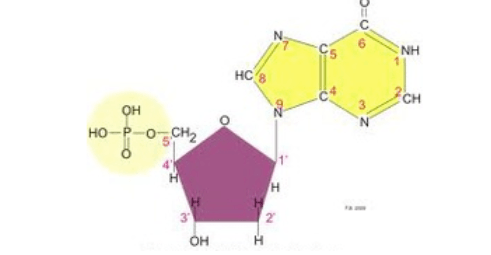
Which biomolecule is made of nucleotides and forms your DNA?
Which biomolecule helps form muscles?
Nucleic Acid
Carbohydrate
Protein
Lipids
Bond to make a polymer
Create proteins
Store energy
Split to make more cells
Which is the monomer for carbohydrates?
Glycerol
Monosaccharide
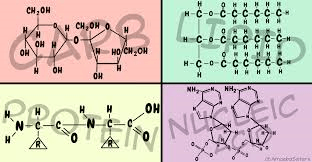
Carbon, Hydrogen, Nitrogen
Which of the following is the highest level of organization within the environment?
population
organism
ecosystem
biosphere
Reorder the following from least to greatest (from left to right).
organism
population
community
ecosystem
biome

What level of ecological organization does the bird represent?
Organism
Population
Community
Ecosystem

What level of ecological organization do all the organisms, water, air, rocks and sunlight represent?
Organism
Population
Community
Ecosystem

What level of ecological organization do all the organisms in this photo represent?
Species
Population
Community
Ecosystem
(a) - Organisms that have similar features and can reproduce.
(b) - A group of the same species that live in a certain area.
(c) - A combination of all the different species that live and interact in the same environment
(d) - All the living and non-living things that interact in one specific part of the environment.
Drag the level labels to the correct level.
Biome
Organism
Population
Ecosystem
Community
All the alligators in a swamp are an example of a(n) _______________.
organism
community
population
group
A group of only one type of organism is a
Population
Community
Ecosystem
Niche

Is this an example of a population or community?
Population
Community

Is this an example of a population or community?
Population
Community
The living and nonliving things in an environment and all the interactions
population
food chain
ecosystem
community

A group of cells that have similar functions? Examples are nervous, epithelial, muscle and connective
cell
tissue
organ
organ system

A group of tissues that perform a similar function is called_____. (Examples include the heart, lungs or stomach)
cells
tissues
organs
organ systems
Made up of organelles. Known as the building blocks of life.
organ
organ system
cell
tissue

What is the smallest unit of an element that has the properties of that element
atom
compound
homogeneous mixture
heterogeneous mixture
An ecosystem is composed of both biotic (living) and abiotic (non-living) factors.
True
False
Biotic includes all the following except:
The Earth's crust is also known as a(n):
Biome
Ecosystem
Atom
Which organic molecule would a long-distance runner most likely choose to eat two hours before a race?
A protein, because it builds muscle mass.
A lipid because it provides long term energy storage.
A carbohydrate because it releases energy quickly.
A protein, because it transports oxygen into the blood stream.
How are the functions of a carbohydrate and a lipid similar?
Both are a source of energy.
Both are replicated during meiosis.
Both lower the activation energy of reactions.
Both dissolve nutrients in the digestive system.
Why is the “lock and key” analogy often used to describe enzyme function?
Each enzyme is the same as its substrate.
Each enzyme will fit with only one specific kind of substrate.
Each enzyme can only be used once in a reaction and cannot be used again.
Each enzyme has its own active site that will not fit with other active sites.
What are the two factors that would cause an enzyme to denature?
Substrates and products
Proteins and fats
Extreme pH and temperatures
Lemons and Kiwis


Which enzyme would most likely function well in the stomach?
Chymotrypsin
Cholinesterase
Pepsin
Papain


Some carbohydrates provide energy while others help provide structure for cells. According to the image, which type of carb is good for energy?
Glycogen
Cellulose
Some carbohydrates provide energy while others help provide structure for cells. According to the image, which type of carb is good for providing structure?
Glycogen
Cellulose
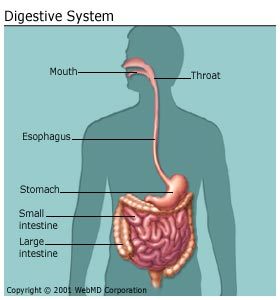
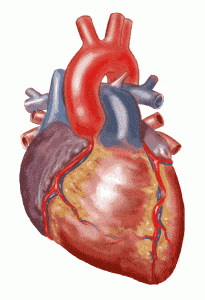
Which diagram represents the most complex level of organization?


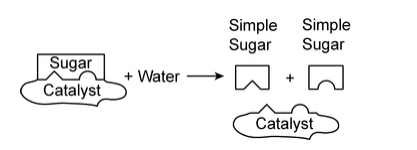
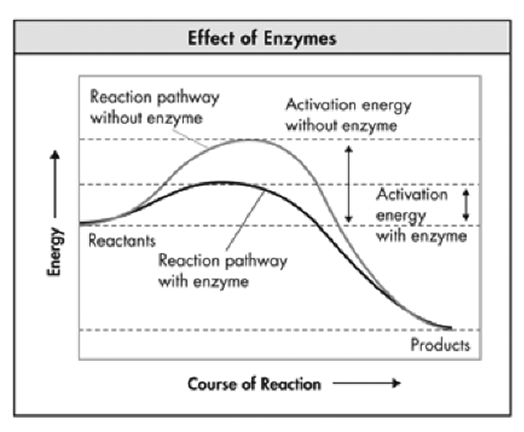

Which enzyme functions most efficiently in an alkaline/basic (pH of 8 or higher) solution?
The enzyme is denatured - its shape changes.
The enzymes remain the same.

