
Font size
 Worksheets
Economic Activities, Classification of Resources
Total questions: 70
Worksheet time: 57mins
Resources that we find in nature and are used without much modification are called:
Human resources
Natural resources
Renewable resources
Human made resources
All non-living things are known as:
Biotic resource
Exhaustible resource
Abiotic resource
Human resource
Anything that can be used to satisfy human needs is a:
Thing
value
Resource
Utility
________ resources refer to the number and ability of the people. E.g: knowledge, skill, etc.
Biotic
Human made
Human
Abiotic
Identify two renewable resource
wind
sun
gas
coal

Resource are __________________________________________
Factors that don’t have functions and utility.
Factors helping man in economic activity to fulfill his needs and wants.
Not useful to humans.
. are available everywhere easily
_______________ Resources are location specific
Abiotic
Potential
Ubiotiques
Localized
The factors that affect the usefulness of a natural resource are ___________________
The pace of its origin
Ease of processing
Cost of processing
All of the above
One method to conserve Resources is ____________
Deforestation
Sustainable Development
Unregulated mining
Contamination of Resources
_______________ Resources come under the classification of development of use.
Human Resource
Biotic
Actual
Renewable
Potential
Non-renewable resources come under the classification of ____________.
Factors of production
Development for use
According to usability
According to their distribution
. _____________ is an example of Man-made resources
Minerals
Technology
Solar Power
Air
Mineral resources under the Antarctic is an example of ________________ Resources
Human Resource.
Ubiquitous
Potential
Renewable
______________ refers to the amount of greenhouse gases especially carbon dioxide emitted by something.
Depletion
Sustainability
Carbon Footprint
Conservation
Anything that can be used to satisfy a need is _________
resource
value
technology
stock of resources
____________are those which have a limited stock
localised.
ubiquitous
non-renewable resources
renewable
Complete the statement.
Biotic resources are
(a) derived from living things
(b) made by human beings
(c) derived from non-living things
Why are resources distributed unequally over the earth?
Resource development is the method of utilising our intelligence in order to improve the quality, usability and utility of a resource.
Resources are distributed unequally over the’earth because of the different natural conditions, and physical factors like terrain, climate and altitude.
We should use resources in such a balanced way that we satisfy our needs as well as conserve them for the future. This concept is called sustainable development.
Human resources are important because the development of other resources solely depends upon this resource as humans have knowledge, skill, and technology to develop other resources.
What is the condition for a substance to be called a resource?
On the basis of their distribution, resources are classified into ubiquitous and localized.
Resources that are drawn directly from nature are called natural resource
A substance needs to have some utility to be called a resource
If a substance can be used in any way, it is said to have a utility.
Explain the terms of resource conservation and sustainable development.
Resource conservation is the concept of using resources carefully so that they do not end up quickly. The future generations also need the resources, but if we keep using them at a fast pace, they may end up, thus posing problems for the future. We should use resources in such a balanced way that we satisfy our needs as well as conserve them for the future. This concept is called sustainable development.
Human beings are intelligent living beings. They can use their intelligence to realise the utility of substances. Had there been no humans, the resources would not have been resources. Human beings are interdependent on each other, and they prove useful to each other. For example, a postman renders us an important service, so he is a resource.
Resources are broadly classified into natural, human-made and human. Natural resources are those that are taken from nature. They are used without modifying them, i.e. in the same form as they exist in. Rivers, lakes, air, soils, minerals, trees, mountains, etc. are natural resources. Human-made resources have not been provided to us by nature. Human beings have used their intelligence to manufacture them for their own use. Examples include vehicles, buildings, roads, telephones, etc.
How are the resources generally classified?
Classification of natural resources on the basis of their exhaustibility
Resources are generally classified into different groups depending upon their level of development and use; origin; stock and distribution
Mr. Iniyan, who works in a laboratory found a machine which removes the salt content in the water in regular basis. What type of resource does it falls?
Reserve
Renewable
Non-Renewable
Resources which are found in a region, but have not been utilised, is called as __________
Potential
Developed
Reserve
Identify the state in India that best suits for Potential resource
Kerala
West Bengal
Rajasthan
Choose one best example for Stock resource.
Water
Hydrogen
Wind
Imagine, if the oil supply gets exhausted one day, how would this affect our life style?
Transportation
does not affect
lead to usage of renewable energy resources
Resources that take long geological time for their formation are called:
Renewable
Non-renewable resources
Reserve
Fossil fuels are nonrenewable because...
they are used to produce heat
they take a long time to form
they can be found underground

What type of economic activity is illustrated in the picture?
primary
secondary
tertiary
quaternary
quinary

What type of economic activity is illustrated in the picture?
primary
secondary
tertiary
quaternary
quinary

What type of economic activity is illustrated in the picture?
primary
secondary
tertiary
quaternary
quinary

What type of economic activity is illustrated in the picture?
primary
secondary
tertiary
quaternary
quinary

What type of economic activity is illustrated in the picture?
primary
secondary
tertiary
quaternary
quinary

What type of economic activity is illustrated in the picture?
primary
secondary
tertiary
quaternary
quinary
which belongs in the secondary industry?
cotton
shoe factory
coal
sales clerk
Which belongs in the tertiary industry?
coffee bean
steel worker
nurse
farmer
What is a primary industry?
Employ people to make things.
Employ people to collect or produce natural resources
provide a service for people
Research and technology
Livestock is a ___________ economic activity.
Productive
Extractive
Forestry is a ___________ economic activity.
Productive
Extractive
Grazing, hunting and gathering are the example of:
Primary Activity
Secondary Activity
Tertiary Activity
Quinary Activity
Activities associated with ___________ sector include retail and wholesale sales, transportation and distribution.
Primary
Secondary
Tertiary
Quaternary
The ____________ sector consists of intellectual activities.
Secondary
Tertiary
Quaternary
Quinary
These intellectual services and activities are what drive
Technological advancement
Production enhancement
Customer care
Economic downfall
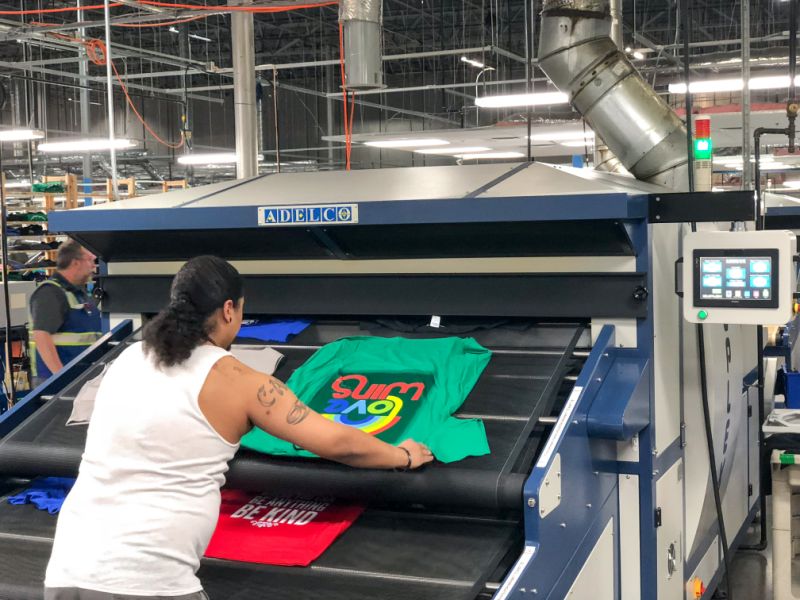
How does the T-shirt industry proceed?
1. Design and manufacture
2. Making the fabric
3. Selling
4. Growing cotton.
1. Selling
2. Growing cotton
3. Design and manufacture
4. Making the fabric.
1.Growing cotton
2. Making the fabric
3. Design and manufacture
4. Selling
1. Making the fabric
2. Growing cotton
3. Selling
4. Design and manufacture
All manufacturing, processing, and construction jobs lie within this sector:
Primary
Secondary
Tertiary
Quaternary
Grazing, hunting and gathering are the example of:
Primary Activity
Secondary Activity
Tertiary Activity
Quinary Activity
Running a small business is a great example of:
Aerobic Activity
Production Activity
Economic Activity
Strength Activity
Economic Activity includes:
manufacturing, distributing or utilizing products only
manufacturing, distributing or utilizing products or services
manufacturing services
utilizing products
Extraction of metallic and non-metallic minerals.
Mining
Forestry
Fishing
Livestock
Agriculture
Techniques and knowledge to grow different plants, seeds, and fruits.
Mining
Forestry
Fishing
Livestock
Agriculture

The four economic sectors are ...
First, second, third, fourth
1, 2, 3, 4
Primary, secondary, tertiary, quaternary
Ichi, ni, san, yon

If you work in sales, which economic activity are you participating in?
Primary
Secondary
Tertiary
Quaternary

Which of the following is an example of a non renewable resource?
Hydro
Solar
Geothermal energy
Natural gas
Tertiary Economic Activities refers to...
Jobs involved in manufacturing
Jobs involved in providing a service
Jobs involved in dealing with natural resources
Jobs involved in dealing with semi finished goods
A resource that cannot be used again is called
Renewable
Infinite
Non Renewable
Finite
Using resources in a way that ensures they will be there for future generations is called?
Stewardship
Interdependence
Sustainability
Over Exploitation
Which of the following describes primary economic activities?
Jobs/industries which involve working directly with (or extracting) natural resources
Jobs/industries which involve making/manufacturing things.
Jobs/industries that involve providing services for people.

