
Font size
 Worksheets
WEEK 2 PTA155 Applied Science of Therapeutic Exercise
Total questions: 43
Worksheet time: 36mins
A two joint muscle limits the ROM of one of the joints when fully lengthened
Passive insuffuciency
ok
Contraindication for Stretching
Hypermobility
Hypomobility
Bony block
Recent fracture and union is incomplete
Acute inflammation, tissue trauma, or infected tissue
Contraindications for Stretching
Pain
Shortened soft tissue is necessary for joint stability
Be cautious of neural tension
Convex and Concave
Roll and glide in same direction
Roll and glide in opposite direction
Cancave and Convex
Roll and glide in same direction
Roll in same, glide in opposite direction
ROM activities are done to minimize loss of tissue
______&_______
extensibility
contracture formation
No voluntary muscle contraction. Movement of segment is strictly from an outside force through the unrestricted range. EXTERNAL FORCE CAN BE FROM ANOTHER PERSON, MACHINE, GRAVITY, OWN BODY, ETC.
PROM
AROM
AAROM
Indications for PROM
When tissue is acute and inflamed. AROM may be detrimental to healing. (Typically, 2-6 days post injury/surgery)
When pt is not able to move segment (Paralyzed, coma, bed rest)
Post surgical repair and AROM would damage repaired muscle
When tissue is acute and inflamed. PROM may be detrimental to healing. (Typically, 2-6 days post injury/surgery)
Goals for PROM
Maintain joint and connective tissue mobility
Assist circulation
Improve synovial movement for cartilage health
Decrease pain
Increase pain
Match the following
Movement of segment by active contraction of muscles crossing the joint.
AROM
Type of AROM where assistance from an external force is used to move through the unrestricted range because the involved muscles need assistance.
AAROM
o
k
Indications of AAROM/AROM
AROM/AAROM: When a pt can contract muscle
AAROM: Inadequate strength through full ROM. Assistance needed for control and ROM
AROM: above and below an immobilized segment
AROM: break from sustained postures; aerobic conditioning
AAROM/AROM Goals
Maintain contractility and elasticity of muscles
Provide sensory feedback in full ROM
Bone and joint integrity
Increase circulation
Coordination and motor skills
to major joints
PROM
AROM
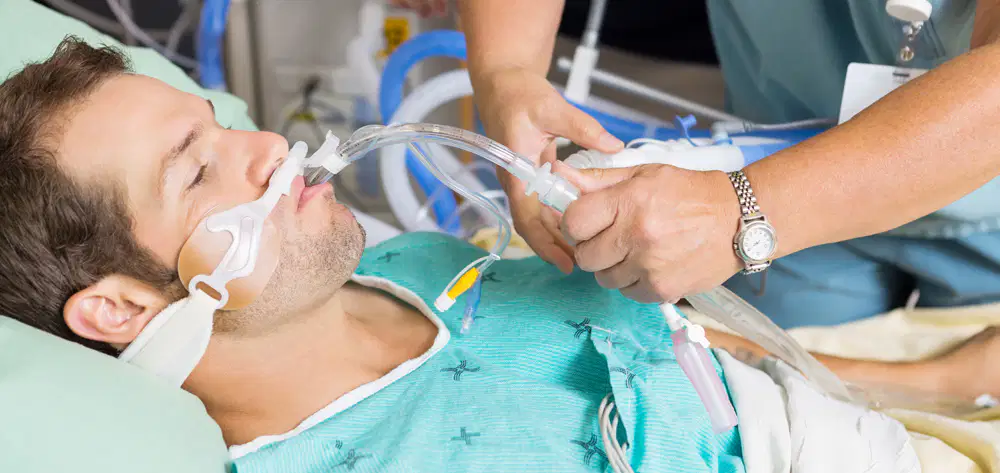
Mechanically ventilated patients (post tx): (a) followed by sitting, standing, and walking can be introduced early
Match the following
muscle's ability to contract through ROM
Dynamic flexibility
extent to which a joint can be passively moved
Passive flexibility
restricted joint motion
Hypomobility
adaptive shortening of the muscle-tendon unit and other soft tissue that cross a joint resulting in significant decreased ROM
Contracture
End range to elongate muscle
Stretching
___found in tendons at muscle/tendon junction. ___ is sensitive to tendon tension and responsible for preventing overactivity of muscle
Golgi Tendon Organ (GTO)
Autogenic inhibition
Reciprocal inhibition
GTO is activated causing muscle relaxation. Sustained isometric contraction of hamstrings leads to GTO activation and muscle relaxes.
Golgi Tendon Organ (GTO)
Autogenic inhibition
Reciprocal inhibition
Antagonist muscle is inhibited while agonist is active. Example: Hip flexion
Golgi Tendon Organ (GTO)
Autogenic inhibition
Reciprocal inhibition
restore nerve mobility and decrease adverse mechanical tension
Neural tissue mobilization
Soft tissue mobilization
Indications for Stretching
Limited ROM due to soft tissue adhesions, contractures, scare tissue limiting function
Restricted motion may lead to structural deformities
Muscle weakness has led to opposing ROM limitations
Prevent injury
Can be done before and after vigorous workout
Contraindications of stretching
Hypermobility
Hypomobility
Bony block
Recent fracture and union is incomplete
Acute inflammation, tissue trauma, or infected tissue
Match the following
Manual or mechanical; passive stretch vs assisted stretch
Stretching
Flexibility exercises performed independently
Self-stretching
Contract/relax and reciprocal inhibition
Muscle Energy Techniques
Manual therapy to treat joint impairments
Joint Mobilization
Improve tissue mobility by manipulating connective tissues
Soft Tissue Mobilization
to feet/ankles to minimize venous stasis and thrombus formation
AROM
PROM
Match the following
Small amplitude oscillation applied early in the ROM (you should feel little to no tissue resistance)
Grade I
Large amplitude oscillation applied early in ROM
Grade II
Large amplitude oscillation applied at end of available ROM. Can use with small amount of traction.
Grade III
Small amplitude oscillation applied at the end of the available joint ROM. Can use with small amount of traction.
Grade IV
-used to treat pain, assist with synovial fluid movement, symptom control, and muscle spasm.
Can do in resting joint position if pt cannot tolerate movement
Grade I
Grade II
Grade III
Grade IV
Grade Joint Mobilizations Technique
-Oscillatory technique: 30 sec to 2 min at rate of 2-3/sec
Apply force _____ to the surface of the joint (glide)
Parallel
Perpendicular
Apply _____ to joint surface (Traction/distraction)
Parallel
Perpendicular
Contraindications for PT Technique
Osteoporosis
Over fracture site
Bone Cancer
Inflammation (For GRII & IV)
Hypermobile
Static and dynamic posture takes muscle endurance, strength, and coordination
Dynamic stabilization requires (a) stability while moving an extremity (kicking ball, throwing, etc)
Exercise protocols should include core muscle strengthening, muscle balance, retraining of correct postural awareness (example: neutral pelvis), and can involve ____, ____, and ______.
visual
verbal
tactile cues
Postural Stability Training
-Can increase difficulty by applying _____, _____, using smaller base of support, or adding a dynamic component (thowing ball)
Pertubations
resistance
protective gait pattern where step length is shortened due to pain
Antalgic
Circumduction
Steppage
Trendeleberg
Vaulting
Circular motion to advance leg
Antalgic
Circumduction
Steppage
Trendeleberg
Vaulting
Leg is lifted high (increased hip and knee flexion) usually secondary to weak dorsiflexors (foot slap)
Antalgic
Circumduction
Steppage
Trendeleberg
Vaulting
abnormal gait found in people with weak abductor muscles of the hip which are supplied by the superior gluteal nerve
Antalgic
Circumduction
Steppage
Trendeleberg
Vaulting
Swing leg processes forward by elevation of pelvis and ankle PF
Antalgic
Circumduction
Steppage
Trendeleberg
Vaulting
Postural Stability Training
-Can increase difficulty by applying _____, _____, using smaller base of support, or adding a dynamic component (thowing ball)
Pertubations
resistance
-used to treat resistance
Grade I
Grade II
Grade III
Grade IV
Match the following
GTO is activated causing muscle relaxation. Sustained isometric contraction of hamstrings leads to GTO activation and muscle relaxes
Autogenic inhibition
Antagonist muscle is inhibited while agonist is active. Example: Hip flexion
Reciprocal inhibition
ok
ok
Research supports (a) second holds to increase flexibility. May need up to (b) seconds for OLDER INDIVIDUALS due to a decrease in elastin.
-Can do (c)
PNF: Reciprocal Inhibition
Hold for
(a)
Golgi Tendon Organ (GTO): found in tendons at muscle/tendon junction. GTO is sensitive to tendon tension and responsible for preventing _____ of muscle
overactivity
calmness

