
 Worksheets
Quiz: The Chemistry of LIfe
Total questions: 27
Worksheet time: 24mins
If an atom contain 3 protons, 4 neutrons, and 3 electrons, its mass number is...
3
4
7
10
If an atom contains 11 protons & 12 neutrons, its atomic number is...
11
12
23
1
Which of the following make up a molecule of water?
one atom of hydrogen
one atom of oxygen
one atom of sodium
one atom of chlorine
one atom of hydrogen
two atoms of oxygen
two atoms of hydrogen
one atom of oxygen
A covalent bond is formed as the result of
transferring electrons
sharing electrons
transferring protons
sharing protons
Water molecules are polar, with the
oxygen side being slightly positive and the hydrogen side being slightly negative
oxygen and hydrogen sides being slightly positive
oxygen and hydrogen sides being slightly negative
oxygen side being slightly negative and the hydrogen side being slightly positive
If you stir salt into boiling water, you produce a
mixture called a suspension
mixture called a solution
solution and suspension
mixture only
A substance with a pH of 6 is called
a weak acid
a weak base
a strong acid
a strong base
Solutions that have more OH- than H+ ions are
reactants
acids
bases
enzymes
Why is carbon so special compared to other elements?
Carbon atoms can bond to one another and form a lot of different structures.
Carbon atoms have 4 valence electrons and can form quadruple bonds.
Only carbon atoms can form covalent bonds with oxygen and hydrogen.
Only carbon atoms can be dissolved in water solutions and suspensions.
Carbon-12 is the most common isotope of carbon. It has 6 protons, 6 neutrons, and 6 electrons. Of its 6 electrons, 4 are valence electrons. How many covalent bonds can a carbon atom form?
1
4
6
12
Amino acid is to protein as
fat is to lipid
DNA is to RNA
sugar is to fat
simple sugar is to starch
In chemical reactions, atoms are
created
destroyed
rearranged
neutralized
When hydrogen and oxygen combine to form water, water is
a product
a reactant
an enzyme
a catalyst
Of the three subatomic particles (a) are most involved in forming chemical bonds.
Which of the following statements explain an enzyme?
Enzymes work best at a specified pH.
All enzymes have the same shape as their substrates.
Enzymes are proteins
The shape of an enzyme allows it to do its job.
Match the following subatomic particles to their charge.
Proton
Positive
Nuetron
Nuetral
Electrons
Negative
Complex carbohydrates are to monosaccharides as polymers are to (a)
The elements or compounds that come out of a chemical reaction are (a)
The energy needed to start a chemical reaction is called the (a)
Fill in the parts of an element on the periodic table.
Atomic Number
Atomic Mass
Atomic Symbol
Atomic Name
Match how to find the following parts of an element to their subatomic particles.
Atomic Number
Proton
Atomic Mass
Proton & Neutron
Isotope
Neutron
Electronegativity
Electrons
Put in order the events when a sodium atom forms and bonds with a chlorine atom.
Sodium and chlorine start their bonding through an ionic bond
Sodium, a cation, gives one electron to chlorine.
Chlorine, an anion, takes one electron from sodium
Sodium and Chlorine form an ionic bond
Sodium and Chlorine becomes NaCl, Sodium chloride (salt)
When H2 gas and O2 gas react to form H2O, what happens to the atoms that were in the gases, and what kind of bonds result?
Covalent bond
2 Hydrogens share their one electrons with Oxygen.
2 Hydrogens transfer their electrons to Oxygen.
Ionic Bond
What accounts for water's properties of adhesion and cohesion?
ability to freeze
Solvent
Bonding
Heat Capacity
Which picture(s) represents a homogenous mixture?




Out of the four groups of macromolecules, which of these are groups are polymers?
Carbohydrates
Lipids
Nucleic Acids
Proteins
Match the correct macromolecule to its structure.
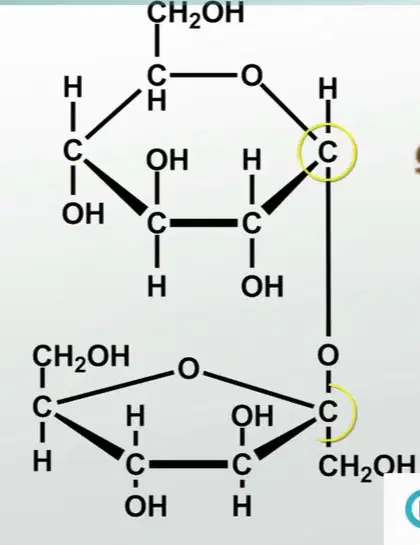
Carbohydrate
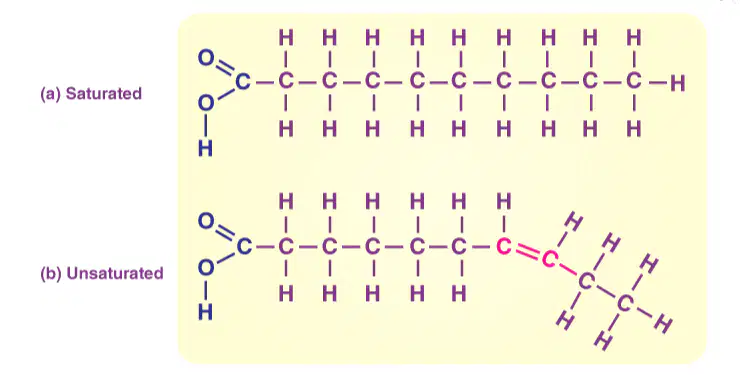
LIpid
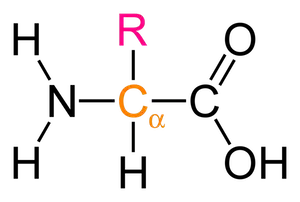
Protein
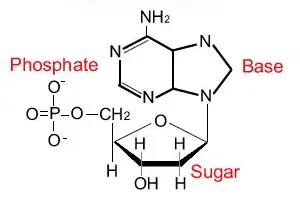
Nucleic Acid

