
 Worksheets
Anatomical Terminology, Body Planes and Movements
Total questions: 20
Worksheet time: 15mins
Name
Class
Date
1.
Plane that divides the body or an organ into right and left sides
a)
Coronal Plane
b)
Sagittal Plane
c)
Transverse Plane
d)
Frontal Plane
2.
The cavity that houses the brain is called the______.
a)
Thoracic cavity
b)
Abdominal cavity
c)
Pelvic cavity
d)
Cranial cavity
3.
Which of the following is NOT a plane of the body?
a)
Coronal
b)
Frontal
c)
Transverse
d)
Vertical
4.
Which of the following planes has a horizontal line through the body
a)
Transverse
b)
Coronal
c)
Lateral
d)
Frontal
5.
Your ears are _______ to your eyes
a)
Lateral
b)
Medial
c)
Superior
d)
Inferior
6.
Your head is considered to be: ______
a)
Caudal
b)
Cranial
c)
Superior
d)
Deep
7.
The heel is ______ to the toes
a)
Posterior
b)
Anterior
c)
Inferior
d)
Proximal
8.

Which body cavity is labeled D
a)
Cranial
b)
Spinal
c)
Abdominal
d)
Thoracic
9.

Which cavity is labeled C
a)
Cranial
b)
Spinal
c)
Thoracic
d)
Abdominal
10.

What quadrant does number 3 Represent? (person is front facing)
a)
Right Upper
b)
Left Upper
c)
Right Lower
d)
Left Lower
11.

What is section 6?
a)
Umbilical
b)
Left lumbar
c)
Right lumbar
d)
Right iliac
12.
Another word for back side is
a)
ventral
b)
anterior
c)
dorsal
d)
sagital
13.
Moving your arms from your side laterally, is which type of movement?
a)
Proximal
b)
Distal
c)
Abduction
d)
Adduction
14.
Performing a bicep curl is which type of movement?
a)
Extension
b)
Doriflexion
c)
Plantarflexion
d)
Flexion
15.
Which of the following is NOT a major function of body membranes?
a)
cover body surfaces
b)
line body cavities
c)
form protective sheets around organs
d)
divide the organs in the cavities
16.

The cavity surrounded by a box is?
a)
Thoracic Cavity
b)
Abdominal Cavity
c)
Pelvic Cavity
d)
Vertebral Canal
17.
Fluid in the pericardial cavity that helps reduce friction as the heart moves within the pericardial sac.
a)
visceral pericardium
b)
pericardial cavity
c)
pericardial fluid
d)
parietal pericardium
18.

Turning the hand so that the palm is upward or facing anteriorly (in anatomical position).
a)
supination
b)
pronation
c)
flexion
d)
dorsiflexion
19.
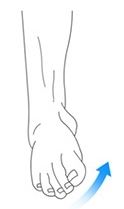
Turning the foot so the plantar surfaces faces medially.
a)
plantar flexion
b)
eversion
c)
inversion
d)
dorsiflexion
20.

What movement is occurring here?
a)
Eversion
b)
Flexion
c)
Dorsiflexion
d)
Plantarflexion
100 %

