
Font size
 Worksheets
chemistry entrance test
Total questions: 25
Worksheet time: 16mins
What makes elements and compounds different from mixtures? Elements & compounds-
have a constant composition (pure substances)
are made of gases
Will not change when heated
conduct electric current
Which of the following is true?
An atom must always have a proton, neutron and electron.
An atom can have only electrons and neutrons but no proton.
The number of protons are equal to number of electrons.
The number of neutrons cannot be more than 2.
The isotopes of an element contains _______________ .
same number of neutrons but different number of protons
same number of neutrons but different number of protons
different number of protons as well as different number of neutrons
different number of neutrons but same number of protons
Which term best matches the following definition?
Definition: the mass of an atom of a chemical element expressed in atomic mass units. It is approximately equivalent to the number of protons and neutrons in the atom.
Atomic Number
Mass Number
Net Charge
Chemical Symbol
Which tool could you use to separate large and small particles?
A sieve
A distillation flask
Chromatography
Evaporating basin
Which of the following techniques could be used to separate a heterogeneous mixture?
Filtration
Chromatography
Magnetic separation
Seiving
To separate a mixture of salt and water what separation method is used?
Filtration
Distillation
Chromatography
Evaporation to dryness
Which of the following techniques can we use to separate homogeneous mixtures?
Crystallisation
Distillation
Evaporation
All of the above

Name the separation technique
Centrifuge
Crystallisation
Distillation
Evaporation
Which of the following techniques can we use to separate homogeneous mixtures?
Crystallisation
Distillation
Evaporation
All of the above
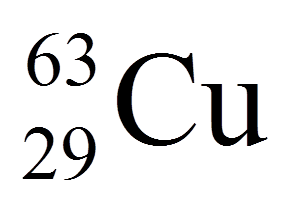

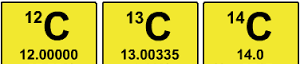

How would you write the isotope name from this nuclide symbol?
Sodium-23
Sodium-11
Sodium-12
Sodium-22

Calculate the average atomic mass of silver.
106.38649amu
111.91896amu
107.8677amu
121
The law of multiple proportions states that...
Which of the particles below represent an ion (Select all that applies)
K+
Na
Cl-
Fe3+
SO42-
What is the name of the element that has the symbol of P
Potassium
Phosphorus
Phosphate
Phosphoric acid

