
 Worksheets
Unit 2 Quiz: Properties of Water
Total questions: 23
Worksheet time: 13mins
Name
Class
Date
1.
What is the chemical formula for water?
a)
H₂O
b)
CO2
c)
NH3
d)
NaCl
e)
H2O2
2.
Which elements are found in a water molecule? (Check all that apply)
a)
Nitrogen
b)
Hydrogen
c)
Oxygen
d)
Helium
e)
Carbon
3.
About how much of a cells weight does water make up?
a)
80-90%
b)
65-75%
c)
99%
d)
75-85%
4.
Water molecules are composed of _______ bonds.
a)
Polar Covalent
b)
Non-polar Covalent
c)
Metallic
d)
Ionic
5.
_____ bonds are created when multiple water molecules bond. They attach to a partially positive hydrogen atom on one molecule and a negative atom on another. They are very weak.
a)
Non-polar Covalent
b)
Ionic
c)
Hydrogen
d)
Metallic
6.
Because water is polar...
a)
it has unevenly distributed electrons that give it a neutral charge
b)
it has unevenly distributed protons that give it a slightly positive end and a slightly negative end
c)
it has unevenly distributed electrons that give it a slightly positive end and a slightly negative end
d)
it has evenly distributed neutrons that give it a neutral charge
7.
Which is not a property of water?
a)
it is polar
b)
it has a low surface tension
c)
it exhibits capillary action
d)
it bonds to other water molecules through hydrogen bonds
8.
These two properties work together to help water move up a plant stem against gravity?
a)
Cohesion
b)
Density
c)
Universal Solvent
d)
Adhesion
9.
Water being cohesive leads to it having high _______ that aid small creatures in being able to travel across the water's surface, and is the reason why it hurts so bad when you belly flop into a pool.
a)
surface tension
b)
pH
c)
heat capacity
d)
polarity
10.
The ability of water to dissolve other substances is due to water being a universal...
a)
solution
b)
solvent
c)
solute
d)
liquid
11.
This property of water allows for the aquatic life to live during the winter
a)
water having a pH of 7
b)
water being less dense as a liquid than a solid
c)
surface tension
d)
water being less dense as a solid than a liquid
12.
The pH scale measures the concentration of ______ ions in a solution.
a)
Helium
b)
Oxygen
c)
Hydrogen
d)
Carbon
13.
The unique properties of water make life on Earth possible. Select 3 properties of water and:
A. Explain what they are.
B. Describe an example of how the property affects life as we know it.
4 lines
14.
In ionic bonding, electrons are _______.
a)
shared
b)
transferred
c)
destroyed
15.
In covalent bonding, electrons are ______.
a)
shared
b)
transferred
c)
destroyed
16.
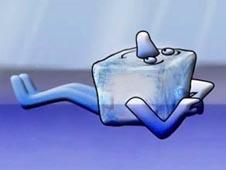
The fact that ice floats on liquid water is due to the fact that water's solid is ___________ than it's liquid form
a)
less polar
b)
more polar
c)
less dense
d)
more dense
17.
Water is a universal solvent because it...
a)
It can be found anywhere
b)
It freezes when it gets cold
c)
floats when frozen
d)
Dissolves most substances
18.

A water strider can skate along the top of a pond because:
a)
covalent bonds result in water cohesion (surface tension)
b)
hydrogen bonds result in water cohesion (surface tension)
c)
water striders have adapted to take advantage of water cohesion
d)
water striders are afraid of water and avoid it
19.
Which is being described: Water traveling up a tube, adhering to the side of the tube
a)
Cohesion
b)
Adhesion
20.
A item that is being dissolved is also known as a what?
a)
Solvent
b)
Solute
c)
Solution
d)
Solvation
21.
An Acid is within the pH range of what?
a)
0 to 7
b)
7 to 14
c)
0 to 14
d)
None of the above
22.
A Base is within a pH range of what?
a)
0-7
b)
7-14
c)
14-21
d)
21-28
23.
Pure water's pH is what?
a)
5
b)
7
c)
10
d)
3
100 %

