
 Worksheets
Properties of matter
Total questions: 23
Worksheet time: 9mins
All matter is made of...
Air
Particles
Solids
Cells
A solid has particles that resemble something like:


The particles of a ____ have a lot of energy and move around freely.
liquid
solid
gas
atom

I boil water to cook pasta. This is an example of which phase change?
vaporization
deposition
condensation
melting (fusion)
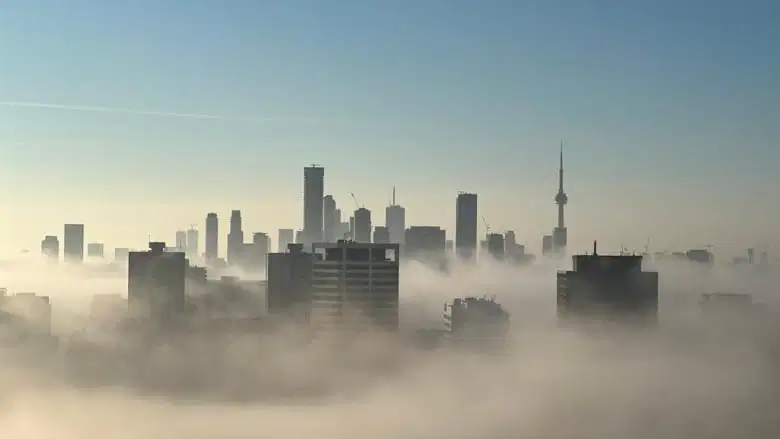
You wake up one cool morning and see fog. What phase change is this?
Deposition
Condensation
Vaporization
Solidification (freezing)
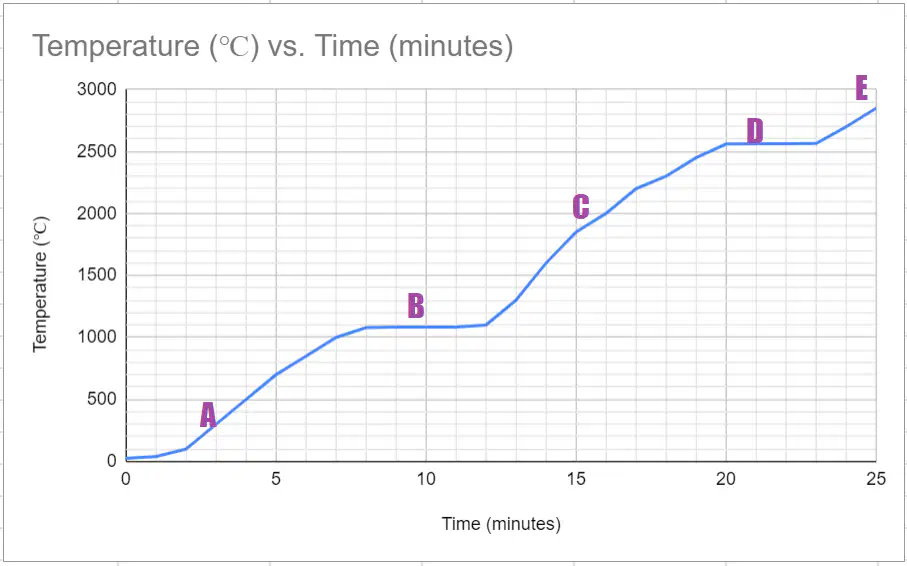
This is a phase change diagram for copper. What is copper's melting point?
0℃
1080℃
2562℃
3000℃
This is a phase change diagram for copper. During what section is copper changing from a solid to a liquid?
section A
section B
section C
section D
This is a phase change diagram for copper. During what section is copper found in only a liquid state?
section A
section B
section C
section D
The temperature at which a substance boils and changes from a liquid to a gas.
Boiling Point
Freezing Point
Melting Point
Solubility

Which substance has a greater density?
Substance A because it has less particles.
Substance B because it has more particles.
They both have the same density because they are the same size.
We have no way of knowing which one.
How much matter an object contains for it's size is called:
Mass
Matter
Density
Volume
Materials which allows electricity to flow through them are called:
Electrical insulators
Heat insulators
Electrical conductors
Electrical insulators
These two substances conduct electricity.
Metal and wood
Wood and rubber
Glass and rubber
Salt water and metal
Bigger objects always have a bigger mass.
True
False
Only if there is a big difference in size
The units when measuring the volume of a substance can be either in:
mL or cm3
mL and g
g and cm
cm and cm3
The pH scale is from ___ to ____.
0 to 10
-10 to 10
7 to 14
0 to 14
Lemon juice has a pH of around 2, therefore, it is:
an acid
a base
a neutral
an alkaline
Which type of substance does NOT make litmus and pH papers change color?
an acid
a base
a neutral
an alkaline
To calculate the density of a substance (in g/cm3), you have to do the following:
mass + volume
volume - mass
mass / volume
volume / mass
Which of the following properties is a non-characteristic property (therefore, CANNOT be used to identify an unknown substance):
density
temperature
melting point
electrical conductivity

When choosing a material to use to store ice, which property should be taken into consideration?
Density
Boiling point
Electrical conductivity
Thermal conductivity
When choosing the material to build a speed bike, which property should be taken into consideration:
Electrical conductivity
Density
Thermal conductivity
Solubility
When choosing a material to cover wires for our protection, which property should be taken into consideration:
density
melting point
electrical conductivity
boiling point

