
 Worksheets
Rock Transformation L1.1 pre-unit assessment Quiz
Total questions: 22
Worksheet time: 24mins
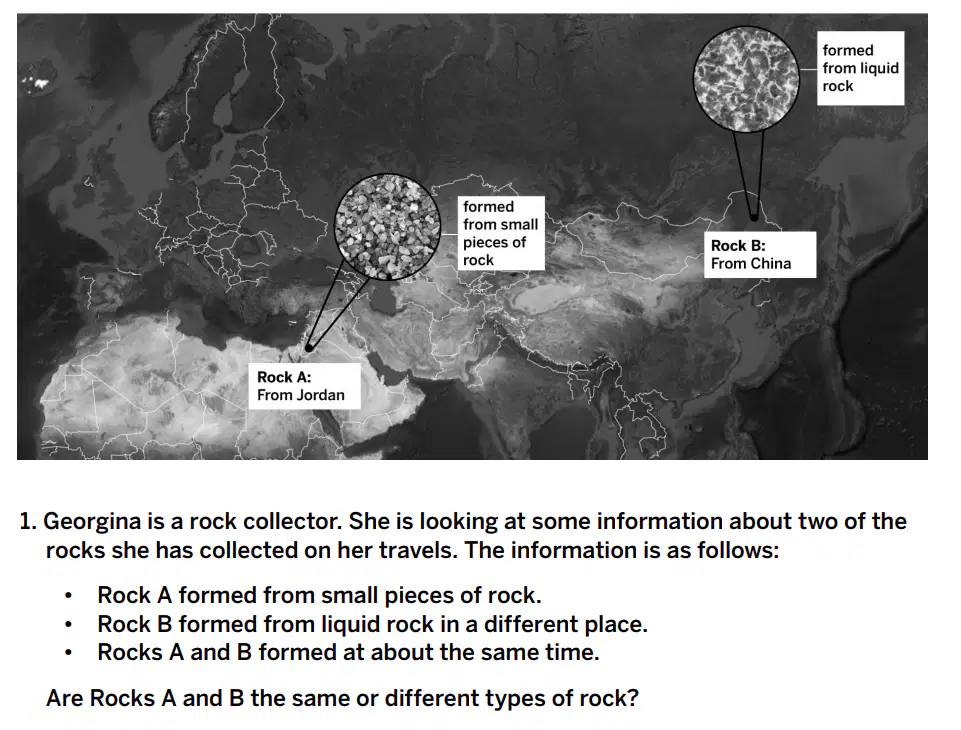
Are Rocks A and B the same or different types of rock?
a. the same type because they are both formed from rock material.
b. the same type because they formed at the same time.
c. different types because they formed in different ways.
d. different types because they formed in different places.

How could energy have played a role in the different rock types forming?
a. Energy from different sources leads to different types of rock. Energy inside Earth melts rock into liquid rock, but energy from the sun causes rock to weather into small pieces of rock.
b. Energy causes different types of rock to change in different ways. Energy changes igneous rock into liquid rock and changes sedimentary rock into small pieces of rock.
c. Energy caused one rock type to form, but not the other. Rock that forms because of energy is a different type of rock than rock that forms without energy.
d. Energy changes rock on different continents in different ways. Each continent on Earth has different rock that might form liquid rock or small rock pieces when exposed to energy.

Could the material for igneous rock come from sedimentary rock?
a. Yes, if sedimentary rock is exposed to energy from the sun at Earth’s surface for a long enough time, it can melt into liquid rock and form igneous rock.
b. Yes, if sedimentary rock is moved below Earth’s outer layer and exposed to energy from Earth’s interior, it can melt into liquid rock and form igneous rock.
c. No, igneous rock can only form from other igneous rock. Sedimentary rock cannot change into igneous rock.
d. No, igneous rock forms under Earth’s outer layer due to energy from Earth’s interior, but sedimentary rock only forms at Earth’s surface.

How did material from the rock formations turn into sand?
a. Rays from the sun shone down on the rock, and it broke into pieces.
b. If anything were left out for a long time, it would break into small pieces.
c. The sand was formed by earthquakes, tsunamis, and other natural disasters. These disasters were strong enough to break rock into small pieces.
d. Wind and rain interacted with the rock, breaking it into small pieces.

How did this metamorphic rock form?
a. Rocks don’t form; they stay as they are.
b. It melted and then cooled down to form metamorphic rock.
c. It was formed by the pressure and heat deep within the Earth.
d. It was formed by the erosion and deposition of other rocks.
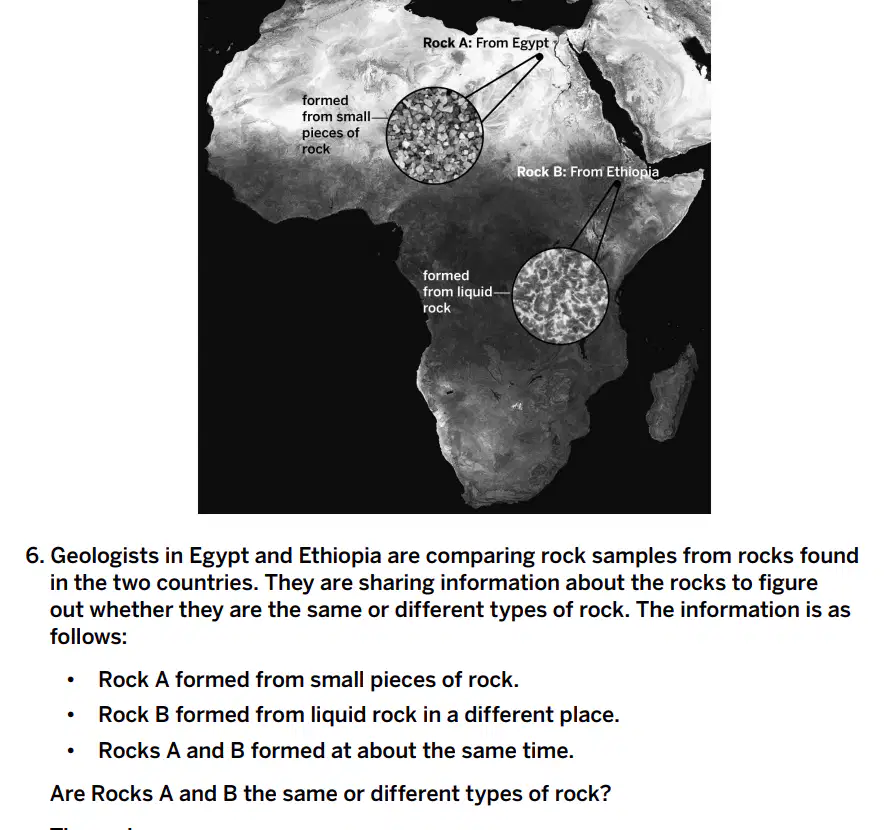
Are Rocks A and B the same or different types of rock?
Different types because they formed in different ways.
Different types because they formed in different places.
The same type because they both formed from rock material.
The same type because they formed at the same time.
Reina is making museum exhibits about two different rock types. How could energy have played a role in the different rock types forming?
Energy causes different types of rock to change in different ways. Energy changes igneous rock into liquid rock and changes sedimentary rock into small pieces of rock.
Energy caused one rock type to form, but not the other. Rock that forms because of energy is a different type of rock than rock that forms without energy.
Energy from different sources leads to different types of rock. Energy inside Earth melts rock into liquid rock, but energy from the sun causes rock to weather into small pieces.
Energy changes rock on different continents in different ways. Each continent on Earth has different rock that might form liquid or small rock pieces when exposed to energy.
Geologists have evidence of an igneous rock formation under Earth’s outer layer. Is it possible that material from an igneous rock formation could ever form sedimentary rock on Earth’s surface?
No, sedimentary rock can only form out of material from other sedimentary rock. There is no way that sedimentary rock can form from material in igneous rock.
No, sedimentary rock forms at Earth’s surface because energy from the sun causes rock to weather, but igneous rock under Earth’s outer layer is not exposed to energy from the sun.
Yes, energy from Earth’s interior can cause igneous rock to break into small rock pieces that can form sedimentary rock.
Yes, if igneous rock is moved to Earth’s surface and exposed to energy from the sun, it could weather into small rock pieces that could form sedimentary rock.
Giovanni and his family go on a trip and they drive over a mountain range. Giovanni wonders how the rock they see as they drive over the mountain range might be different when they drive back home next week. What would you tell Giovanni about how the rock will change?
The rock will probably change a lot. Rock is always changing and transforming.
The rock is not likely to change very much. Most rock transformation processes happen very slowly.
The rock will not change at all. Rock just stays as it is.
The rock might change if it is the right season.
Africa and Europe are very close to each other, but they used to be far apart. Which diagram above shows what happened to the plates that Africa and Europe are part of?

The plates hit each other, broke

plates pushed against each other

one plate goes underneath the other

one plate goes under the other and sinks
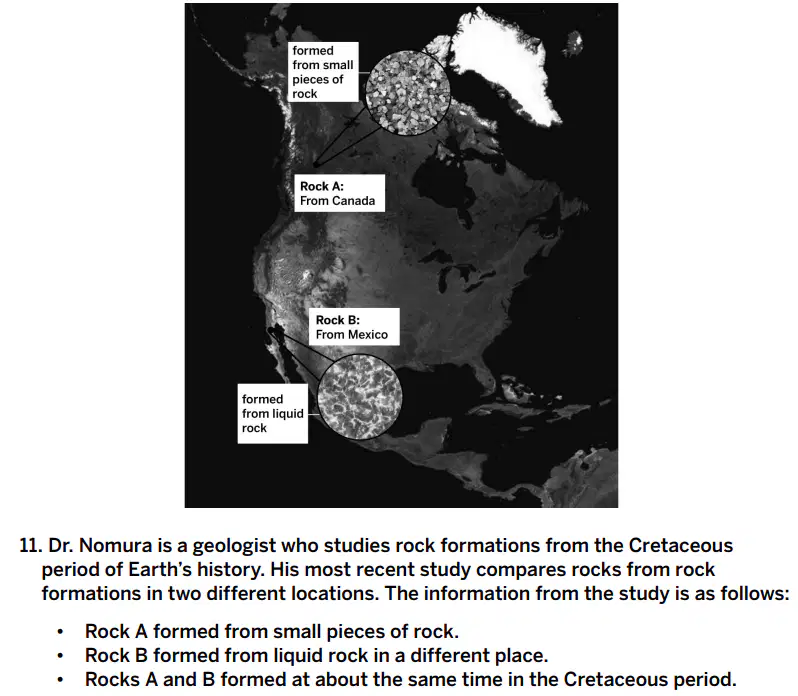
Dr. Nomura wants to write a report to other geologists. Are Rocks A and B the same or different types of rock?
different types because they formed in different places.
different types because they formed in different ways.
the same type because they formed at the same time
the same type because they both formed from rock material.
A mining company was comparing rock samples from two different mines. Their observations showed that the rock samples were two different types of rock. How could energy have played a role in the different rock types forming?
a. Energy from different sources leads to different types of rock. Energy inside Earth melts rock into liquid rock, but energy from the sun causes rock to weather into small pieces of rock.
b. Energy causes different types of rock to change in different ways. Energy changes igneous rock into liquid rock and changes sedimentary rock into small pieces of rock.
c. Energy changes rock on different continents in different ways. Each continent on Earth has different rock that might form liquid rock or small rock pieces when exposed to energy.
d. Energy caused one rock type to form, but not the other. Rock that forms because of energy is a different type of rock than rock that forms without energy.
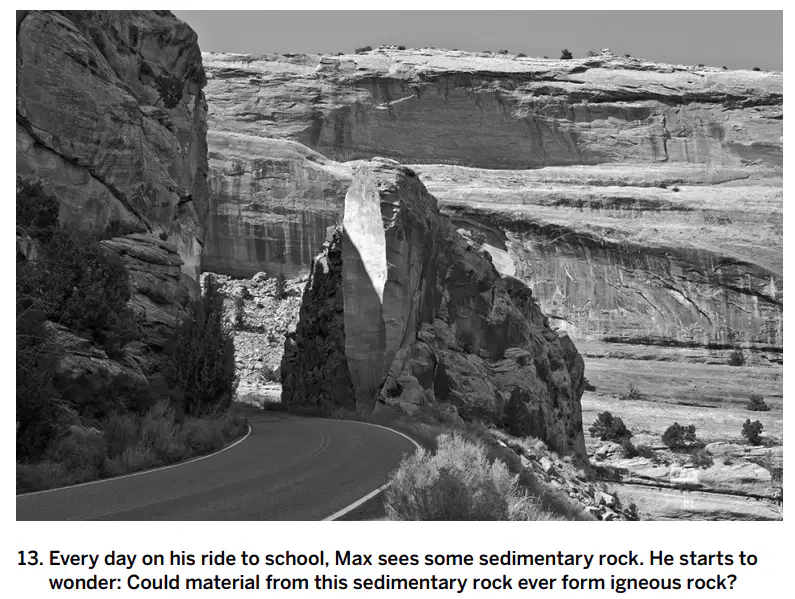
. Every day on his ride to school, Max sees some sedimentary rock. He starts to wonder: Could material from sedimentary rock ever form igneous rock?
a. No, igneous rock can only form out of other igneous rock. Sedimentary rock cannot change into igneous rock.
b. No, igneous rock forms under Earth’s outer layer due to energy from Earth’s interior, but sedimentary rock is only at Earth’s surface.
c. Yes, if sedimentary rock is exposed to energy from the sun at Earth’s surface for a long enough time, it can melt into liquid rock and form igneous rock.
d. Yes, if sedimentary rock is moved below Earth’s outer layer and exposed to energy from Earth’s interior, it can melt into liquid rock and form igneous rock.
On a hike up a mountain, Delilah sees small pieces of rock along the trail. The small pieces look just like the rock that the mountain is made from. How did the small pieces of rock break off from the mountain?
a. Wind and rain interacted with the rock, breaking it into small pieces.
b. The small pieces of rock were formed by earthquakes, tsunamis, and other natural disasters. These disasters were strong enough to break the rock into small pieces.
c. Rays from the sun shone down on the rock, and it broke into pieces.
d. If anything were left out for a long time, it would break into small pieces.
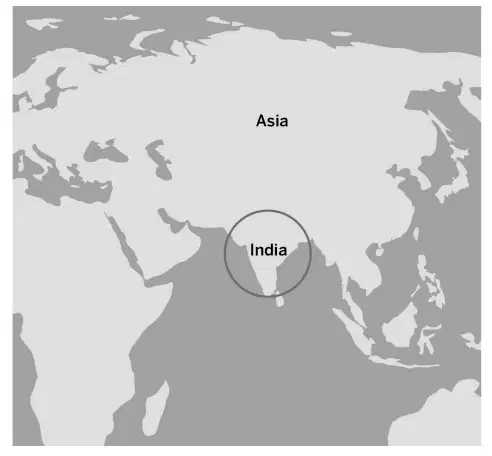
Which diagram shows what happened to the plates that India and Asia are part of?

a. Diagram A: The plates hit each other and broke.

b. Diagram B: The plates sank into the ocean below.
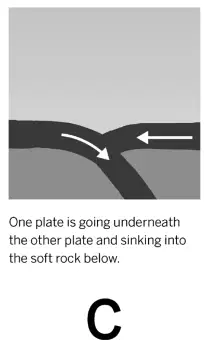
c. Diagram C: The plates moved apart and created a gap.

d. Diagram D: One plate went underneath the other plate and sank into the ocean below.

According to the information provided, how did Rock A and Rock B form?
the same type because they both formed from rock material
the same type because they formed at the same time
different types because they formed in different places.
different types because they formed in different ways.
Jasmine travels a lot and collects rocks wherever she goes. She was examining two rocks from her collection, and she noticed that they are different types of rock. How could energy have played a role in the different rock types forming?
Energy changes rock on different continents in different ways. . Each continent on Earth has different rock that might form liquid rock or small rock pieces when exposed to energy.
Energy caused one rock type to form, but not the other. Rock that forms because of energy is a different type of rock than rock that forms without energy
Energy from different sources leads to different types of rock. Energy inside Earth melts rock into liquid rock, but energy from the sun causes rock to weather into small pieces of rock
Energy causes different types of rock to change in different ways. Energy changes igneous rock into liquid rock and changes sedimentary rock into small pieces of rock.
Steve is making a model for geology class, showing how rocks form. He is wondering if his model should show how an igneous rock formation underneath Earth’s outer layer could turn into a sedimentary rock formation. Is this possible?
Yes, if igneous rock is moved to Earth's surface and exposed to energy from the sun
Yes, energy from Earth's interior can cause igneous rock to break into small rock pieces that form sedimentary rock
No, sedimentary rock forms at Earth's surface because energy from the sun causes rock to weather, but igneous rock under Earth's outer layer is not exposed to energy from the sun
No, sedimentary rock can only form out of material from other sedimentary rock
Isidro visits the same park every week. The park has lots of different rock formations.. How does the rock at the park change from week to week?
The rock might change if it is the right season
The rock is not likely to change very much. Most rock transformation processes happen very slowly
The rock will not change at all. Rock just stays as it is
The rock will probably change a lot. Rock is always changing and transforming
Michelangelo's David is a statue that was carved in the early 1500s. The statue is made from marble, which is a type of metamorphic rock. How did the metamorphic rock used in the David form?
It melted and cooled
It broke into sediment and then compacted.
It was heated and put under pressure
Option D Rock doesn’t form; it stays as it is.

The (a) rock formed from magma that (b) down. If sedimentary rock is exposed to (c) from Earth's interior and to form (d) , then the igneous rock could have been (e) rock in the past.
The (a) rock formed from sediment that was (b) and cemented. If (c) rock is exposed to energy from Rhombus’s sun, so wind and water can move and (d) the igneous rock into (e) , then the sedimentary rock could have been igneous rock in the past.

