
 Worksheets
Pre- Colonial Art
Total questions: 79
Worksheet time: 1hrs 3mins
Filipino Art Before our Colonization
(a)
Refers to art created before the coming of our first colonizers, the Spaniards. These are pieces of art dating back to the first wave of migrants that came through land bridges up until the Spanish settlement in the Philippines.
(a)
Ethnic Art or Pre-colonial Art refers to art created before the coming of our first colonizers, the ____________. These are pieces of art dating back to the first wave of migrants that came through ___________ up until the Spanish settlement in the Philippines
(a)
30,000 years ago, the Philippines was believed to be connected to Asia via land bridges. These land bridges brought our initial inhabitants to the Philippines.
Aetas
Malays
Early Philippine Settlers:
Aetas
Malays
Borneos
They were said to have come from Australia through Borneo while others claim they came from the Malay Peninsula through Sumatra
Aetas
Malays
Aetas _________ years ago, the Philippines was believed to be connected to ______ via land bridges.
(a)
These (a) brought our initial inhabitants to the Philippines.
Aetas were said to have come from _______ through _________ while others claim they came from the _______ Peninsula through _________
(a)

Depiction of the Negritos, circa 1590 (Boxer Codex, The Lilly Library Digital Collections)
Aetas
Malays

Title of Artwork
(a)
The Philippines was believed to be part of the continental land mass of Asia. This theory was later on contested by many researchers.
The Land-bridge connection
The Land-bridges
The Land-bridge land mass
The Philippines was believed to be part of the continental land mass of (a)
But our islands were situated very near the _____ Islands and when the water levels dropped during the ice age, it was not impossible then to walk across the exposed land mass to the neighboring islands
Sunda
Wallacea
Sahul
Borneo
Around 3,000 B.C.E., the ______arrived in the Philippines and brought more advance culture such as iron melting, pottery, farming, etc
Aetas
Malays
Around 3,000 B.C.E., the Malays arrived in the Philippines and brought more advance culture such as __________, __________, __________, etc
(a)
They were seafarers and used a type of boat called the balangay. Today, we use the term “barangay” - a derivative from “balangay” to refer to the most basic social unit/community in Philippine society.
Aetas
Malays
Malays were "seafarers" and used a type of boat called the ________. Today, we use the term “barangay” - a derivative from “________” to refer to the most basic social unit/community in Philippine society.
(a)
a derivative from “balangay” to refer to the most basic social unit/community in Philippine society
(a)
is the first wooden watercraft excavated in Southeast Asia.
Balanghai
Balangay
Butuan Boat
None of the above
The Philippines has a rich maritime culture and ________ are linked to many aspects of Filipino life
boats
ships
cargo ships
It is a plank boat adjoined by a carved-out plank edged through pins and dowels. Made without the use of blueprints, the technique is taught from one generation to another and is still used by boat makers in Tawi-tawi
Balangay
Balanghai
Butuan boat
None of the above
Balanghai/ Balangay/ Butuan boat is a plank boat adjoined by a carved-out plank edged through pins and dowels. Made without the use of blueprints, the technique is taught from one generation to another and is still used by boat makers in (a)
The early settlers were _________ and _________.
(a)
When people started living in established social units called the barangay where they were led by a (a)
The early settlers in the Philippines established relations and foreign trade with different foreigners up to as far as the (a) .
The early settlers in the Philippines established relations and foreign trade with different foreigners up to as far as the Middle East.
True
False
Later on, they became _______ and ________ with the arrival of the Malays and the Chinese traders
farmers
traders
hunter-gatherers
fishermen
Later on, they became farmers and traders with the arrival of the ______ and the ______ traders
Malays
Chinese
Taiwanese
Japanese
Sunda
They exchanged precious minerals and goods with _______, _______, and ________
Arabs
Indians
Chinese
Malays
>> The early settlers were hunter-gatherers and fishermen.
>> When people started living in established social units called the barangay where they were led by a datu.
>> They’ve established relations and foreign trade with different foreigners up to as far as the Middle East.
>> Later on, they became farmers and traders with the arrival of the Malays and the Chinese traders
>> They exchanged precious minerals and goods with Arabs, Indians and Chinese.
True
False
Art during this time were (a) items
These items were used for everyday life...
Weapons for hunting
Tools for fishing
Burial jars and containers
Basic clothing and ornaments
These items were used for everyday life (4)
(a)
The engravings are mostly symbolic representations and are associated with healing and sympathetic magic. The site has been declared by the National Museum of the Philippines as a National Cultural Treasure in 1973
Angono Petroglyphs
Manunggul Jars
Pasiking (backpack)
Bulul
Tangkil
The "Angono Petroglyphs" site has been declared by the National Museum of the Philippines as a ___________________
National Cultural Treasure in 1972
National Cultural Treasure in 1973
National Cultural Treasure in 1974
National Cultural Treasure in 1971
The engravings are mostly symbolic representations and are associated with healing and sympathetic magic.
(a)
The (a) is a secondary burial jar excavated from a Neolithic burial site in the Manunggul cave of the Tabon Caves at Lipuun Point in Palawan, Philippines.
It dates from 890–710 B.C. and the two prominent figures at the top handle of its cover represent the journey of the soul to the afterlife.
Manunggul Jars
Bulul
Tangkil
Angono Petroglyphs
Sipattal
The Manunggul Jar is a secondary burial jar excavated from a Neolithic burial site in the Manunggul cave of the ________________ in Palawan, Philippines
Tabon Caves at Lipuun Point
Tabon Caves at Lapuun Point
Tibon Caves at Lipuun Point
Toban Caves at Lipuun Point
The Manunggul Jar dates from ____--____ B.C. and the two prominent figures at the top handle of its cover represent the journey of the soul to the afterlife.
890–710
980–170
89–71
891–711
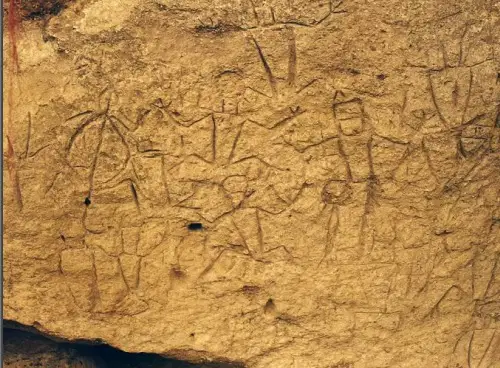
Name
Angono Petroglyphs
Manunggul Petroglyphs
Angana Petroglyphs
Anguno Petroglyphs
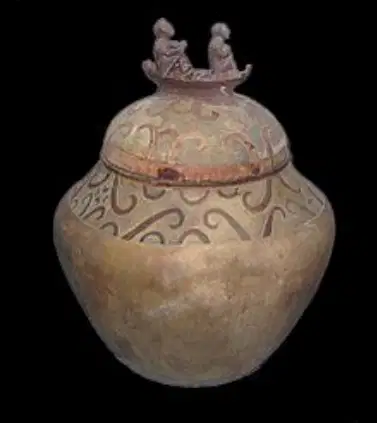
Name
(a)
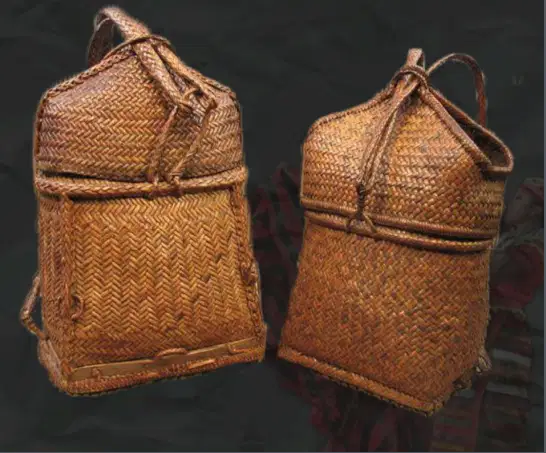
Name
(a)
A backpack used in the mountain province made with split rattan and bamboo that is durable even in rainy weather.
(a)
It is traditionally used by hunters for carrying equipment and supplies.
Pasiking
Paseking
Pisiking
Pesiking
Also known as “bul-ul” or “tinagtaggu” is a carved wooden figure used to guard the rice crop by the Ifugao (and their sub-tribe Kalanguya) peoples of northern Luzon.
Bulul
Bulol
Bolul
Bolol
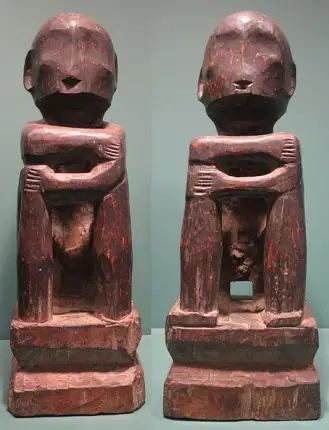
Name
(a)
Bulul Also known as “bul-ul” or “_________” is a carved wooden figure used to guard the rice crop by the _______ (and their sub-tribe ______) peoples of northern Luzon.
(a)
Bul'uls are used in ceremonies associated with rice production and with healing. The creation of a bulul involves (a) ritual by a priest to ensure that the statue gains power.
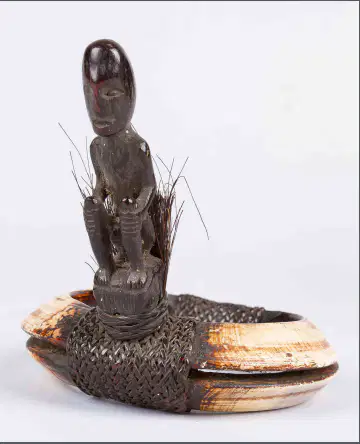
Arm ornament of the Bontoc tribe made from tusks of boars, rattan wood and even crocodile teeth
(a)
Tangkil are arm ornament of the (a) tribe made from tusks of boars, rattan wood and even crocodile teeth
Men wear these arm ornaments during celebrations and rice rituals
(a)
Name
(a)
Worn by the women of the Isneg tribe from the Apayao Province.
A neck ornament made or mother of pearl, glass beads, rattan. Is usually a marriage gift of men for the women in the tribe
(a)
Sipattal is worn by the women of the _____ tribe from the _______ Province.
(a)
Many of the provinces in this country, from the Northernmost tip of Luzon to the Southernmost island of Mindanao, has its own unique weaving culture.
True
False
WEAVE NAME OF:
Ilocos
(a)
WEAVE NAME OF:
Cordillera
(a)
WEAVE NAME OF:
Mindoro
(a)
WEAVE NAME OF:
Iloilo
(a)
WEAVE NAME OF:
Zamboanga/ Basilan
(a)
WEAVE NAME OF:
South Cotabato
(a)
WEAVE NAME OF:
South Cotabato
(a)
Inabel, Ikat, Ramit
Ilocos
Cordillera
Mindoro
Iloilo
Zamboanga/ Basilan
Hablon,Yakan, T’nalak
Zamboanga/Basilan
South Cotabato
Iloilo
Ilocos
Cordillera
is another form of body embellishment by pre-colonial Filipinos.
(a)
were often elements in nature but interpreted in geometric forms.
(a)
For men it meant victories, social status, bravery and for women, it was a way to beautify themselves or a way to signify that they are ready for marriage
Tattoo
Weave
Sipattal
Tangkil
Bulul
There were also "tangible" art during the pre-colonial Philippines such as dances and songs commonly performed during sacred rituals
True
False
was also said to be present during the precolonial times. An example is the Ambahan and the Mangyan verses from the Hanunuo tribe of Mindoro that were written on the skins of the bamboo trees in their own script
Literature
Dance
Writing
Hunting
Literature was also said to be present during the precolonial times. An example is the _________ and the _______________________________ that were written on the skins of the bamboo trees in their own script
Ambahan
Mangyan verses from the Hanunuo tribe of Mindoro
an ancient form of writing from the pre-colonial period
(a)
Ethnic Philippine Art
(6)
Practical, everyday items such as jars, pottery, weapons, ornaments and clothing
Rich and diverse Culture
Abundant and Anchor to our Identity
Abolished and erased by colonizers
Has survived through heritage preservation and is slowly becoming relevant again
Pre-colonial art was mainly found in practical, everyday item
True
False
During the advent of the colonizers, everything contradictory to their own beliefs were 'improved', including art. This led to the curtailing of our flourishing artistry and expression.
True
False (abolished)
Although underdeveloped and uncultivated, ethnic art serves as an important anchor to our perception of national identity.
True
False
The Philippines was made up of many loosely related groups instead of one entity. This is why the Philippines has a very rich and diverse culture and art.
True
False
Although a lot of our pre-colonial art has been lost, there are still remnants of this rich pre-colonial culture that survived through the efforts of heritage preservation. This provides an opportunity for the contemporary artists to fashion "ancient" art that reflects our history
True
False (new)

