
Font size
 Worksheets
Unit 2: Organelles & Cell Transport
Total questions: 27
Worksheet time: 17mins
To observe a small, living organism, a scientist might use a/an ____.
electronic balance
compound microscope
TEM
SEM
Which microscope/s require the specimen to be dead, or non-living in order to view it.
compound microscopes
dissection microscopes
transmission electron microscopes TEM
scanning electron microscopes SEM
Which are part of the cell theory?
All cells come from existing cells
Cells are the basic building block of living things.
Living things must contain one or more cells.
Cells have at least one nucleus with DNA

What organelle acts as a clean up crew and breaks down waste products?
Nucleus
Lysosome
Mitochondria
Golgi Apparatus

What provides rigid external support and protection to the cell in plants?
Cell membrane
Cell wall
Chloroplast
Nucleus


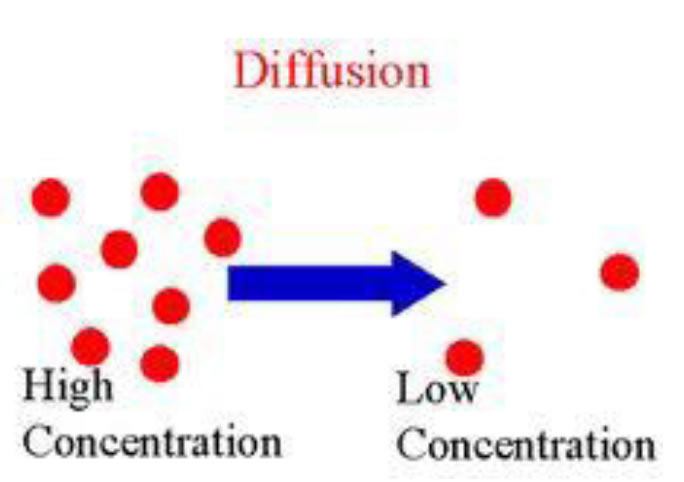
Movement of water from an area of higher concentration to an area of lower concentration.
This cell organelle helps organisms maintain homeostasis (balance) by controlling what substances may enter or leave cells.
Which type of transport requires an input of energy/ ATP?
Facilitated diffusion
Active does not need energy and passive uses ATP (chemical energy)
Active uses ATP ( chemical energy) and passive does not need energy
Which is true of prokaryotic and eukaryotic cells?
Prokaryotic cells are larger than eukaryotic cells.
Eukaryotic cells do not have nuclei, and prokaryotic cells do have nuclei.
Prokaryotic cells lack membrane-bound organelles, and eukaryotic cells contain membrane-bound organelles.
Eukaryotic cells are simpler than prokaryotic cells.

Produces the energy a cell needs to carry out its functions, known as the powerhouse of the cell.
mitochondria
ER
Golgi bodies
vacuoles

What does a plant cell have that an animal cell doesn't have?
Cell Membrane and Cell Wall
Cell Wall and Mitochondria
Cell Wall and Nucleus
Cell Wall and Chloroplast
Which process allows gases to be exchanged between the alveoli in the lungs and the blood in the circulatory system?
facilitated diffusion
simple diffusion
active transport
osmosis

Gel-like fluid where the organelles are held
chloroplast
chlorophyll
pigment
cytoplasm

What is the function of a chloroplast?
makes proteins for animal cells
allows materials in and out of the cell
provides structure and support
creates sugar & oxygen via photosynthesis

What is the function of ribosomes?
to create proteins
to break down polymers
to contain DNA
This organelle is in all eukaryotic cells. It is the control center/ brain of the cell because it holds the DNA.


these package proteins to be packed & shipped out of the cell (think UPS, FedEx)
proteins
ribosomes
golgi bodies
endoplasmic reticulum

