
 Worksheets
Matter Unit 1
Total questions: 42
Worksheet time: 22mins
What is the definition of matter?
Any substance that has mass and takes up space
A substance that has indefinite shape
A substance that has definite volume
A substance that is measured or observed
What is the definition of an atom?
A change in size shape or matter
The smallest Unit of matter
Material that is measured with how a substance reacts with another substance
The largest Unit of matter
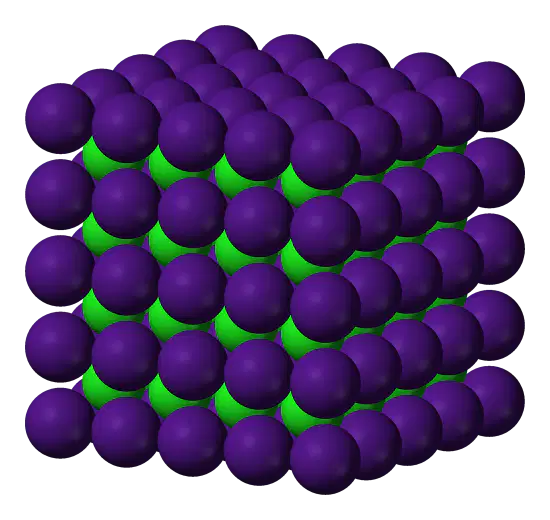
What state of matter does this photo represent?
Liquid
Gas
Solid
Plasma
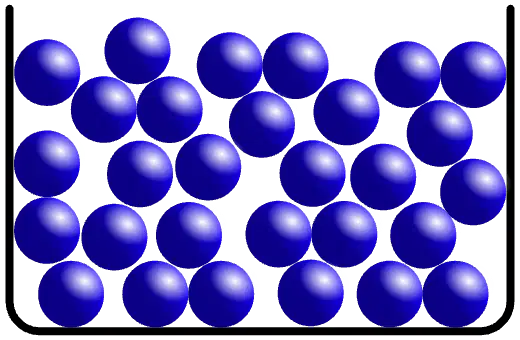
What state of matter does this photo represent?
Liquid
Solid
Gas
Plasma

What state of matter does this photo represent?
Liquid
Solid
Gas
Plasma
Which states of matter are fluids?
Plasma
Gas
Solid
Liquid
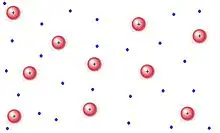
What state of matter does this photo represent?
Liquid
Gas
Solid
Plasma
Which of the following are properties of a solid?
-Tightly packed together but are far enough to slide over one another
-Indefinite Shape and Definite Volume
-Medium Energy
-Far apart and Move Freely
-Indefinite Shape and Indefinite Volume
-Highest Energy
-Particles are tightly packed together
-Definite Shape and Definite Volume
-Always Touching
-Lowest Energy
-Most common state of matter in the universe
-Ionized Gas
-Indefinite Shape and Indefinite Volume
-Conductor of Electricity
Which of the following are properties of a liquid?
-Tightly packed but are far apart enough to slide over
-indefinite shape and definite volume
-medium energy
-far apart and move freely
-indefinite shape and indefinite volume
-highest energy
-particles are tightly packed together
-definite shape and definite volume
-slowest motion
-lowest energy
-always touching
-most common state of matter in the universe
-ionized gas
-indefinite shape and volume
-conductor of electricity
Which of the following are properties of a liquid?
-Tightly packed but are far apart enough to slide over
-indefinite shape and definite volume
-medium energy
-far apart and move freely
-indefinite shape and indefinite volume
-highest energy
-particles are tightly packed together
-definite shape and definite volume
-slowest motion
-lowest energy
-always touching
-most common state of matter in the universe
-ionized gas
-indefinite shape and volume
-conductor of electricity
Describe liquids in terms of shape and volume
Definite shape and definite volume
indefinite shape and indefinite volume
indefinite shape and definite volume
definite shape and indefinite volume
Describe solids in terms of shape and volume
indefinite shape and definite volume
definite shape and definite volume
indefinite shape and indefinite volume
definite shape and indefinite volume
Describe gases in terms of shape and volume
indefinite shape and definite volume
definite shape and indefinite volume
definite shape and definite volume
indefinite shape and indefinite volume
which of the following is a physical property
material that is measured how a substance reacts with another substance
material that is measured or observed without destroying the material
material that is measured or observed while destroying the material
material that is not measured how a substance reacts with another substance
What is the definition of an element?
substance that cannot be broken down any further
substance that can be broken down any further
a substance made up of one type of atom
a substance made up of more than one type of atom
What is a molecule?
a group of atoms bonded together by chemicals
a group of atoms far apart
a group of atoms bonded together by physical means
a group of atoms mixed physically
What is a compound?
a chemically bonded mixture
a physically mixed mixture
a element
a molecule
What is a pure substance?
an element
a mixture
a compound
heterogenous mixture
What is the definition of deposition(The opposite of Sublimation)
Gas to Solid Transformation
Solid to Liquid
Transformation
Liquid to Gas
Transformation
Solid to Gas
Transformation
What is the definition of sublimation(opposite of deposition)?
Liquid to gas
Gas to Solid
Solid to Gas
Gas to Liquid
What is the definition of Condensation(Opposite of Evaporation or Vaporization)?
Solid to Liquid
Gas to Liquid
Gas to Solid
Liquid to Gas
What is the definition of Vaporization?
Liquid to Solid
Liquid or Solid to Gas
Gas to Liquid
Solid to gas
What is the definition of evaporation?
Liquid to Gas
Gas to Solid
Gas to Liquid
Liquid to Solid
What is the definition of melting?
Gas to Solid
Solid to Liquid
Liquid to Gas
Solid to Gas
What is the definition of Melting Point?
the temperature at which a given solid will melt
the temperature at which a given solid will freeze
the temperature at which a given liquid will freeze
the temperature at which a given liquid will melt
What is a freezing point?
The temperature at which a liquid freezes
The temperature at which a liquid melts
The temperature at which a solid melts
The temperature at which a solid freezes
What is the definition of boiling point?
the temperature at which a liquid boils and turns to plasma
the temperature at which a liquid boils and turns to a solid
the temperature at which a liquid boils and turns to vapor
the temperature at which a solid boils and turns to vapor
What is the definition of a mixture?
a substance made by melting other substances together.
a substance made by freezing other substances together.
a substance made by boiling other substances together.
a substance made by mixing other substances together.
What is the definition of surface tension?
The property of the surface of plasma that allows it to resist an external force.
The property that determines the shape and volume of a gas
The property of the surface of a solid that allows it to resist an external force.
The property of the surface of a gas that allows it to resist an external force.
What is thermal energy(heat energy)
The kinetic energy of moving particles of matter, measured by their volume.
The kinetic energy of moving particles of matter, measured by their mass.
The kinetic energy of moving particles of matter, measured by their temperature.
The kinetic energy of moving particles of matter, measured by their shape.
What is the definition of viscosity?
the state of being thick, sticky, due to internal friction
the state of being thin, sticky, due to internal friction
the state of being thick, wet, due to internal friction
the state of being thick, sticky, due to external friction
What is the definition of Volume?
The amount of space that a substance or object occupies
The amount of density that a substance or object occupies
The amount of space that a substance or object melts
The amount of space that a substance or object freezes
What is the definition of density?
the liquidness of a substance
the length of a substance
the mass of a substance
the degree of compactness of a substance.
What is the difference between a homogeneous and heterogeneous mixture?
a homogeneous mixture is a substance with the same proportions(non-clumpy) while a heterogeneous mixture does not have the same proportions(clumpy)
a heterogenous mixture is a substance with the same proportions(non-clumpy) while a homogenous mixture does not have the same proportions(clumpy)
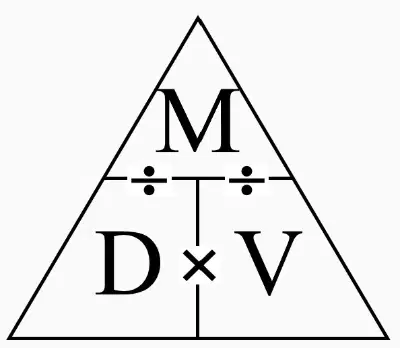
How do you find the density of a sample?
mass/density
mass x volume
mass/volume
volume/mass
How do you find the density of an irregular shaped object?
Find the mass divided by the volume
Find the volume multiplied by the mass
Add the volume and the mass
Find the volume divided by mass
What is the difference between a pure substance and a mixture?
Pure substances can be separated and and Mixtures can't be seperated
Pure substances can't be separated and Mixtures can be seperated

What does letter A represent on the phase change diagram
Liquid
Plasma
Solid
Gas

What does letter C represent on the phase change diagram
Liquid
Solid
Plasma
Gas
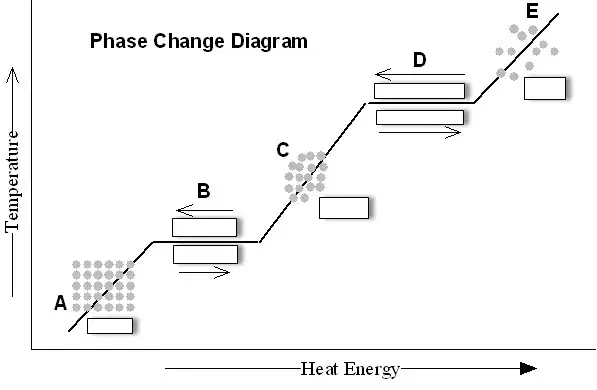
What does letter E represent on the phase change diagram
Liquid
Solid
Plasma
Gas
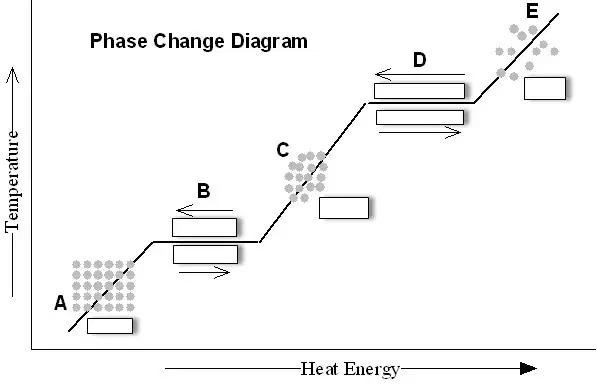
What does letter B represent on the phase change diagram
Vaporization(top) condensation(bottom)
Melting(top) and Freezing(bottom)
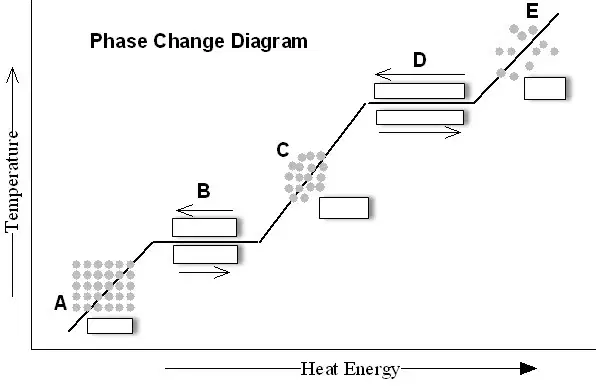
What does letter D represent on the phase change diagram
Vaporization(top) Condensation(bottom)
Melting(top) Freezing(bottom)

