
 Worksheets
Medieval Europe
Total questions: 48
Worksheet time: 33mins
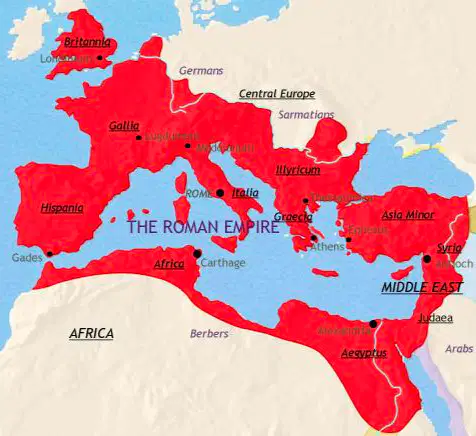
At its peak, the Roman Empire held land in Europe and what other two continents?
(a)
The lowliest type of peasant was tied to the land. These peasants were known as what?
(a)
Land granted to a vassal in exchange for loyalty and service is known as what?
Fief
Chivalry
Serfdom
Feudalism
Peasants usually ate what?
Bread and pork
Eggs and bacon
Burgers
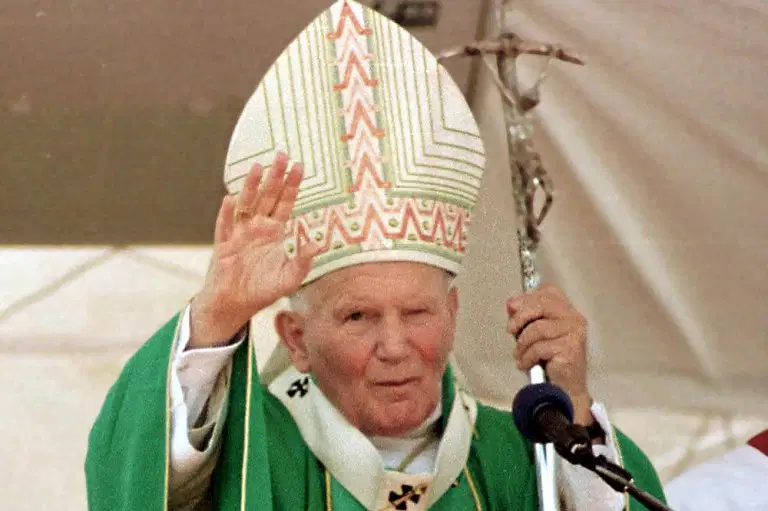
Who is the leader of the Roman Catholic Church?
King or Queen
Bishop
Pope
Cardinal
The head of a cathedral is known as a
King or Queen
Bishop
Pope
Cardinal
Which of these is not a reason Europeans went on pilgrimages?
Demonstrate their devotion to God.
To learn a new trade to make more money.
Perform penance for their sins.
Attempt to cure an illness.
The Crusades were military expeditions to the land where Jesus had lived. This land was also known as...
(a)
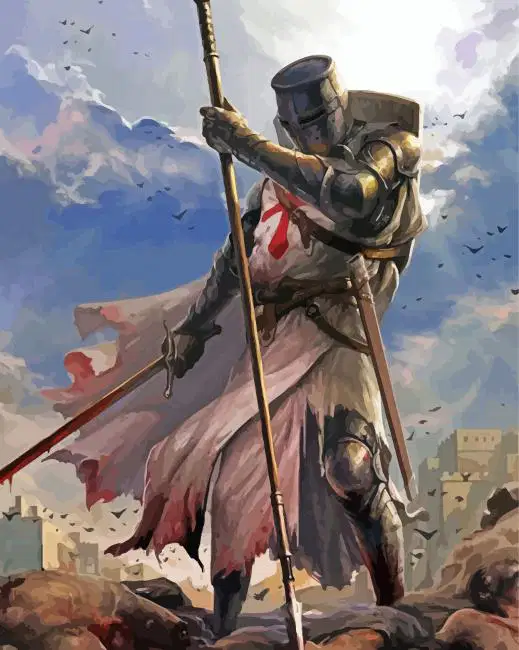
Which of these is NOT a reason someone would go on a Crusade?
To find a good husband or wife.
Wealth.
Adventure
Salvation.
Though there were many Crusades to the Holy Land, only two of them can be considered successful - the 1st and the 3rd.
True
False
Cathedrals built between 1150 and 1400 were designed to appear as if they were rising to heaven and were built in what style?
(a)
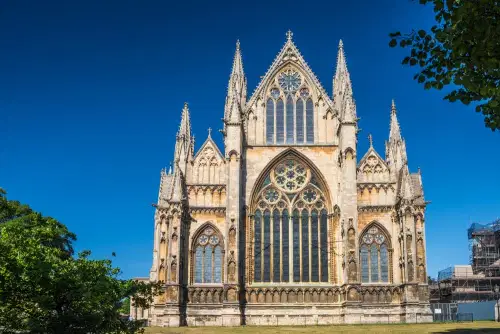
Art and architecture found their most glorious expression in cathedrals. Which of the following was NOT a technique used in cathedrals?
Flying buttresses
Vaulted Ceilings
Gargoyles
Low Ceilings
Stained Glass Windows
The Church was the center of life in Medieval Western Europe.
True
False
In the hierarchy of the Roman Catholic Church, name the position that came immediately after the Pope?
(a)
The biggest difference between Monks and Friars is
Monks focused on farming to feed the common people.
Friars served the monarch instead of the Roman Catholic Church.
Monks stayed in their monastery while friars went out among the ordinary people.
Monks worked together with nuns in convents to provide a safe place for men and women.
Most European Holidays were related to the monarch.
True
False
Which of these are a Lord's responsibility? (multiple answers)
To act as a judge
Joust in tournaments.
Manage a Fief
To grow the crops.
Defend its workers with their knights.
A knight's duties include... (multiple answers)
Paying high taxes
Abiding by the code of chivalry
Protecting
Growing Crops
Feudalism provided protection and safety by establishing a stable social order. But what did Feudalism NOT do? (multiple answers)
Balanced the power between monarch and peasant.
Helped to spread democracy.
Provide excellent living conditions for all people.
Promote freedom for all common people.
What was the name of the greatest Frankish ruler who unified most of the Christian lands of Europe and built an Empire that lasted centuries after his death?
(a)
What was the name of the Frankish leader who helped spread Christianity throughout Europe?
(a)
Most people in medieval Europe were what?
Monarchs.
Bishops.
Knights.
Peasants.
Towns in Medieval Europe were (multiple answers)
Clean
Dirty
Safe after dark
Crowded
Why were Medieval Towns growing?
Improvements in agriculture increased a surplus of food.
Better sanitation and clean streets.
There was a revival in trade.
Safe conditions.
Some towns specialized in making specific goods or providing a service, such as cloth, glass, barrels, or trade.
True
False
Merchant and Craft Guilds are:
Groups of people pursuing a feudal title.
Organizations of people in the same craft or trade.
What were the benefits of joining a guild? (multiple answers)
Provided help.
Provided Protection.
Maintained high standards
Who benefited the most from the increase in trade?
Nobles
Farmers
To join a guild, a person had to work for 7 years with no pay and produce a masterpiece at the end. What do you call someone who works for a master in a trade or craft in return for training?
(a)
In Feudal Europe, the wealthy enjoyed splendid homes. What were homes like for the common people in towns during this time?
Open, spacious, and clean.
Small, crowded, and dirty.
Colorful, happy, sanitary.
By 1100, England started to create a system of courts and established common law. What is common law?
rulings made by monarchs that must be followed by all.
Laws established by the model parliament that restricted the power of the nobility.
rulings made by judges that become part of a nation’s legal
system.
What is the name of the biblical performances put on by guilds during fairs and religious feasts?
(a)
Punishments in medieval Europe can be considered light.
True
False
Before common law was established in England, which of these was an alternative method to establishing innocence or guilt? (multiple answers)
Trial by ordeal
Trial by combat
Trial by wealth.
Feudalism developed in Europe due to threats from what people? (multiple answers)
Native Americans from the West.
Vikings from the North.
Asian tribes from the East.
Muslims from the South.
In a feudal society, serfs and then peasants were under knights, Lords and Ladies were above knights, but who was at the top in charge of everyone?
Monarch
Chancellor
President
Which of these was NOT a reason for the decline of Feudalism?
Legal reform in England.
Bubonic Plague
Hundred Years War
Volcanic Eruptions.
What English King signed the Magna Carta, which was eventually seen by the people as a document that protected their rights and liberties?
(a)
The Magna Carta established what? (multiple answers)
Monarch could rule.
Monarch would observe Common Law.
Commoners did not have to serve in the military.
Monarch would observe habeas corpus.
The legal concept that an accused person cannot be jailed indefinitely without being charged with a crime is known as what?
Habeas Corpus
Feudalism
Acquittal
King Edward I created a governing body that included commoners. What was it called?
Democracy
Model Parliament
Common Council
Legal reforms in England contributed to the decline of feudalism by doing what? (multiple answers)
Strengthening royal authority.
Shifting power from the nobles to the people.
Making knights more important.
Increasing trade, and thus increasing the wealth of all people.
The Bubonic plague is believed to have spread from Central Asia along the Silk Road traveling on what?
Fleas on rats.
Bats.
Worms in bread.
Lice from the hair of the merchants.
How much of the European population is believed to have died due to the Bubonic plague (also known as the Black Death)?
Half, about 40 million.
80%
1/3, about 24 million
A small number.
The need for workers increased during the bubonic plague, and this contributed to a shift in power to the common people.
True
False
The Hundred Years' War was fought between what two countries?
(a)
What military technology was developed during the Hundred Years' War that contributed to the decline of Feudalism?
The longbow, because it decreased the effectiveness of knights.
The crossbow, because if decreased the effectiveness of monarchs.
The wheel, because it allowed for faster troop deployment.
Gunpowder, because it decreased the effectiveness of castle.
A sense of nationalism was found during the Hundred Years' War, which created loyalty for countries as opposed to their lords. Name a famous French 17 year old girl who fought during the Hundred Years' War and helped ignite this sense of nationalism in France.
(a)

