wayground logo

Free Printable Worksheets

Font size

S
M
L
XL
Worksheets

Quarter 1 -Cells, Integumentary, Muscular-skeletal Systems

Total questions: 107

Worksheet time: 2hrs 47mins

Name
Class
Date
1.
1. A(n) _____________ cell transmits a message from one cell to another.
a)
Axon
b)
Dendrite
c)
Synapse
d)
Nerve
2.
2. A sudden, uncontrolled electrical disturbance in the brain is a _________________.
a)
Seizure
b)
CTE
c)
Autism
d)
CVA
3.
3. The most common cause of Chronic Traumatic Encephalopathy (CTE) is:
a)
Car accidents
b)
Motor vehicle accidents
c)
Falls
d)
Contact sport injuries
4.
4. The central nervous system is made up of the ____________ and spinal cord.
a)
Myelin sheath
b)
Neurons
c)
Brain
d)
Transmitters
5.
5. Fatty insulation wrapped around some axons that increases the rate at which impulses travel along the axon is the _____________.
a)
Synapse
b)
Nerve
c)
Neuron
d)
Myelin sheath
6.
6. The autonomic nervous system controls the ______________, or automatic, activities of the vital organs.
a)
Sensory
b)
Voluntary
c)
Motor
d)
Involuntary
7.
9. The _______________ is the largest section of the brain and is concerned with reasoning, the senses, speech, and voluntary body movement.
a)
Cerebellum
b)
Cerebrum
c)
Brain stem
d)
Diencephalon
8.
10. Afferent neurons, also called _____________ neurons carry messages from all parts of the body to the brain and spinal cord.
a)
Motor
b)
Neurons
c)
Efferent
d)
Sensory
9.
11. The spinal cord is protected by the:
a)
Vertebrae
b)
Muscles
c)
Myelin sheath
d)
Brain
10.
12. The ____________________ system consists of nerves that reach all parts of the body
a)
Central nervous
b)
Alimentary
c)
Peripheral nervous
d)
Autonomic nervous
11.
13. What serves as the communication network for the body?
a)
A neuron
b)
A synapse
c)
The brain
d)
The nervous system
12.
14. You are caring for a patient who suddenly complains of the worst headache they’ve ever had and now is demonstrating left-sided weakness, difficulty speaking, and is slurring their words. What is the most likely cause of this?
a)
CTE
b)
CVA
c)
Autism
d)
Seizure disorder
13.
Which of the following is NOT part of a neuron?
a)
dendrite
b)
axon
c)
myelin sheath
d)
medulla oblongata
14.
Which are the main divisions of the nervous system?
a)
afferent and efferent
b)
peripheral and central
c)
somatic and autonomic
d)
sympathetic and parasympathetic
15.
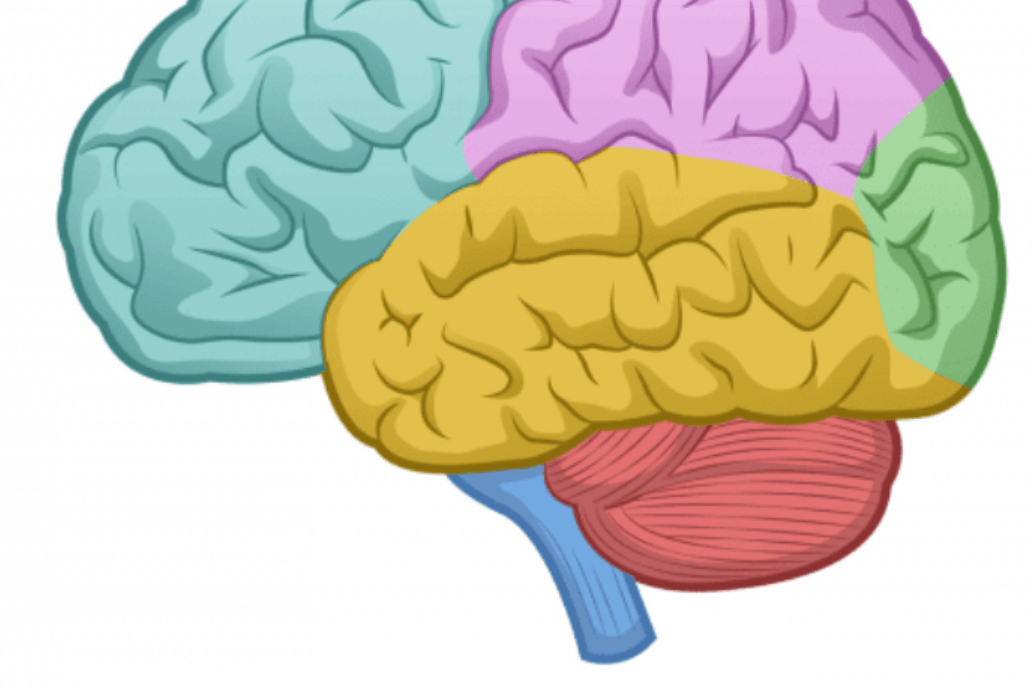
What is the largest part of the brain?
a)
Cerebellum
b)
Cerebrum
c)
brain stem
d)
medulla oblongata
16.
What part of the brain is responsible for thought and planning?
a)
frontal
b)
parietal
c)
temporal
d)
occipital
17.
What part is responsible for visual processing?
a)
frontal
b)
parietal
c)
temporal
d)
occipital
18.
What is number 1?
a)
dendrite 
b)
axon
c)
cell body
d)
myelin sheath
19.
What is number 4?
a)
dendrite
b)
axon 
c)
cell body
d)
myelin sheath
20.
What is number 5?
a)
cell body
b)
nucleus
c)
axon terminal
d)
synapes
21.
What is number 2?
a)
Cerebrum
b)
Cerebellum
c)
brain stem
d)
spinal cord
22.
What is number 6?
a)
Cerebrum
b)
Cerebellum
c)
brain stem
d)
spinal cord
23.
What are the 2 major divisions of the peripheral nervous system (PNS)?
a)
Sensory & Motor
b)
Peripheral & Central
c)
Somatic & Autonomic
d)
Brain & Spinal Cord
24.
part of a neuron that receives information from other neurons
a)
axon
b)
dendrites
c)
myelin sheath
d)
synapse
25.
This part of the nervous system regulates involuntary actions such as heart function, blood pressure, breathing, digestion.
a)
Autonomic Nervous System
b)
Sensory Nervous System
c)
Motor Nervous System
d)
Peripheral Nervous System
26.

What structure is bright blue and located at bottom of the brain and controls the information sent between brain and rest of the body?

a)

Cerebrum

b)

Cerebellum

c)

Brain Stem

27.

What is the gap between two neurons called?

a)

Impulse

b)

Synapse

c)

CNS

d)

Inter neuron

28.
______ is the largest organ of the human body.
a)
liver
b)
lungs
c)
skin
d)
stomach
29.
One of the main functions of the ______ system is it is the first line of defense against external pathogens.
a)
endocrine
b)
gastrointestinal
c)
integumentary
d)
respiratory
30.
The _____ layer of skin contains blood and lymph vessels, nerves, sweat and oil glands, and hair follicles.
a)
dermis
b)
epidermis
c)
hypodermis
d)
lowest
31.

What pigment in the epidermis determine a person's skin color?

a)
chlorophyll
b)
melanin
c)
neutral
d)
oxyhemoglobin
32.
The degree of the severity of most burns is based on the size and _____ of the burn.
a)
circumference
b)
degree
c)
depth
d)
pain
33.
A sunburn is an example of a _____ burn.
a)
first degree/superficial
b)
second degree/partial thickness
c)
fourth degree
d)
full thickness
34.
Basic burn care measures do not include which of the following?
a)
applying a cool compress
b)
ring and/or other tight item removal
c)
popping fluid-filled blisters
d)
use of pain relievers
35.

The _____________________, or the subcutaneous layer, is deep to the integument and is composed primarily of adipose tissue.

a)

hypodermis

b)

spinosum

c)

stratum corneum

d)

stratum basale

36.

which of the following is the most dangerous form of skin cancer?

a)

basal cell carcinoma

b)

squamous cell carcinoma

c)

malignant melanoma

37.

Which of the following is NOT a function of the Integumentary System?

a)

vitamin D synthesis

b)

barrier to UV light

c)

vitamin K synthesis

d)

thermoregulation

38.

Which layer is characterized by adipose tissue?

a)

epidermis

b)

dermis

c)

hypodermis

d)

melanocytes

39.

Which letter represents the DERMIS?

a)

A

b)

B

c)

C

40.

Which letter represents the EPIDERMIS

a)

A

b)

B

c)

C

41.

What is your dermis helps to control body temperature?

a)

cells

b)

blood vessels

c)

muscles

d)

hair

42.

The prefix hyper means

a)

too much, above

b)

too little or below

c)

on top of

d)

the study of

43.

The prefix hypo means

a)

too little or below

b)

inflammation

c)

too much

d)

the study of

44.

-ology refers to

a)

the study of

b)

inflammation

c)

not harmful

d)

tumor

45.

-itis refers to

a)

tumor

b)

inflammation

c)

the study of

d)

bad

46.

-oma refers to

a)

tumor

b)

bad

c)

not harmful

d)

above

47.

Benign means

a)

not harmful

b)

bad

c)

cancerous

d)

tumor

48.

Malignant

a)

bad

b)

cancerous

c)

not harmful

d)

inflammation

49.

The prefix carcin- refers to

a)

cancerous

b)

not harmful

c)

bad

d)

tumor

50.

Study of x-rays

a)

otolaryngology

b)

radiology

c)

histology

d)

oncology

51.

Muscles are attached to the bone by tendons

a)

true

b)

false

52.

Back injuries are a leading cause of work-related injuries among health care professionals

a)

true

b)

false

53.

Carpal tunnel syndrome is caused by:

a)

fracture of the wrist bones

b)

an autoimmune disorder

c)

repetitive motion injury

d)

dislocation of the radius and ulna

54.
Which type of Muscles are under are conscious control?  This means we instruct them to perform
a)
Skeletal/Voluntary Muscle
b)
Smooth/Involentary
c)
Cardiac Muscle
d)
Rough Muscle 
55.
How many types of Muscles are there in the body?
a)
2
b)
4
c)
3
d)
1
56.
How many Muscles are in the Skeletal System?
a)
500
b)
600
c)
300
d)
200
57.
This muscle is an involuntary muscle and moves on it's own. 
a)
Heart
b)
Bicep
c)
Hamstring
d)
Lats 
58.

What bone is highlighted?

a)

Skull (Cranium)

b)

Mandible

c)

Clavicle

d)

Scapula

59.

What bone is highlighted?

a)

Skull (Mandible)

b)

Clavicle

c)

Mandible

d)

Scapula

60.

What bone is highlighted?

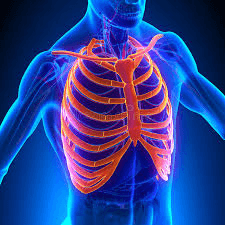
a)

Ribs

b)

Vertebrae

c)

Clavicle

d)

Femur

61.

What bone is highlighted?

a)

Vertebrae

b)

Radius

c)

Pelvis

d)

Ribs

62.

What bone is highlighted?

a)

Patella

b)

Pelvis

c)

Clavicle

d)

Femur

63.
What bone protects the brain?
a)
Rib Cage
b)
Skull
c)
Femur
d)
Face
64.

What muscle is the arrow pointing toward?

a)

biceps

b)

traps

c)

pecs

d)

triceps

65.

What muscle is the arrow pointing to?

a)

Pectoralis (Pecs)

b)

Biceps

c)

Triceps

d)

Lats

66.

What muscle is the arrow pointing to?

a)

Biceps

b)

Triceps

c)

Lats

d)

Quads

67.
a)
Quadriceps
b)
Satorius
c)
Hamstring
d)
Gastronecmius
68.
a)
Latissmius Dorise
b)
Erectors
c)
Deltoids
d)
Abdominal
69.
a)
Abdominal
b)
External Oblique
c)
Erectors
d)
Satorius
70.
a)
Trapezius
b)
Gluteals
c)
Deltoid
d)
Hamstring
71.
a)
Hamstrin
b)
Quadricep
c)
Tibialis Anterior
d)
Gastrocenmius
72.
a)
Glutueal
b)
Hamstring
c)
Quadricep
d)
External Oblique
73.

What muscle is the arrow pointing to?

a)

Biceps

b)

Triceps

c)

Lats

d)

Quads

74.
a)
Abdominal
b)
External Oblique
c)
Erectors
d)
Satorius
75.

These muscles that make up someone's "six pack" are really called what?

a)

extermal obliques

b)

gluteus maximus

c)

rectus abdominus

d)

gastrocnemius

76.
Name the bone (thumb side)
a)
ulna
b)
humerus
c)
radius
d)
scapula
77.
Name the bone (pinky side)
a)
humerus
b)
tibia
c)
ulna
d)
radius
78.
Name the bone
a)
tibia
b)
fibula
c)
femur
d)
tarsals
79.
Name the bone
a)
femur
b)
fibula
c)
tibia
d)
patella
80.
Name the bone
a)
Ribs
b)
Sternum
c)
Clavicle
d)
Ulna
81.
Name the bone
a)
Clavicle
b)
Radius
c)
Ulna
d)
Scapula
82.
Name the bone
a)
Radius
b)
Humerus
c)
Ulna
d)
Patella
83.
Name the bone
a)
Femur
b)
Tibia
c)
Fibula
d)
Patella
84.
What is the biggest bone in your body?
a)
fibula
b)
humerus
c)
pelvis
d)
femur
85.

Closer to the head.

a)

Anterior

b)

Proximal

c)

Superior

d)

Medial

86.

Away from the head.

a)

Inferior

b)

Lateral

c)

Deep

d)

Distal

87.

Toward the front of the body.

a)

Superficial

b)

Anterior

c)

Inferior

d)

Proximal

88.

Toward the back of the body.

a)

Superficial

b)

Distal

c)

Superior

d)

Posterior

89.

Another term for posterior.

a)

Medial

b)

Deep

c)

Dorsal

d)

Anterior

90.

Toward the midline of the body

a)

Inferior

b)

Superficial

c)

Proximal

d)

Medial

91.

Away from the midline of the body

a)

Inferior

b)

Distal

c)

Lateral

d)

Posterior

92.

Closer to the trunk.

a)

Proximal

b)

Medial

c)

Superior

d)

Deep

93.

Away from the trunk.

a)

Superior

b)

Distal

c)

Lateral

d)

Anterior

94.

Toward the surface of the body.

a)

Deep

b)

Superficial

c)

Inferior

d)

Distal

95.

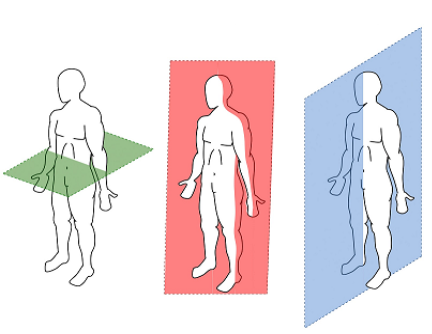
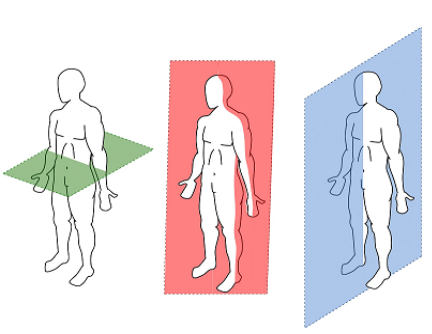
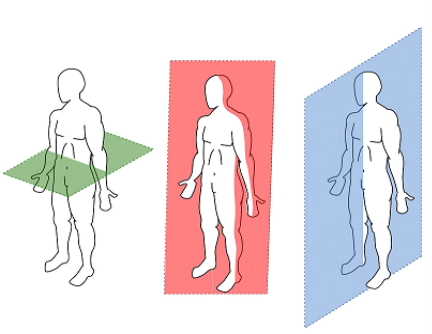
Divides the body into left and right portions.

a)

Frontal

b)

Transverse

c)

Sagittal.

96.

Divides the body into front and back portions.

a)

Sagittal

b)

Frontal

c)

Transverse

97.

Divides the body into top and bottom portions.

a)

Sagittal

b)

Frontal

c)

Transverse

98.

What is an example of an organ?

a)

Pancreas

b)

Blood

c)

Insulin

d)

Knee

99.

Structures in a cell that have specialized jobs.

Similar concept to organs for the human body.

a)

Tissue

b)

Molecule

c)

Atom

d)

Organelles

100.

Groups of cells with similar functions.

a)

Organs

b)

Molecules

c)

Tissues

d)

Organelles

101.

Group of tissues with similar functions.

a)

Organelles

b)

Cells

c)

Tissues

d)

Organs

102.

Group of organs with similar functions.

a)

Organism

b)

Cell

c)

Organ

d)

System

103.

What is the function of the cell membrane?

a)

To control what comes in and out of the cell

b)

To break down food inside the cell

c)

to serve as a barrier

d)

to eat the cells food

104.

Which organelle produces the energy a cell needs to carry out its function

a)

Mitochondria

b)

Golgi Bodies

c)

Cytoplasm

d)

Nucleus

105.

Which organelle receives proteins and materials from the ER, packages them and distributes them

a)

Vacuoles

b)

Golgi Bodies

c)

Nucleus

d)

Chromatin

106.

what is the function of ribosomes

a)

to assemble amino acids to create proteins

b)

to pack proteins

c)

to clean proteins

107.

The control center of cell is

a)

the nucleus

b)

ribosomes

c)

chromatin