
 Worksheets
W.E.D
Total questions: 20
Worksheet time: 16mins
If a dune is created from sand being blown by wind, what parts of W.E.D are being used in the process of making it.
Just Erosion.
Erosion and Deposition.
Erosion, Deposition and Weathering
Deposition and Weathering.
Physical weathering is the process of weathering something physically, and it is also called (a) weathering.
Fun question! Draw an example of a landform that is created from weathering, erosion, and deposition.

How fast does weathering happen?
Usually slow, but can also be fast.
Always very fast.
Always very slow.
In the middle.
A type of weathering that is not very strong is weathering from (a)
What factors influence the rate of weathering?
Climate and rock type.
Only climate.
Only rock type.
Neither climate nor rock type.
What is the main cause of chemical weathering?
Water.
Wind.
Sunlight.
Animals.
If sediment is being weathered by warm water, it will dissolve faster than if the water was (a)
Color changing because of water is an example of what?
Deposition
Chemical Weathering
Erosion
Mechanical Weathering
Does physical weathering change the chemical composition of rocks?
No, but chemical weathering does.
No, but mechanical weathering does.
Yes, it does.
No, but erosion does.
Fun question! What is your favorite landform that is created by W.E.D, and why?
Physical weathering can be caused by changes in (a)
What is sediment, and how is it a part of W.E.D?
Sediment is another name for erosion, so it is the E in W.E.D.
Sediment is broken down rock that is created by weathering, moved by erosion, and dropped by deposition.
Sediment is broken down rock that is created by deposition.
Sediment is a type of landform that is created by W.E.D.
(a) Weathering is usually what makes mountains.
In the experiment where we sprayed water on skittles, what type of weathering was it?
Biological
Mechanical
Chemical
Physical
How does erosion differ from weathering?
Erosion involves the movement of rock particles, while weathering does not.
Weathering involves the movement of rock particles, while erosion does not.
Both erosion and weathering involve the movement of rock particles.
Neither erosion nor weathering involve the movement of rock particles.
What is the main cause of chemical weathering?
Temperature changes
Water
Wind
Sunlight
What is the main agent of erosion that shapes coastal landscapes?
Wind.
Glaciers.
Water.
Gravity.
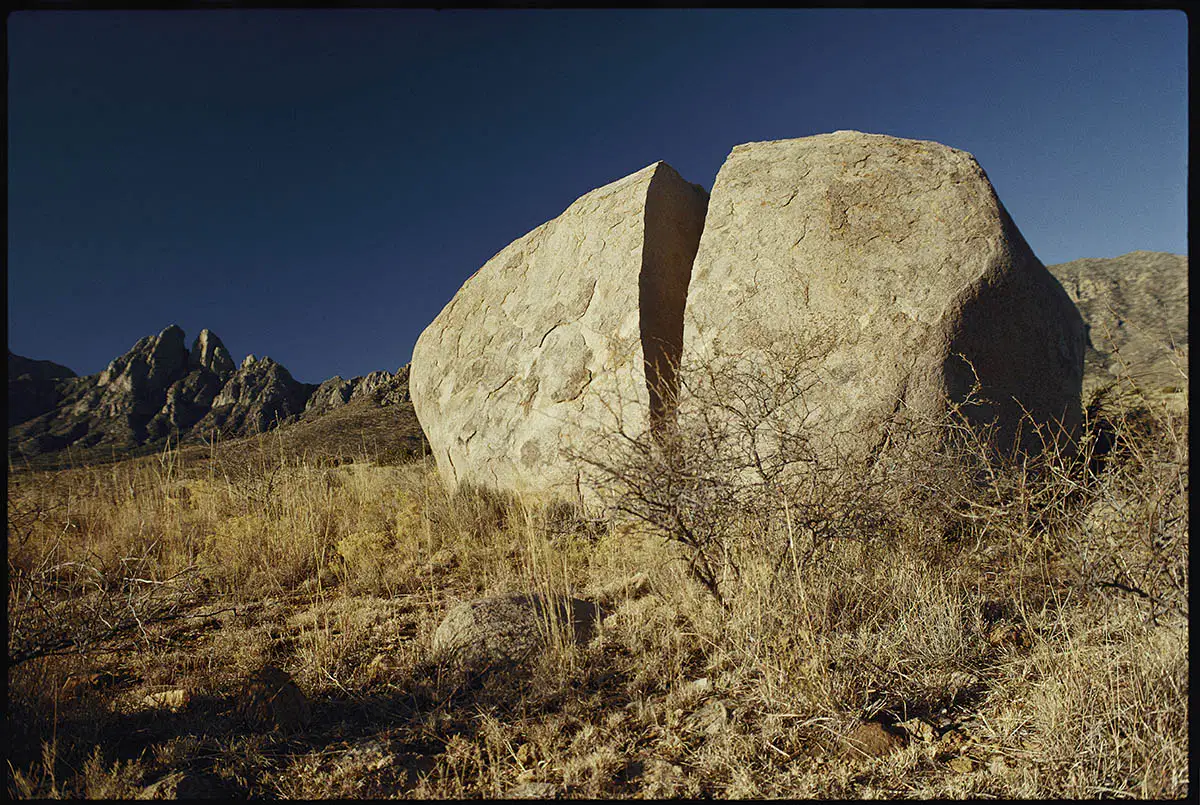
What part of W.E.D is this?
Sediment
Weathering
Erosion
Deposition
Fun question! What do you think is the MOST IMPORTANT part of W.E.D?
Weathering
Erosion
Deposition
I don't know!?

