
 Worksheets
Zoology 1 9 Week's Test
Total questions: 26
Worksheet time: 7hrs 30mins
What moves water through the sponge?
Collar cell
Flagella
Porocyte
Amebocyte
What moves water through the sponge?
Cilia of the choanocyte cell
Flagella of the choanocyte cell
Porocyte cell
Amebocyte cell
How do sponges get their food?
By going through photosynthesis
By decomposing it
Sponges do not eat
By filter feeding
What is the name of the phylum to which sponges belong?
Mammals
Chordate
Cnidarians
Porifera
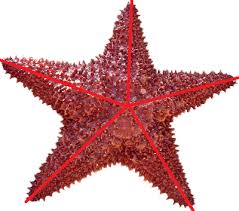
What type of symmetry is displayed in the picture?
Asymmetry
Bilateral symmetry
Radial symmetry
Photosynthesis

Which phylum has a soft, unsegmented body that can be protected by a shell?
Mushroom
Mollusks
Echinoderm
Annelid
Which of the following is a correct description of the Cnidarian digestive tract?
A complete digestive tract consisting of two openings.
A complete digestive tract consisting of one opening.
An incomplete digestive tract consisting of two openings.
An incomplete digestive tract consisting of one opening.
The mollusks in the class Gastropoda are:
Single-shelled mollusks, such as snails and whelks
Oysters, clams, and scallops
Octopuses, squid, and clams
All of the above
Mollusks in the class Cephalopoda include:
Slugs and snails
Oysters and scallops
Nudibranchs
None of the above
The _____________ is thought to be the most intelligent vertebrate.
Squid
Octopus
Whelk
Cuttlefish
What does the term 'coelomate' (root word coelom) refer to?
Organisms that do not have a nervous system.
Organisms that do not have a circulatory system.
Organisms that do not reproduce sexually.
Organisms that do not have a digestive system.
Let's dive into the underwater world! Can you spot the odd one out who is NOT a member of the cnidarian family?
Jellyfish
Anemone
Sponge
Coral
Can you guess what the large opening at the top of a sponge is called? It's a fun fact!
Osculum
Porocyte
Spicule
Spongocoel

Imagine you're a tiny fish swimming around in the ocean and you come across a sponge. You notice it's not moving at all! This is because sponges are considered ______. Can you guess why?
sessile
senile
sedimentary
spongin

Imagine you're a tiny particle floating in the water. Which cell would you likely bump into that has a sticky, funnel-shaped collar of cilia ready to collect you, and a flagellum creating a water current?
amoebocyte
ostiocyte
pinacocyte
choanocyte

Imagine you're a tiny creature living in the ocean. You come across structures that look like skeletons. They can be hard or soft and they act as your internal support and defense against predators. What are these structures called?
Spicules
Spongin
Sessile
Something

Can you guess the type of symmetry shown in this fun picture?
Bilateral symmetry
Radial symmetry
Asymmetry
Cellular respiration

Ready for a fun fact? One of these groups is entirely made up of mollusks. Can you guess which one it is?
Octopus, Squid, Slugs, Snails
Fish, Squid, Jellyfish, Sea cucumbers
Sea stars, Sea cucumbers, sea urchins
Oysters, Fish, Whales, Sponges
Imagine you're a marine biologist, diving deep into the ocean. You encounter a fascinating creature that has both a medusa and a polyp stage, stinging tentacles, and radial symmetry. Can you identify which phylum this creature belongs to?
Arthropods
Annelids
Cnidarians
Echinoderms
Mollusks
Imagine you're a marine biologist studying the fascinating world of sponges (Porifera). Can you tell what type of symmetry these intriguing creatures have?
Asymmetrical
Radial
Bilateral
Medial
Imagine you're a tiny creature swimming in the ocean. Suddenly, you're paralyzed! What's the culprit? It's an organelle inside a stinging cell that has just injected you with a paralyzing toxin. Can you guess the name of this organelle?
Pinacocytes
Lysomatocyts
Choanocytes
Nematocysts
Let's dive into the underwater world! How do you think Cnidarians reproduce?
They only know the birds and the bees (only sexually)
They're independent creatures (only asexually)
They like to mix things up (both sexually and asexually)
They don't reproduce at all (neither sexually nor asexually)
Let's dive into the underwater world! Can you guess which is the largest class in the phylum Cnidaria? Here's a hint: it includes _______.
Anthozoa, those fascinating jellyfish
Hydrozoa, the mysterious siphonopores
Anthozoa, the beautiful corals and anemones
Scyphozoa, the mesmerizing jellyfish
Imagine you're a marine biologist. You've just discovered a new species of fire coral and a siphonophore. To which class do you think they belong?
Hydrozoa
Anthozoa
Scyphozoa
Protozoa
Hey there, marine life enthusiast! Can you tell us which of these fascinating creatures belong to the phylum Mollusca?
The colorful Sea slugs
The slow-moving Snails
The mysterious Squid
All of these amazing creatures
Let's dive into the underwater world! Can you tell me something about the Mollusks in the Bivalvia class?
They are the proud owners of two shells!
They are unique creatures that lack a "head"!
They are special because they do not have a radula!
All of these fascinating facts are true!

