wayground logo

Free Printable Worksheets

Font size

S
M
L
XL
Worksheets

HC U1 Retake assignment

Total questions: 181

Worksheet time: 3hrs 31mins

Name
Class
Date
1.

Is this an example of a physical or chemical change?

a)

Physical

b)

Chemical

2.

Is this an example of a physical or chemical change?

a)

Physical

b)

Chemical

3.

A change in which NEW substances are formed.

a)

Chemical change

b)

Physical change

4.
Which of the following below is a chemical property? 
a)
Color
b)
Density
c)
Boiling Point
d)
Reactivity with Acid
5.
Which of the following situations is evidence of chemical change? 
a)
Boiling water produces steam
b)
Adding vinegar to baking soda makes foaming bubbles
c)
Sharpening a pencil
d)
Cutting paper
6.
The fact that sugar can be white is a 
a)
Chemical Property 
b)
Physical Property 
c)
Both A and B
d)
None of the above 
7.
Flammability is a 
a)
Chemical Property 
b)
Physical Property 
c)
Both A and B
d)
None of the above 
8.
Iron's ability to rust when exposed to air is a 
a)
Chemical Property 
b)
Physical Property 
c)
Both A and B
d)
None of the above 
9.
Density is a 
a)
Chemical Property 
b)
Physical Property 
c)
Both A and B
d)
None of the above
10.
An antacids (TUMS) ability to change pH in your stomach is an example of a 
a)
Chemical Property 
b)
Physical Property 
c)
Both A and B 
d)
None of the above 
11.
After blowing out the flame on the candle, James noticed the wick changed from white to black, this is a
a)
Physical Property
b)
Physical Change
c)
Chemical Property 
d)
Chemical Change 
12.
The candle has a texture that is soft enough to scrape with a fingernail, this is a 
a)
Physical Property 
b)
Physical Change
c)
Chemical Property 
d)
Chemical Change 
13.
The mass of the candle is 2.12 grams, this is a 
a)
Physical Property 
b)
Physical Change
c)
Chemical Property 
d)
Chemical Change 
14.
The candle wick started to smoke after it was lit, this is a 
a)
Physical Property 
b)
Physical Change
c)
Chemical Property 
d)
Chemical Change 
15.
Which example represents a chemical change occurring? 
a)
A blue bike is painted pink
b)
Sand paper is used to smooth wood
c)
When the two chemicals inside an ice pack are mixed it becomes cold 
d)
Paper is ripped into smaller pieces 
16.
In a chemical change
a)
Bonds are not broken
b)
A new substance is formed and bonds are rearranged 
c)
No new substances are formed 
d)
None of the above 
17.
Sodium is a soft, white metal that reacts violently with water. Chlorine is a poisonous yellow-green gas. During the chemical reaction between sodium and chlorine, table salt is produced. Which of the following statements correctly compares and contrasts the reactants with the resulting products? 
a)
The reactants are dangerous and the product can be eaten 
b)
The reactants and the products are identical 
c)
The reactants are a solid and a gas and the product is a gas
d)
The reactants and the products are the same color 
18.
During a chemical reaction the chemical properties of the new substance 
a)
Are the same as the chemical properties of the original substance 
b)
Are different from the chemical properties of the original substance 
c)
All of the above
d)
None of the above 
19.
While burning, sugar changed from a white solid substance to a brown liquid substance. What occurred? 
a)
No new reactants were formed
b)
The products combined to form a new reactant
c)
The bonds of the reactants were broken and rearranged into a new product 
d)
The reactants were the same as the product 
20.
Which of the following would be the BEST scientific question to ask after the teacher burned the sugar? 
a)
What time is class over?
b)
Can we do this experiment again? 
c)
Did a chemical change occur? 
d)
Is sugar an element? 
21.
Which of the following is a physical property of vinegar (acetic acid)? 
a)
The liquid is dark and cloudy
b)
The powder is blue
c)
The white powder can rust 
d)
The liquid is clear and has a strong odor
22.

A chemical property ....

a)

is observed with the senses

b)

indicates how a substance reacts with something else

c)

is measured

d)

is determined without destroying the object.

23.

Boiling point of water is 100oC

a)

physical property

b)

chemical property

24.

Silver is shiny

a)

physical property

b)

chemical property

25.

Determine whether the observation describes a physical or a chemical property of matter:

Gold does not tend to tarnish or interact with other substances.

a)

Physical Property

b)

Chemical Property

26.

A chemical property ....

a)

is observed with the senses

b)

indicates how a substance reacts with something else

c)

is measured

d)

is determined without destroying the object.

27.

Boiling point of water is 100oC

a)

physical property

b)

chemical property

28.

Silver is shiny

a)

physical property

b)

chemical property

29.

Sugar is soluble (dissolves) in water.

a)

physical property

b)

chemical property

30.

A copper pot turns green when left outside.

a)

physical property

b)

chemical property

31.

A physical property ....

a)

is measured or observed with the senses without destroying the object.

b)

indicates how a substance reacts with something else

32.

You're asked to identify these liquids based on color. Would that be an intensive or extensive property?

a)

intensive

b)

extensive

c)

both

d)

neither

33.

In a lab, you're asked to measure an item's mass. Is that an intensive or extensive property?

a)

intensive

b)

extensive

c)

both

d)

neither

34.

You calculate the density of several objects as part of a lab. Is that in intensive property or an extensive property?

a)

intensive

b)

extensive

c)

both

d)

neither

35.

Which of the following is a Chemical Property?

a)

radioactivity

b)

boiling point

c)

solubility

d)

viscosity

36.

Which of the following is a Chemical Property?

a)

solubility

b)

flammability

c)

viscosity

d)

melting point

37.

How easily a substance reacts, usually with an acid or a base

a)

reactivity

b)

solubility

c)

oxidation

d)

flammability

38.

Choose ALL the examples of CHEMICAL PROPERTIES

a)

Flammability

b)

Oxidation

c)

Radioactivity

d)

Color

39.
Ability to rust is this type of property:
a)
Physical property
b)
Chemical property
40.
Which is an example of a physical property?
a)

ability to react with acid

b)

 state of matter

c)

flammability

d)

ability to react with oxygen

41.
Ice melting is an example of a
a)
physical change
b)
chemical change
c)
physical property
d)
chemical property
42.
Physical properties are
a)
properties that can be observed without changing the identity of the substance
b)
properties that describe how a substance changes into a completely different substance
c)
properties that we can only observe with our eyes
d)
properties that we need special tools to observe
43.
Which is an example of a chemical change?
a)
melting ice to make water
b)
baking cake batter to make a cake
c)
putting cheese on bread to make a cheese sandwich
d)
cutting an orange into slices for a snack
44.
Hammering wood together to build a playhouse
a)
Chemical change
b)
Physical change
45.
a copper penny turning greenish after a few years.
a)
Chemical Change
b)
Physical Change
46.
Burning a marshmallow over a campfire
a)
Physical
b)
Chemical
47.

______________________ can only be recognized when substances react or do not react chemically with one another.

a)

Physical properties

b)

Chemical properties

c)

Flammable properties

d)

Colorful properties

48.
Which of the following is NOT an example of a physical change?
a)
crumpled paper
b)
pencil sharpening
c)
shrunken clothing
d)
rust
49.
In physical changes, substances might change in __________ but not in __________.
a)
appearance, composition
b)
volume, state of matter
c)
texture, color
d)
weight, mass
50.
True or False: a physical change may produce a new substance.
a)
True
b)
False
51.
Which of the following is an example of a precipitate?
a)
liquid evaporating into gas
b)
a solid formed from a frozen liquid
c)
a chunk solid formed from two liquids combining
d)
a liquid solution that contains two substances
52.
Which of the following is an example of a physical change?
a)
sugar and oxygen reacting to produce water and carbon dioxide
b)
honey dissolving in tea
c)
a raw egg being cooked
d)
metal rusting after being left out in the rain
53.
A physical change can sometimes result in a color change. Which of the following situations show this?
a)
Milk turns yellow when it spoils.
b)
Dough becomes darker when it is baked into cake.
c)
A red candy dissolves and turns water pink.
d)
A match turns black when it is burned.
54.
A copper penny turning greenish after a few years is an example of ...
a)
Chemical Change
b)
Physical Change
55.
A change in which NEW substances are formed.
a)
Chemical change
b)
Physical change
c)
Casual change
d)
Formal change
56.
Bubbles form when two or more substances are combined ...
a)
Chemical Change
b)
Physical Change
57.
An explosion occurs ...
a)
Chemical Change
b)
Physical Change
58.
A change in the size, shape, or state of matter.
a)
chemical change
b)
physical change
59.

Choose the best description below for the image

a)

physical change

b)

chemical change

60.

Choose the best description below for the image

a)

physical change

b)

chemical change

61.

Choose the best description below for the image

a)

physical change

b)

chemical change

62.

Choose the best description below for the image

a)

physical change

b)

chemical change

63.

Choose the best description below for the image

a)

physical change

b)

chemical change

64.

Choose the best description below for the image

a)

physical change

b)

chemical change

65.

The image is best described as

a)

Chemical Change

b)

Physical Change

66.
Is Gatorade powder dissolving in water physical or chemical change?
a)
Physical 
b)
Chemical
67.
Is making orange juice a physical or chemical change?
a)
Physical 
b)
Chemical
68.
Is copper tarnishing a physical or chemical change?
a)
Physical 
b)
Chemical
69.
Is the formation of the grand canyon a physical or chemical change?
a)
Physical 
b)
Chemical
70.

Is a a rusting bicycle a chemical or physical change?

a)

Chemcial

b)

Physical

71.

Is this a physical or chemical change?

a)

Physical

b)

Chemical

72.

In this example, what is the evidence a chemical change has occurred?

a)

volume is increased

b)

no energy is released

c)

gas is being released

d)

a precipitate has formed

73.

Which type of change is occurring in the picture?

a)

Chemical

b)

Physical

74.

What type of change has occurred?

a)

Chemical

b)

Physical

75.

Which of the following is a chemical property?

a)

volume

b)

magnetism

c)

temperature

d)

reactivity

76.
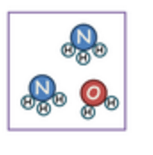
This picture represents: 
a)
Element
b)
Compound
c)
Mixture of Elements
d)
Mixture of Compounds
77.
What type of mixture is this?
a)
homogenous mixture
b)
chemical
c)
heterogeneous mixture 
d)
solid mix
78.
A substance in which all the atoms are the same
a)
colloid
b)
homogeneous mixture
c)
solution
d)
element
79.
A mixture in which different materials can be identified easily
a)
element
b)
heterogeneous mixture
c)
homogeneous mixture
d)
solution
80.
A mixture that contains two or more substances blended evenly throughout
a)
heterogeneous mixture
b)
homogeneous mixture
c)
suspension
d)
colloid
81.
Which of the following is an element?
a)
Sugar
b)
Salt
c)
Water
d)
Oxygen
82.
This picture represents which of the following?
a)
element
b)
compound
c)
mixture
83.
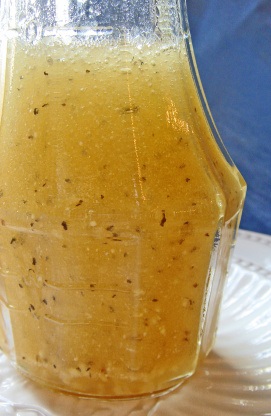
Italian Salad Dressing is a . . .
a)
heterogeneous mixture
b)
homogeneous mixture
c)
Pure Substance
d)
Compound
84.
Can usually be separated in your kitchen (by physical means)
a)
Pure Substance & Element
b)
Pure Substance & Compound
c)
Mixture & Homogenous
d)
Mixture & Heterogenous
85.

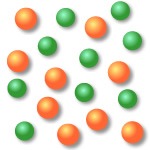
This picture represents a:

a)

Element

b)

Compound

c)

Mixture of Elements

d)

Mixture of Compounds

86.

What type of mixture is this?

a)

homogenous mixture

b)

chemical

c)

heterogeneous mixture

d)

solid mixture

87.

A substance with two or more elements that are combined in a fixed proportion is called a:

a)

heterogeneous mixture

b)

compound

c)

element

d)

homogeneous mixture

88.

A substance in which all the atoms are the same type.

a)

heterogeneous mixture

b)

homogeneous mixture

c)

compound

d)

element

89.

A mixture that contains two or more substances blended evenly throughout

a)

heterogeneous mixture

b)

homogeneous mixture

c)

compound

d)

element

90.

A mixture that is NOT evenly distributed is called a:

a)

compound

b)

homogeneous mixture

c)

heterogeneous mixture

d)

pure substance

91.

This picture represents a:

a)

element

b)

compound

c)

mixture of elements

d)

mixture of compounds

92.
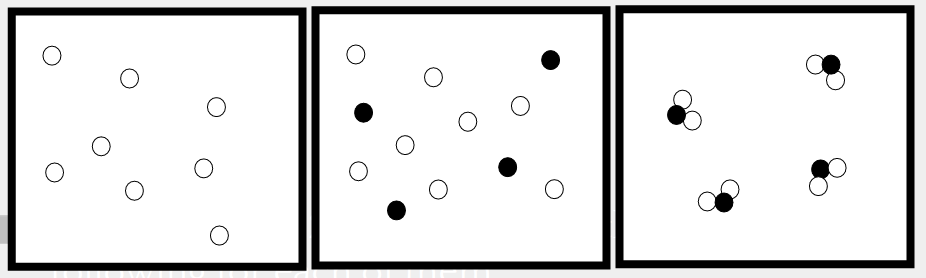
Which one of these pictures represents a mixture? 
a)
1
b)
2
c)
3
d)
1, 2 and 3
93.
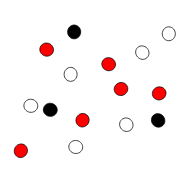
This picture represents: 
a)
Element
b)
Compound
c)
Mixture of Elements
d)
Mixture of Compounds
94.

True or False: Matter is divided into two main groups: pure substances and mixtures.

a)

True

b)

False

95.

True or False: The two types of pure substances are elements and compounds.

a)

True

b)

False

96.

Chicken soup is an example of what kind of matter?

a)

homogenous mixture

b)

solution

c)

heterogeneous mixture

d)

compound

97.

Kool-Aid is an example of:

a)

Element

b)

Compound

c)

Homogeneous Mixture

d)

Heterogeneous Mixture

98.

Carbon is an example of:

a)

Element

b)

Compound

c)

Homogeneous Mixture

d)

Heterogeneous Mixture

99.

O2 is an example of:

a)

Element

b)

Compound

c)

Homogeneous Mixture

d)

Heterogeneous Mixture

100.

NaCl is an example of:

a)

Element

b)

Compound

c)

Homogeneous Mixture

d)

Heterogeneous Mixture

101.

Aluminum is an example of:

a)

Element

b)

Compound

c)

Homogeneous Mixture

d)

Heterogeneous Mixture

102.

A metal alloy is a(n):

a)

homogeneous mixture

b)

heterogeneous mixture

c)

element

d)

compound

103.

What is a pure substance made of 2 or more elements chemically combined in a specific ratio (Ex. Water)?

a)

Element

b)

Compound

c)

Mixture

d)

Solution

104.

What is a type of mixture in which different parts can easily be seen (Ex. Vegetable soup)?

a)

Heterogeneous mixture

b)

Homogeneous mixture

c)

Solution

d)

Colloid

105.

What is a well-mixed mixture containing a solvent and at least one solute that has the same properties throughout (Ex. Sugar water)?

a)

Heterogeneous mixture

b)

Colloid

c)

Suspension

d)

Solution

106.

What is a type of mixture that is evenly mixed so you cannot see the parts and it looks all the same (Ex. Paint)

a)

Element

b)

Compound

c)

Heterogeneous mixture

d)

Homogeneous mixture

107.

What is a pure substance that cannot be broken down into any other substances by chemical or physical means (Ex. Oxygen)?

a)

Element

b)

Compound

c)

Colloid

d)

Suspension

108.

What is a mixture in which particles can be seen seen and settle out over time (Ex. Muddy water)?

a)

Solution

b)

Suspension

c)

Colloid

d)

Element

109.

What is a mixture containing small, undissolved particles that do not settle out over time (Ex. Fog)?

a)

Solution

b)

Suspension

c)

Colloid

d)

Compound

110.

A base is a compound that makes hydroxide ions (OH-) when dissolved in water.

a)

True

b)

False

111.

Which of the following values is very acidic on the pH scale?

a)

0

b)

6

c)

9

d)

14

112.

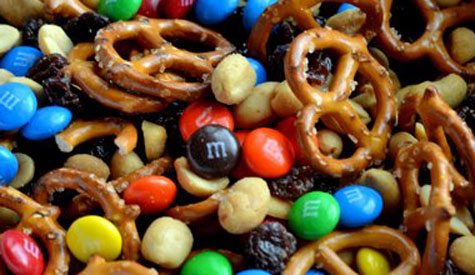
Trail mix is a

a)

Mixture

b)

Substance

113.

Sugar is a

a)

Substance

b)

Mixture

114.

Concrete is a

a)

Substance

b)

Mixture

c)
d)
115.

Table salt (NaCl)

a)

Substance

b)

Mixture

116.

Mercury is (Hg)

a)

Element

b)

Compound

117.

Water is (H20)

a)

Element

b)

Compound

118.

Aluminum is (Al)

a)

Element

b)

Compound

119.

Oxygen is (O2)

a)

Element

b)

Compound

120.

Carbon Dioxide (CO2)

a)

Element

b)

Compound

121.

Is Coffee

a)

Heterogeneous

b)

Homogeneous

122.

Pizza is

a)

Heterogenous

b)

Homogenous

123.

Soil is

a)

Heterogenous

b)

Homogenous

124.

Air is

a)

Heterogenous

b)

Homogenous

125.

Select all of the compounds in these particle diagrams.

a)
b)
c)
d)
e)
126.
Question Image

Match the following

a)
1.

element

b)
2.

compound

c)
3.

mixture of 2 elements

d)
4.

mixture of 2 compounds

127.

Match the term with its definition

a)

a pure substance that consists of one type of atom.

1.

elment

b)

a pure substance that consists of multiple types of atoms chemically joined.

2.

compound

c)

contains two or more different substances physically joined together

3.

mixture

128.
Which of the following are pure substances?
a)
solutions
b)
compounds
c)
homogeneous mixtures
d)
colloids
129.
Which of the following is NOT a pure substance?
a)
milk
b)
oxygen
c)
water
d)
carbon dioxide
130.
A substance that is made up of only one kind of atom is a(an)
a)
compound
b)
homogeneous mixture
c)
element
d)
solution
131.
If an unknown substance CANNOT be broken down into simpler substances, it is 
a)
a compound
b)
an element
c)
a homogeneous mixture
d)
a heterogeneous mixture
132.
If a material contains three elements joined in a fixed proportion, it is a(an)
a)
mixture
b)
solution
c)
atom
d)
compound
133.
Water is a compound because it
a)
can not be broken down into simpler substances
b)
always has two hydrogen atoms for each oxygen atom
c)
is made of water atoms joined together
d)
is heterogeneous
134.
Which of the following is a mixture?
a)
carbon dioxide
b)
silicon
c)
silicon dioxide
d)

Beach sand

135.
Which of the following is a characteristic of a mixture?
a)
has varying properties
b)
has a fixed composition
c)
contains only pure substances
d)
does not reflect light
136.
A mixture that appears to contain only one substance is a(an)
a)
homogeneous mixture
b)
heterogeneous mixture
c)
compound
d)
element
137.
Which of the following is a heterogeneous mixture?
a)
water in a swimming pool
b)
sugar water
c)
a jar of mixed nuts
d)
stainless steel
138.
you are about to open a container of soy milk but notice that there are instructions to "shake well before serving".  The soy milk is most likely a
a)
solution
b)
pure substance
c)
colloid
d)
suspension
139.
This image represents a(n)
a)
element
b)
compound
c)
mixture
d)
colloid
140.
The air that fills this room would be classified as
a)
an element
b)
a compound
c)
a homogeneous mixture
d)
a pure substance
141.
Why is the composition of every element fixed?
a)
Because it contains only one type of atom.
b)
Because the ratio of atoms is always the same.
c)
Because the atoms are so small.
d)
Because God said so.
142.
Two classifications of a pure substance are
a)
homogeneous and heterogeneous
b)
atoms and elements
c)
elements and compounds
d)
solutions and colloids
143.
Two classifications of homogeneous mixtures would be
a)
solutions and colloids
b)
solutions and suspensions
c)
colloids and suspensions
d)
compounds and solutions
144.
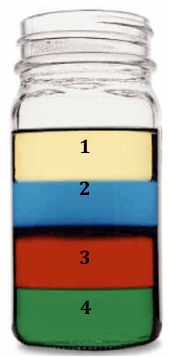
Put the liquids in order from most dense to least dense?
a)
4, 3, 2, 1
b)
1, 2, 3, 4
c)
3, 4, 2, 1, 
d)
4, 3, 1, 2
145.
What is the formula for density?
a)
density = mass x volume
b)
density = mass / volume
c)
density = mass + volume
d)
density = mass - volume
146.
Frank has an eraser. It has a mass of 4g, and a volume of 2cm3. What is its density?
a)
8 g/cm3
b)
2 g/cm3
c)
1/2 g/cm3
d)
24 g/cm3
147.

Why do objects sink or float in H2O?

a)

Because their densities are higher or lower than compared to water

b)

Because their densities are using gravity to pull down

c)

Because their densities are heavier or lighter

d)

Because their mass and volumes are equal

148.
An object with which of the following densities will float on water?
a)
0.7 g/cm3
b)
1.2 g/cm3
c)
3.5 g/cm3
d)
11.4 g/cm3
149.
Calculate the density of the cube. (Hint: calculate the volume of the cube using V= Bh)
a)
0.33 g/cm3
b)
0.4 g/cm3
c)
0.6 g/cm3
d)
0.5 g/cm3
150.
What is the volume of Object X?
a)
10.0 cm3
b)
15.0 cm3
c)
20.0 cm3
d)
25.0 cm3
151.

What is the volume of 150 grams of lead if it has a density of 11.3 g/cm3?

a)

13.3 g

b)

13.3 cm3

c)

.075 g

d)

1695 cm3

152.
Find the volume of this piece of brass.  
a)
50 g
b)
10 cm
c)
6 cm3
d)
12 cm3
153.
Which box has a higher density?  
a)
Box A
b)
Box B
c)
cannot be determined
d)
they are the same
154.
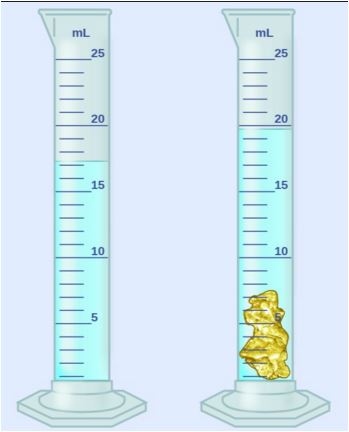
An irregularly shaped piece of gold was lowered into a graduated cylinder holding a volume of water equal to 17 ml. The height of the water rose to 20 ml. If the mass of the gold was 27 g, what was its density?
a)
9 g/mL
b)
10.5 g/mL
c)
6.5 g/mL
d)
8 g/mL
155.

Which has the greatest volume?

a)

One on left

b)

One on right

c)

Both the same

d)

Volume cannot be determined

156.

Which has the greatest volume?

a)

One on left

b)

One on right

c)

Both the same

d)

Volume cannot be determined

157.

The slope of a mass vs volume graph represents which physical property?

a)

mass

b)

volmue

c)

density

d)

temperature

158.

What is the density of the object depicted in the graph?

a)

0.2 g/cm3

b)

5.0 g

c)

2 g

d)

5.0 g/cm3

159.

Which has the greatest density?

a)

A

b)

B

c)

C

d)

All the same density

160.

Which are measurable physical properties? (may be more than one)

a)

volume

b)

density

c)

mass

d)

temperature

161.

Ethanol has a density of 0.789 g/cm 3 .

What is the mass of 225 cm 3 of ethanol?

a)

178g

b)

285g

c)

0.004 g

d)

225.789g

162.

Which of the following is an example of an object with a high density?

a)

Pillow

b)

Bowling Ball

c)

Beach Ball

163.

Which of the following is the correct units for density?

a)

grams (g)

b)

Newtons (N)

c)

cm3

d)

g/cm3

164.

What is the density of an object if it has a mass of 6g and a volume of 3cm3? (Hint: Density = mass/volume)

a)

6 g/cm3

b)

3 g/cm3

c)

2 g/cm3

d)

1/3 g/cm3

165.

Does 1cup or 6cups of water have a higher density?

a)

1 cup

b)

6 cups

c)

They have the same density

166.

You calculated the density of an unknown substance to be 7.8g/cm3. According to the chart, which of the substances doe you most likely have?

a)

Zinc

b)

Copper

c)

Tin

d)

Iron

167.

You calculated the density of an unknown substance to be 5.7g/cm3. According to the chart, which of the substances do you most likely have?

a)

Aluminum

b)

Iron

c)

Tin

d)

Zinc

168.

Which of the following substances would float in water? (Hint: water has a density of 1g/cm3)

a)

gold

b)

rubber

c)

water

d)

cork

169.

Which of the following objects is least dense?

a)

A

b)

B

c)

C

d)

D

170.
What is the formula for density?
a)
density = mass x volume
b)
density = mass / volume
c)
density = mass + volume
d)
density = mass - volume
171.
Why do some substances float on water?
a)
they are warmer than water
b)
they are cooler than water
c)
they are more dense than water
d)
they are less dense than water
172.
What two types of measurements make up DENSITY
a)
Mass and Volume
b)
Temperature and Mass
c)
Grams and Centimeters
d)
Volume and Weight
173.
True or False:  The density of a specific type of material never changes.  
a)
True
b)
False
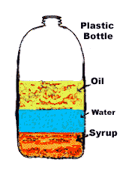
174.

Which liquid is the least dense?

a)

oil

b)

water

c)

syrup

d)

plastic bottle

175.

Rocks sink because they are

a)

the same density as the water

b)

less dense than the water

c)

more dense than the water

d)

because they're round

176.
If an object has a density of 3.6 g/mL and you put it into water, will it sink or float?  
a)
sink
b)
float
177.
If an object has a density of .6 g/mL and you put it into water, will it sink or float?  
a)
sink
b)
float
178.
Look at this image.  Which object has the LOWEST density in water? How
a)
The Ping Pong Ball because it floats to the top 
b)
The bolt because it has sunk to the bottom
c)
The soda cap because it is not just full of air like the Ping Pong ball
179.
If an object has a density of 3.6 g/mL and you put it into water, will it sink or float?  
a)
sink
b)
float
180.
Frank has an eraser. It has a mass of 4g, and a volume of 2cm3. What is its density?
a)
8 g/cm3
b)
2 g/cm3
c)
1/2 g/cm3
d)
24 g/cm3
181.
Frank has a paper clip. It has a mass of 9g and a volume of 3cm3. What is its density?
a)
3 g/cm3
b)
1/3 g/cm3
c)
27 g/cm3
d)
39 g/cm3