
 Worksheets
Macromolecules and Water Properties
Total questions: 25
Worksheet time: 25mins
Name
Class
Date
1.
Which statement explains why water molecules stick together?
a)
both sides are negative
b)
one side has a positive charge and the other side has a negative charge
c)
one side has a negative charge adn the other side has a neutral charge
d)
both sides are positive
2.

When a molecule has an opposite electrical charge on each end, it is known as what?
a)
cohesion
b)
polar molecule
c)
hydrogen bond
d)
solution
3.

The ability of water molecules to stick to each other, creating surface tension is called:
a)
Cohesion
b)
Adhesion
c)
Insulation
d)
Ph
4.
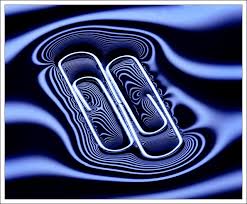
The tightness across the surface of water that enables paper clips to float is ____________.
a)
adhesion
b)
capillary action
c)
surface tension
d)
polarity
5.
Large bodies of water, such as lakes and oceans, do not quickly fluctuate in temperature. What is the reason for this phenomenon?
a)
Water is an acid.
b)
Water is a versatile solvent.
c)
Water has a high heat capacity.
d)
Water acts as a buffer.
6.
Which of the following is LEAST likely to dissolve in water?
a)
nonpolar fats and oils
b)
polar sugar molecules
c)
salt made of a positive sodium ion and a negative chloride ion
d)
all of the substances will dissolve easily in water
7.
Water is a universal solvent because it...
a)
It can be found anywhere
b)
It freezes when it gets cold
c)
floats when frozen
d)
Dissolves most substances
8.
Which end of the water molecule has a slightly positive charge?
a)
the oxygen end
b)
the hydrogen end
c)
both ends are slightly positive
d)
neither end is positive
9.
Why does ice float?
a)
As water freezes, it expands and its density decreases.
b)
As water freezes, it takes up more hydrogen from the atmosphere, causing it to have a greater buoyancy.
c)
As water freezes, air becomes trapped between the hydrogen bonds of water molecules.
d)
As water freezes, it takes up more oxygen from the atmosphere, causing it to have a greater buoyancy.
10.

Attractions between the negative Oxygen atom of one water molecule and the positive Hydrogen atom of another water molecule are called
a)
Covalent bonds
b)
Ionic bonds
c)
Polar bonds
d)
Hydrogen bonds
11.

What word describes when water is attracted to other substances?
a)
cohesion
b)
adhesion
c)
capillary action
d)
surface tension
12.

What two elements make up water?
a)
Helium and oxygen
b)
Hydrogen and oxygen
c)
helium and carbon
d)
oxygen and carbon
13.
All living things on Earth are based on which element?
a)
Oxygen
b)
Hydrogen
c)
Nitrogen
d)
Carbon
14.
In CHNOPS, what does the P stand for?
a)
Potassium
b)
Phosphorus
c)
Platinum
d)
Polonium
15.
In CHNOPS, what does the O stand for?
a)
Oxygen
b)
Orphium
c)
Oganesson
d)
Optium
16.
In CHNOPS, what does the C stand for?
a)
Calcium
b)
Carbon
c)
Cesium
d)
Cobalt
17.
In CHNOPS, what does the S stand for?
a)
Sulfur
b)
Strontium
c)
Silicon
d)
Selenium
18.
In CHNOPS, what does the H stand for?
a)
Helium
b)
Hafnium
c)
Hassium
d)
Hydrogen
19.

What is the primary function of carbohydrates in your body?
a)
Speed up chemical reactions.
b)
Give immediate energy.
c)
Help to store energy.
d)
Build cell walls in plants.
20.
A type of biological molecule that includes fats, oils, hormones, waxes, and components of cellular membranes ...
a)
lipids
b)
proteins
c)
carbohydrates
d)
nucleic acids
21.
Which biomolecule helps form muscles?
a)
Nucleic Acid
b)
Carbohydrate
c)
Protein
d)
Lipids
22.
DNA and RNA are examples of
a)
Carbohydrates
b)
Lipids
c)
Proteins
d)
Nucleic Acids
23.
Sugars, starches and chitin are examples of
a)
Carbohydrates
b)
Lipids
c)
Proteins
d)
Nucleic Acids
24.
The basic unit of life is a ____________.
a)
atom
b)
molecule
c)
organelle
d)
cell
25.
What are the four biological molecules?
a)
proteins, carbohydrates, lipids, nucleic acids
b)
A, T, C, G
c)
water, air, earth, and fire
d)
Joe, Nick, and Kevin Jonas
100 %

