
Font size
 Worksheets
HISTORY OF ARCHITECTURE I
Total questions: 25
Worksheet time: 42mins
State the five principles advocated by Architect Le-Corbusier.
(a)
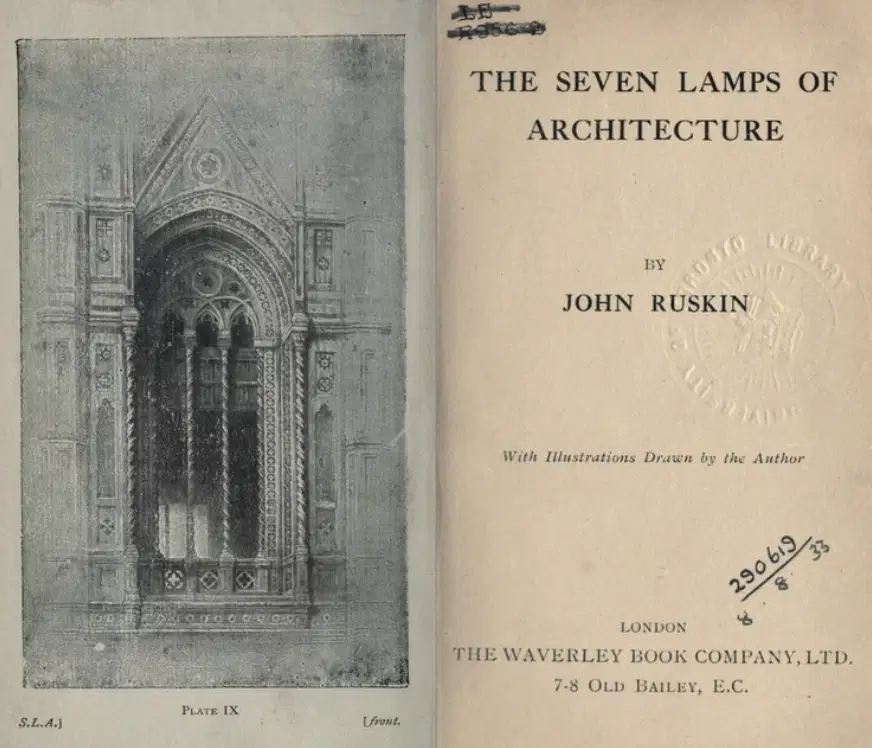
The arts and Crafts movement was inspired by the writing of (a) . The movement became the foundation for the other three movements: Art Nouveau, Art Deco and Bauhaus.
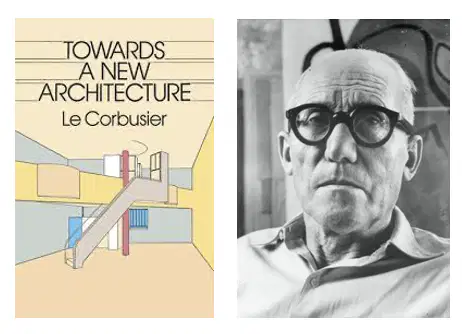
The Architect is widely regarded as the most important architect of the 20th century, proclaimed that ‘a house is a machine for living’ in his book ‘Towards a New Architecture’.
By this definition, a house is an efficient tool to help provide for the necessities of life and no more. Decoration and extra frills are not necessary.
Using this reasoning, the Architect advocated an architectural style of simple shapes, clean lines, open floor plans, large windows, and comfortable furniture. Everything you need to live comfortably and productively and nothing more.
These reflect his manifesto of “Purism” and “five points of architecture”.
(a)

Temple of Luxor (Luxor, Egypt) Architect
Amenhotep
Ramesses II
Imhotep
Hemiunu

Abu Simbel (Egypt) Architect
Amenhotep
Ramesses II
Imhotep
Hemiunu

Epidaurus Theater (Epidaurus, Greece) Architect
Itchinus and Callicrates with Phidias
Mnesicles
Polykleitos
Apollodorus of Damascus

What type of structure is in this picture?
Step pyramid
Mastaba
Rock-cut tomb
Ziggurat
This type of tomb were commonly used by nobility or members of the royal family, Usually made up of mud brick, rectangular in plan with a flat roof and sloping sides.
Pyramid
Mastaba
Rock-cut tomb
Ziggurat
This temple is used SPECIFICALLY for the Worship of their main Deities/gods/goddesses.
Cult Temple
Mortuary Temple
Pyramid
Mastaba
Temple for offerings and worship of a deceased person, usually a deified king.
Cult Temple
Mortuary Temple
Pyramid
Mastaba

Sphinx
Stela
Pylon
Lamassu
An Egyptian monolithic four-sided free-standing stone, tapering to a pyramidical cap
Pylon
Obelisk
Pyramid
Stela
A gateway guarding a sacred precinct consisting of either a pair of tall truncated pyramids and a doorway between them, often decorated with painted reliefs, represents the mountains of the horizon.
Pylon
Mammisi
Pyramid
Stela
The first architect in recorded History
Imhotep
Djoser
Ramesses
Sneferu
A massive masonry tomb structure with a rectangular base and four smooth, steeply sloping sides facing the cardinal points and meeting at an apex.
Pyramid
Step pyramid
Mastaba
Obelisk

What is the name of this structure?
Abu Simbel
Mortuary Temple of Hatshepsut
The Great Sphinx of Giza
Tomb of Tutankhamun

What is the name of this Image?
Pyramids of Giza
Step Pyramid of Djoser
North Pyramid of Dahshur
Temple complex of Luxor

What is the name of this structure?
Mastaba
Pyramid
Rock-cut tomb
Cult temple

The oldest known Ancient Egyptian architecture was created during the
The Middle Kingdom
The Old Kingdom
The New Kingdom
True or False: Pyramids were built by the Ancient Egyptians to live in.
True
False
True or False: Most of the grandiose architecture of Ancient Egypt was built using stone.
True
False

True or False: It is known how the Ancient Egyptians built the Great Pyramids of Giza.
True
False
True or False? Mud brick was the principal building
material for domestic building.
TRUE
FALSE

Is this Ancient Egyptian Architecture?
TRUE
FALSE
State the five principles advocated by Architect Le-Corbusier.
(a)

