
 Worksheets
FARA SET 2
Total questions: 71
Worksheet time: 2hrs 17mins

NUMBER 1 is
Lungs
Pharynx
Mouth
Alveoli

NUMBER 2 is
Pharynx
Bronchi
Alveoli
Lungs

NUMBER 6 is
Lungs
Trachea
Mouth
Alveoli

NUMBER 3 is
Pharynx
Trachea
Bronchi
Alveoli
Which are the main organs in the respiratory system?
Heart
Stomach
Lungs
Nose
What is the function of the respiratory system?
Take in oxygen only
Remove carbon dioxide only
Take in oxygen and remove carbon dioxide
Make sugar
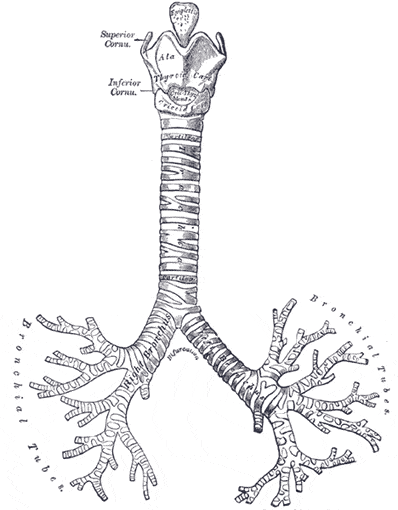
What is the tube called that is also known as your wind pipe?
Oesophagus
Bronchi
Trachea
Alveoli
Which of these organs is not a part of the respiratory system?
Trachea
Lungs
Heart
Pharynx
The muscles that helps to expand and contract the lungs, forcing air in and out
Pharynx
Nasal cavity
Alveoli
Diaphragm
Given the following structures:
1. lungs
2. nasal cavity
3. bronchi
4. trachea
5.pharynx
Which of the following is the correct order that air would flow during inhalation.
1,2,5,3,4
2,5,4,3,1
2,1,3,4,5
4,5,2,3,1
Which sequence correctly indicates the branching pattern of the human respiratory system?
trachea -> bronchi -> bronchioles -> alveoli
trachea -> bronchioles -> bronchi -> alveoli
alveoli -> trachea -> bronchioles -> bronchi
alveoli -> bronchioles -> trachea -> bronchi

Which structure shown in the diagram below contracts, causing a pressure change in the chest cavity during breathing?
A
B
C
D
What does the function of Nostrills
Stop dust dust to enter in nose
Release Carbon dioxide from lungs
Transport oxygen to lungs
When we inhale, Our diaphragm
moves up
moves down
flatterns
None

What is labelled ' E ' the Diagram
Pharynx
Bronchoiles
Trachea
Larynx

Gaseous exchange happens because of...
Osmosis
Respiration
Diffusion
Semi-permeable membranes
Air exhaled has more (a) than air inhaled.
Blood rich in _____________ flows to the body cells. Blood rich in __________ flows to the lungs.
(a)
(a) is the exchange of gases across a respiratory surface.
(a) is a mechanical process that involves inhaling air.

Which one is not features to ensure an efficient gaseous exchange with the surroundings?
Moist surface of respiratory structures
Thin respiratory structures such as the walls of blood capillaries
Dry outer skin causes the respiratory gases to dissolve and diffuse easily
Large surface area of respiratory structures

When we exercise, our rate of respiration
increases. Higher rate of transport of
.................... to body cells and higher rate of
elimination of ....................... from body
cells result in healthier body cells.
oxygen , carbon monoxide
oxyhaemoglobin , carbon monoxide
carbon dioxide , oxygen
oxygen , carbon dioxide
A dome shaped sheet of muscle, the _________, separates the chest from the abdomen
'n Koepelvormige spiervel, die ________, skei die borskas van die buik
diaphragm/diafragma
epiglottis
alveoli
bronchi/brongi

The lungs are made up of many tiny air spaces called (a)
Breathing is (a) and controlled by the brain.
Carbon dioxide diffuses from the (a) into the alveolus, and is exhaled out of the body.

Name A
Trachea
Lung
Alveolus
Blood capillary
Name B
Trachea
Lung
Alveolus
Blood capillary
Carbon dioxide diffuses in from
A to B
B to A
Oxygen diffuses in from
A to B
B to A

Alveolus is surrounded by
(a)
Oxygen combine with (a) in red blood cell
(a) gas moves from the alveolus to the blood capillaries
Which of the following is not correct about alveolus?
Thick wall
Thin wall
Moist wall
Large surface area
Alveolus is effective for gaseous exchange due to the wall is (a)
Which of the following are features of the ALVEOLI that adapt them to gas exchange?
I. Large surface area
II. Thin walls
III. Dry surfaces
I & II ONLY
I ONLY
II AND III
I, II AND III
Breathing in oxygen is
(a)
Breathing out carbon dioxide is
(a)

Based on diagram, which statement is correct?
When balloon expand, air pressure increases
When balloon expand, volume increases
When balloon expand, air forces out from the balloon
When balloon expand is exhalation process

It is a tiny air sacs and looks like grape
blood capillary
lung
alveoli
bronchus

Name B
Trachea
Larynx
Bronchus
Lung

Name c
(a)
Name F
Diaphragm
Lung
Bronchioles
Alveoli

During inhalation, F will
(a)
Inhaled gas is
(a)
Exhaled gas is
(a)

Gaseous exchange between carbon dioxide and oxygen occurred here
(a)

When pulled down rubber sheet
balloon contract
balloon expand
When pushed up rubber sheet
inhalation
exhalation
Y shape glass tube represent our
Trachea
Lung
Nostril - trachea - X - bronchioles - alveolus.
So X is,
lung
blood capillary
bronchus
Larynx
Tiny air sacs of the lungs where oxygen and carbon dioxide are exchanged are ________________.
bronchi
alveoli
larynx
pharynx
The purpose of cellular respiration is to
make water
make energy
make glucose
make oxygen
which of the following is a respiratory disease due to damaged and ruptured alveoli?
Bronchitis
Asthma
Emphysema
Lung cancer
The following is the adaptation in respiratory system of insects except...
Moist wall of traceholes
Have air sacs
Thick wall of tracheoles
Trachea branches out into many tracheoles
What are the tiny projections found on the filament of fish called?
Lamellae
Gills
Blood vessel
Gills arch
Which of the following gases cause the level oxygen in body to drop?
Sulphur dioxide
Carbon monoxide
Carbon dioxide
Nitrogen oxide
Oxygen + haemoglobin ---> oxyhaemoglobin
Where does this occur?
Brain
Kidney
Stomach
Lungs

What factor causes stomata to open?
High light intensity
Low humidity
High humidity
Low light intensity
What is the gas released during respiration in plants?
Carbon monoxide
Oxygen
Carbon dioxide
Nitrogen dioxide
During photosynthesis, the concentration of carbon dioxide in the air space is _________ compared to the cells. This allows the gas to diffuse into the cells.
Similar
Higher
Lower

